
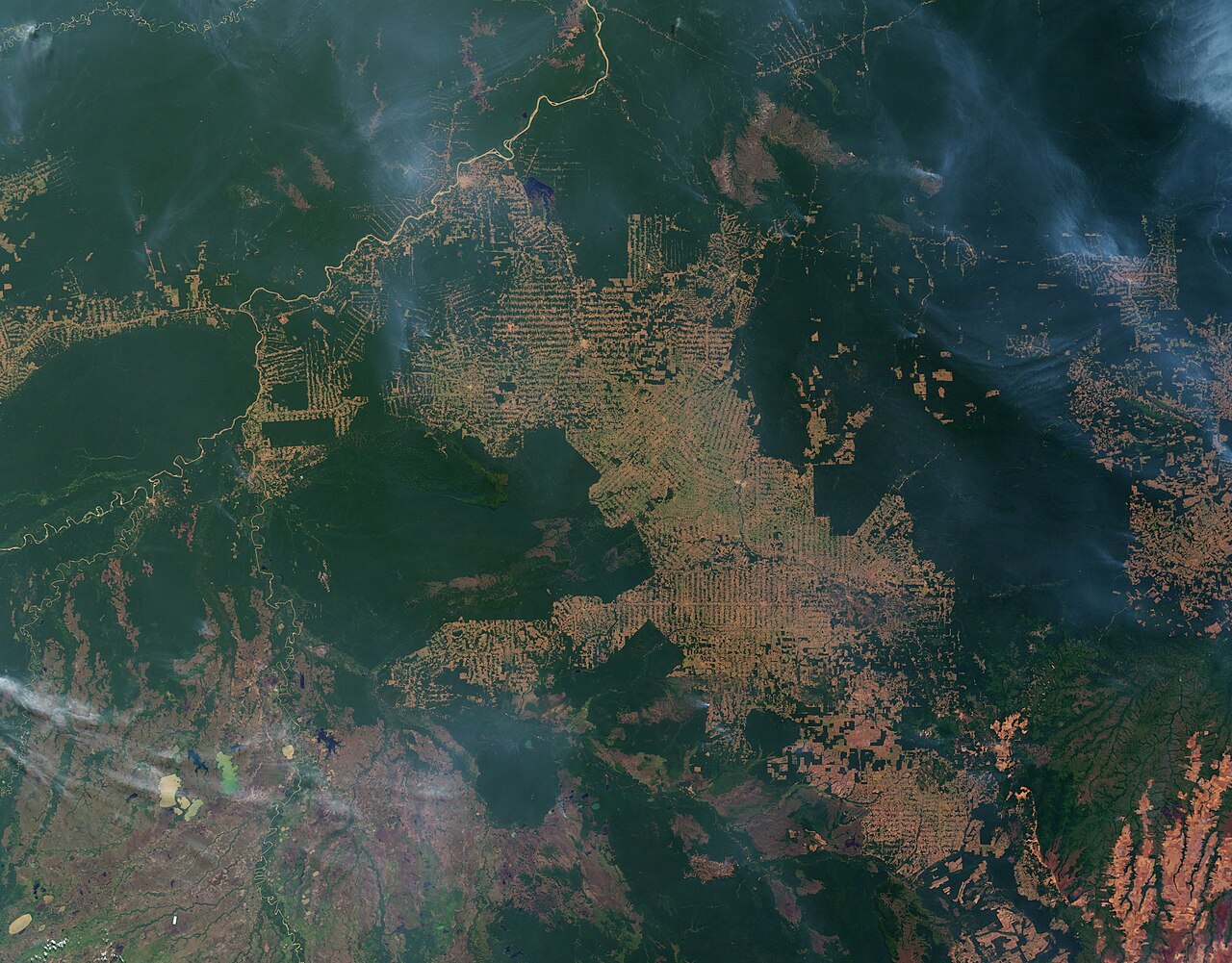
Global deforestation fell by 15% in 2025 to seven million hectares, the sharpest year-on-year decline since the 2018-2020 baseline, but the world remains far off track to halt deforestation by 2030, according to the Forest Declaration Assessment 2026, Down To Earth reported. Annual losses had exceeded eight million hectares every year since 2021.
The independent assessment, published by Climate Focus and research partners, finds a cumulative shortfall of 10.7 million hectares since 2021 against the reductions needed. "This bit of positive news comes after five years in which deforestation hardly budged," it says.
Tropical Latin America and the Caribbean cut losses to 33% below the baseline, though the report warns that the Amazon is nearing a warming threshold that could set off large-scale ecological change. In tropical Africa deforestation kept rising and for the first time reached a level comparable to Latin America's. Tropical Asia was broadly unchanged. Beyond outright clearance, 65.4 million hectares of forest were downgraded to a lower ecological integrity category in 2024 alone.
Farming remains a central driver. Deforestation linked to agricultural commodities and other commercial activity fell to 6.01 million hectares in 2025 from a baseline of 7.24 million, still far above the path to zero by 2030. "Increasing demand for forest-risk commodities, like beef and soy, as well as critical minerals and other mined materials, will only place further strain on the world's forests," the report says. Grasslands and other non-forest ecosystems are being converted at nine million to 13 million hectares a year.
Only 29% of companies assessed under the Forest 500 initiative had zero-deforestation commitments covering all the commodities they handle, and 14 major companies weakened or withdrew commitments in 2025. About 11.8 million hectares are under active restoration, roughly 6% of the estimated global potential. The story was written by Himanshu Nitnaware.
Photo: Jesse Allen and Robert Simmon / Wikimedia Commons (Public domain)
Source: Down To Earth

Comments
(0)