
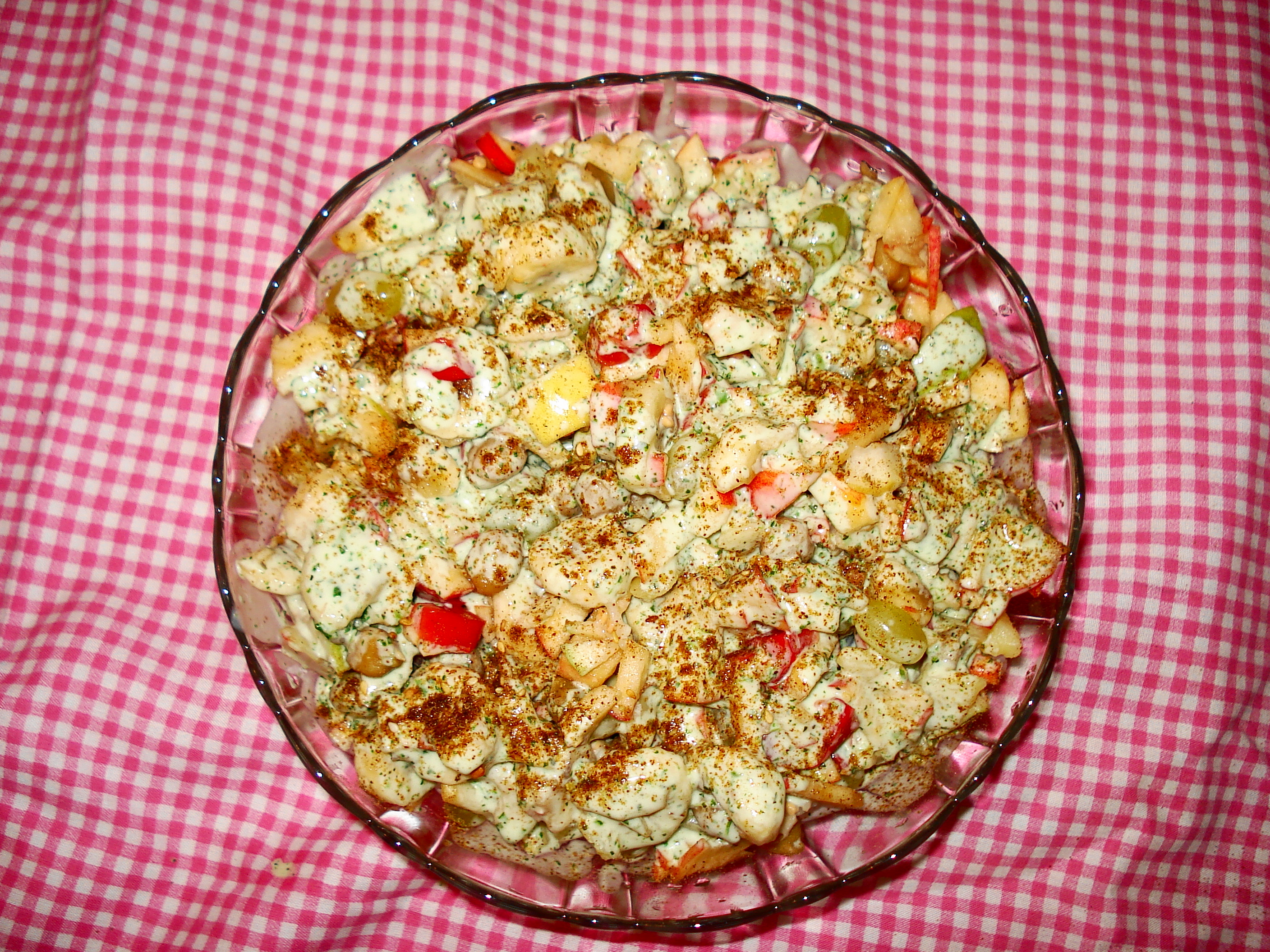
On 8 March 2026, during the month of Ramadan, the lifestyle section of the Bangladeshi news site Jagonews24 published a short recipe for fruit chaat: fresh fruit cut into cubes and tossed with a little spice, lemon juice and chaat masala. The recipe presented the dish as a light, healthy and tasty choice for hot days that can be made in very little time from the fruit already in the house, and suggested it as an afternoon snack, as something to serve guests and as a healthy dish for iftar, the meal that breaks the daily fast at sunset.
Ramadan had begun in Bangladesh on Thursday 19 February 2026. The National Moon Sighting Committee, meeting at the Baitul Mukarram National Mosque in Dhaka, announced on 18 February that the crescent had been seen in the country's sky and that fasting would start the next day, Prothom Alo reported. The weeks that followed were a time of high fruit prices in Dhaka, as the newspaper reports set out below show, so a recipe built on whatever fruit is at hand had a practical point.
The recipe as Jagonews24 gave it
The method in the report was brief. All the fruit is cut into cubes, everything is put together in a large bowl and mixed well, and the chaat is ready. The report called the result a nutritious fruit chaat with a different taste. It left the choice of fruit to the cook, describing the dish as one made from the fruit at home, and named lemon juice, chaat masala and a little spice as the seasoning, without fixed amounts.
The steps below follow the Jagonews24 method. The washing and handling steps at the start are taken from the United States Food and Drug Administration (FDA).
- Wash your hands for 20 seconds with soap and warm water before and after handling the fruit (FDA).
- Cut away any bruised or damaged parts of the fruit (FDA).
- Rinse each fruit under plain running water before you peel it, so that dirt and bacteria are not carried from the knife into the flesh. The FDA says there is no need to use soap or a produce wash.
- Scrub firm fruit, such as melons, with a clean vegetable brush (FDA).
- Dry the fruit with a clean cloth or a paper towel (FDA).
- Peel the fruit where needed and cut it into cubes (Jagonews24).
- Put all the cubes together in a large bowl and add lemon juice, chaat masala and a little spice to taste (Jagonews24).
- Mix well and serve (Jagonews24).
Because the report gave no amounts for the seasoning, the quantity of chaat masala and spice is a matter of taste. Most chaat masala contains salt, which matters for anyone watching their salt intake, as the section on diet below explains.
What chaat is
The word chaat comes from the Hindi cāṭ, which is linked to cāṭnā, "to lick", as in licking one's fingers while eating, and it traces back to the Prakrit caṭṭei, meaning to devour with relish. In South Asian cooking it names a family of savoury snacks that began in India, with roots in Uttar Pradesh, and that is now eaten across South Asia, very often bought from roadside carts and stalls.
One account, given by the culinary anthropologist Kurush Dalal and repeated in encyclopedic references, places the rise of chaat as a group of dishes in northern India in the late 17th century under the Mughal emperor Shah Jahan, when royal physicians are said to have advised the people of Delhi to eat spicy fried snacks and yoghurt to counter the alkaline water of the Yamuna. The same references note that this origin story is not well documented, and that most of the chaats known today took shape in Uttar Pradesh in the 20th century.
The classic savoury chaat combines pieces of potato, crisp fried bread, dahi vada or dahi bhalla (lentil dumplings in yoghurt) and chickpeas with tangy and salty spices, and is finished with chilli, saunth (a chutney of dried ginger and tamarind), fresh coriander leaves and yoghurt. Chopped onion, sev (thin, dried, salty noodles) and chaat masala are common to many versions, and it is traditionally served on a small metal plate or a piece of banana leaf. Encyclopedic lists of regional versions include a Dhaka chaat among them.
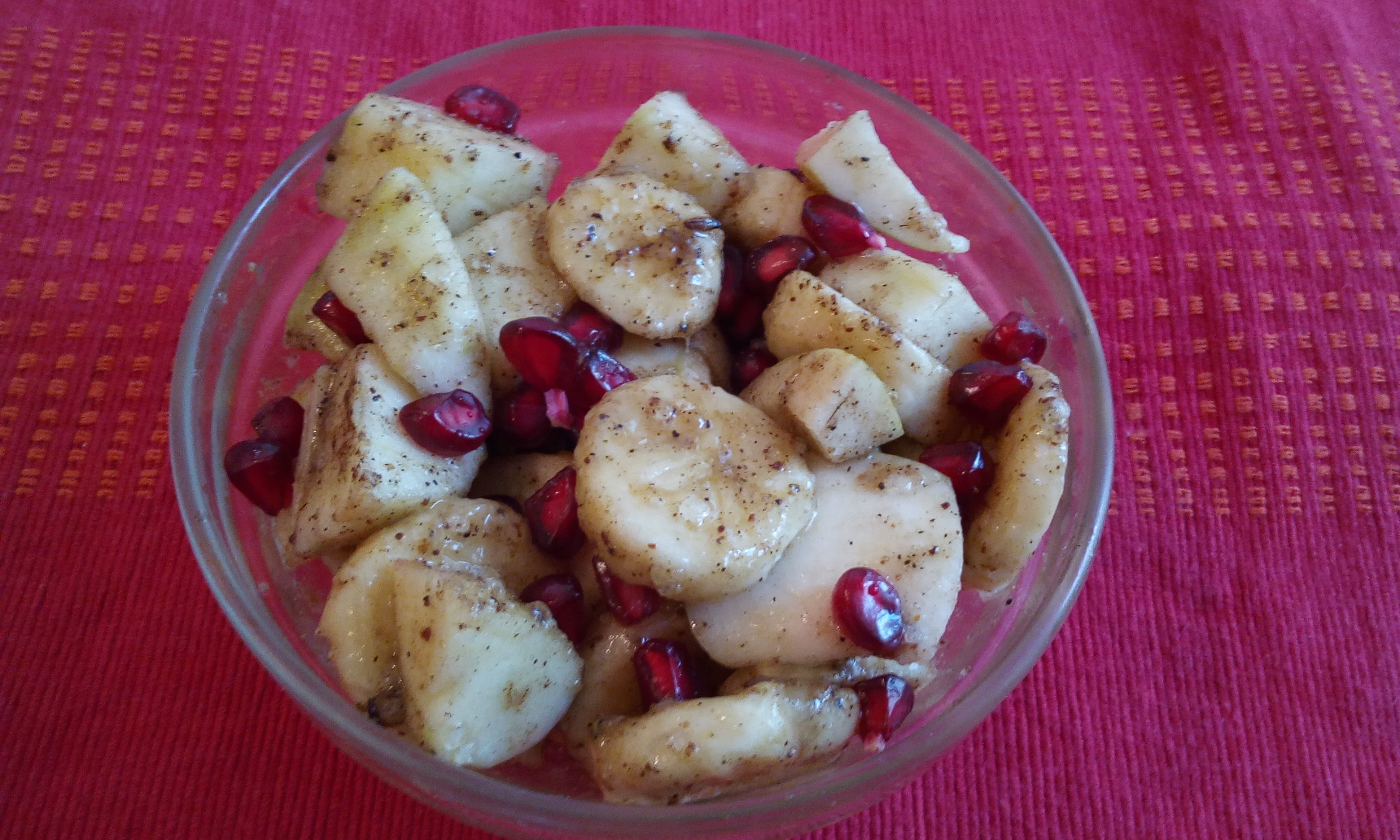
Fruit chaat takes the seasoning of chaat and applies it to fruit. Reference works on spices note that chaat masala is used in Indian fruit salads made with papaya, sapodilla, apples and bananas, and that street vendors usually mix their own chaat masala to sprinkle over chopped fruit or fresh vegetables. Sometimes black salt with chilli powder alone is used in its place.
Chaat masala, the seasoning that makes it chaat
Chaat masala is a powdered spice mix from the Indian subcontinent. It typically contains amchoor (dried mango powder), cumin, coriander, dried ginger, salt (often black salt), black pepper, asafoetida and chilli powder, with garam masala as an optional addition.
Spice companies also sell a separate blend labelled fruit chaat masala. According to reference works on spices, it carries less cumin, coriander and ginger than ordinary chaat masala, and more chilli, black salt, amchoor and asafoetida.
Black salt, known in South Asia as kala namak, is a type of rock salt used as a condiment in the region; it is salty and has a pungent smell. In this recipe, salt comes in with the chaat masala. The World Health Organization (WHO) advises adults to keep salt intake below 5 grams a day, which is 2 grams of sodium, so the amount sprinkled on a bowl of fruit is part of the day's total.
Why lemon juice goes in
Lemon juice does two jobs in a fruit chaat: it adds a sour taste that balances the sweetness of the fruit, and it slows the browning of cut fruit. Many fruits, apples among the best known, turn brown soon after they are cut. This is enzymatic browning: once the flesh is exposed to oxygen, an enzyme called polyphenol oxidase turns natural phenols in the fruit into quinones, which then react further to form brown pigments on the surface.
Polyphenol oxidase works best at a pH of 5 to 7 and is held back below pH 3. Acids such as citric acid and ascorbic acid (vitamin C) are used in the food industry to stop browning, and the effect of lemon juice in keeping cut food bright is thought to come from the citric and ascorbic acids it contains. Studies have also found that pineapple juice slows browning on apples and bananas.
Lemon juice and many of the fruits used in chaat are also sources of vitamin C. MedlinePlus, the consumer health service of the United States National Library of Medicine, says the vitamin is needed for the growth and repair of tissues in all parts of the body: it helps form collagen, heal wounds, maintain cartilage, bones and teeth and absorb iron, and it is an antioxidant. Among the fruits it lists as the richest sources are cantaloupe, citrus fruits such as orange and grapefruit, kiwi, mango, papaya, pineapple, strawberries and other berries, and watermelon. The recommended daily amount for adults aged 19 and over is 90 milligrams for men and 75 milligrams for women.
Fruit in Dhaka's markets that Ramadan
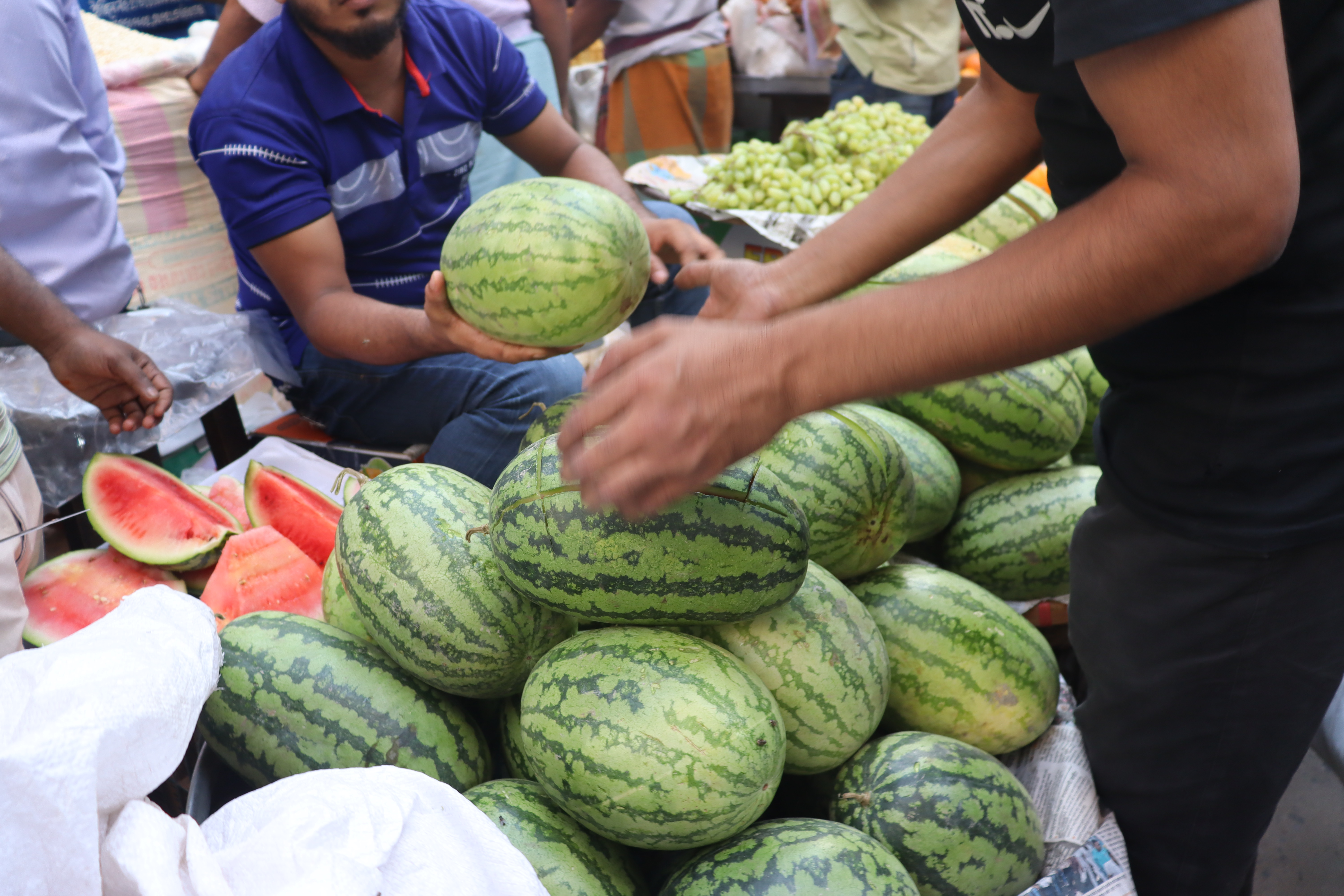
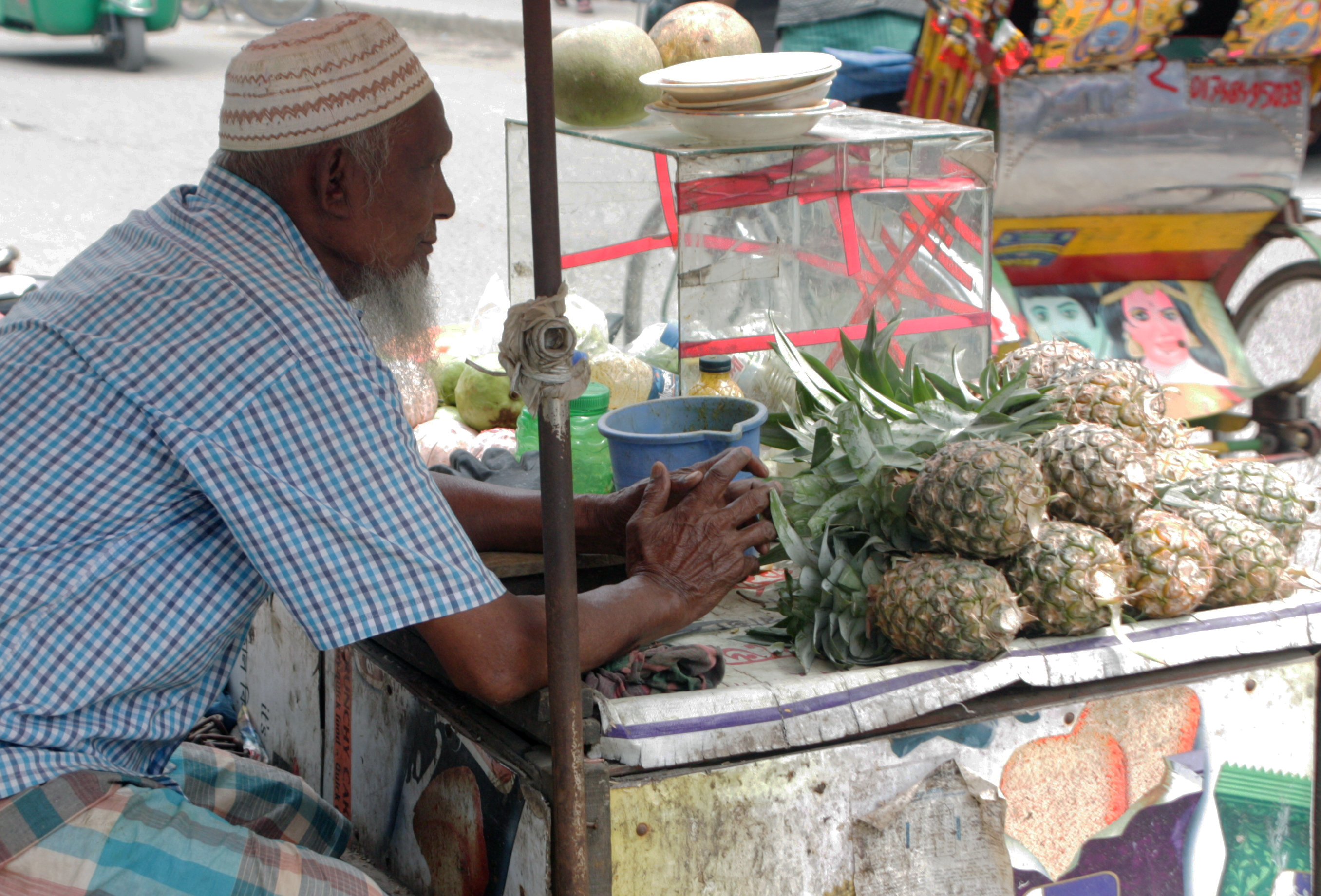
The recipe appeared in a season of dear fruit. On 17 February 2026, two days before the fast began, Prothom Alo surveyed Hatirpool, Boro Moghbazar, Rampura kitchen market and Karwan Bazar in Dhaka. Local bananas had risen by Tk 40 to 60 a dozen: at Karwan Bazar the champa variety sold for Tk 100 a dozen, sabri for Tk 160 to 180 and bangla for Tk 140 to 160. Watermelon was being offered at Tk 70 to 90 a kilogram depending on size, although its season had not fully begun. Guava sold at Tk 100 to 150 a kilogram and pineapple at Tk 40 to 60 each, and local papaya had gone up by Tk 10 to 20 a kilogram.
Imported fruit cost more. The same survey found malta at Tk 310 to 340 a kilogram, apples at Tk 330 to 400 and oranges at Tk 320 to 340 at Karwan Bazar; one Rampura seller said a crate of oranges of 22 to 23 kilograms had gone from Tk 5,000 to 5,300 to Tk 6,000 to 6,500. Lemons, which the recipe calls for, had climbed too: an ordinary hali of four that cost Tk 20 to 40 a few weeks earlier was selling for Tk 60 to 80, and large lemons for Tk 80 to 120 a hali. Sellers blamed lower supply after the national election and transport costs that had risen several times over, and the report noted allegations that syndicates in some wholesale markets were pushing prices up.
On 22 February, with the fast under way, Prothom Alo found that demand for fruit had risen and that many buyers were turning to local fruit because good-quality imported fruit could not be had for under Tk 300 a kilogram, while watermelon, banana, papaya, sammam, bel (wood apple) and pineapple could mostly be bought for around Tk 200 or less. Watermelon, then the best seller, cost Tk 80 to 100 a kilogram, and a 3-kilogram fruit Tk 240 to 300. Sammam sold at Tk 100 to 150 a kilogram by quality, bangi (a local melon) at Tk 80 to 100, ripe papaya at Tk 80 to 120, sapodilla at Tk 150 to 180, custard apple at Tk 250 to 300 and dragon fruit at Tk 300 to 400, the last two dear because they were out of season. Pineapple sold at Tk 30 to 60 a piece and bel at Tk 80 to 200 a piece by size.
Nuruddin Ahmed, general secretary of the Bangladesh Fresh Fruits Importers Association, told the newspaper that fruit worth Tk 200 to 250 crore changed hands every day in Dhaka's wholesale markets, 90 to 95 percent of it imported. He said ships carrying imported fruit had arrived late before Ramadan, which had pushed prices up, and that he expected prices to ease within some days.
Badamtali and the imported fruit trade
Much of the imported fruit in a Dhaka fruit chaat passes through Badamtali, the country's largest wholesale fruit market, on the bank of the Buriganga near the Sadarghat launch terminal and Ahsan Manzil. A Prothom Alo report of 30 October 2025 described it as about a century old: according to Banglapedia, four or five traders began a wholesale fruit business there around 1935, in British times. Until 1971 it dealt mostly in local seasonal fruit and some fruit brought from India and West Pakistan, and after independence it gradually became the main market for imported fruit. Trading starts at dawn and runs until midday, and more than a hundred thousand people are involved in it.
The report put daily turnover at about Tk 100 crore; traders' own estimate, counting more than 500 middlemen and wholesalers, was Tk 150 to 200 crore a day, falling to Tk 50 to 60 crore in a slump. Most imported fruit reaches the country through Chattogram port, some fruits such as avocado and cherry come by air, and dates come from Saudi Arabia and other Middle Eastern countries. A growing share of imported fruit is now sold in advance online and sent directly from Chattogram to other parts of the country, which has cut into Badamtali's trade.
According to the same report, Bangladesh imports 2 to 2.5 lakh tonnes of fruit a year, not counting dates, of which it imports 85,000 to 90,000 tonnes. Malta is the largest import, mostly from Egypt, South Africa and China; apples and oranges come mainly from China, South Africa and India; grapes from China and India; pomegranates from India and Egypt; and pears from China. Malta, apples, oranges and grapes together make up 60 to 70 percent of fruit imports. The source of malta follows the seasons: Egypt from January to June, South Africa from June to October and India from August to October.
Bangladesh's own fruit
For a cook who wants to keep the cost of a fruit chaat down, the country's own fruit is the alternative. Banglapedia, the national encyclopedia of Bangladesh, records 9 major and 48 minor fruits grown in the country. Mango, banana, jackfruit, pineapple, papaya, litchi and jujube are the main major fruits, and coconut is also an important fruit tree; mango, jackfruit and coconut together make up almost 90 percent of fruit tree cultivation.
Most local fruit ripens in the months of Baishakh, Jaistha, Asharh and Srabon, and May, June and July are known as the fruit-festival months. About 54 percent of the country's fruit is harvested and marketed in those peak months and the remaining 46 percent in the other eight months, Banglapedia says. Papaya and banana are produced all year round. A Ramadan that fell in February and March therefore came before the main local fruit season, which is why the market reports of that month list banana, papaya, guava, pineapple, bel, early watermelon and melons as the local fruit on sale.
Sammam, one of the melons that appeared in Dhaka's markets that Ramadan, is known as a fruit of the Arab region but is now also grown in Bangladesh, Prothom Alo reported on 22 February. It comes in two types, one green outside and red inside and the other yellow outside and red inside. A Karwan Bazar fruit seller, Md Shahjahan, told the paper that the sammam then on sale came from early plantings, and that larger fruit of 1 to 2.5 kilograms would arrive with the full season around April, when prices were expected to fall.
Banglapedia also records that each person should eat at least 85 grams of fruit a day for a healthy life, against an average intake of only about 35 grams, and that intake is uneven, with many poor people eating too little fruit, which adds to malnutrition.
Fruit, iftar and a healthy diet
The World Health Organization's fact sheet on healthy diets, dated 26 January 2026, says everyone older than 10 years should aim for at least 400 grams of fruit and vegetables a day. It calls fresh fruit and vegetables great choices, and says frozen and canned ones are also good provided they have no added sugar or excess sodium. Healthy diets, the fact sheet says, help protect against malnutrition in all its forms and against noncommunicable diseases including diabetes, heart disease, stroke and cancer.
WHO counts as free sugars the sugars added to foods and drinks by the manufacturer, cook or consumer, together with the sugars naturally present in honey, syrups, fruit juices and fruit juice concentrates, and advises keeping free sugars below 10 percent of daily energy, which for an adult of healthy weight eating about 2,000 calories a day is about 50 grams, or around 12 level teaspoons; going below 5 percent may bring further benefits. The Jagonews24 recipe uses whole fruit and no added sugar. The fact sheet also says a potassium intake of at least 90 millimoles (3,510 milligrams) a day may be beneficial for adults.
For the fasting month itself, WHO's Bangladesh office has published advice under the title "Stay healthy during Ramadan". It advises breaking the fast at iftar with dates, to prevent headaches and give the body the energy it needs; dividing food into three parts, iftar, a light evening meal and seheri; drinking plenty of water and eating hydrating foods; eating fruits instead of fruit juices; and reducing fatty, deep-fried, processed, spicy or salty food, which increases thirst during the fasting hours. Banglapedia describes the Bangladeshi custom of opening the fast with dates and something cold to drink, water or sherbet, and notes that roadside shops spring up in Ramadan to prepare and sell iftar food.
General advice of this kind does not fit every reader. People with diabetes, kidney disease, high blood pressure or another long-term condition, pregnant women and anyone on a special diet should ask their doctor how much fruit and salt suits them, and whether and how they should fast.
Keeping cut fruit safe
Fruit chaat is eaten raw, so the care taken in buying, storing and cutting the fruit is what keeps it safe. The FDA's guidance on selecting and serving produce advises choosing fruit that is not bruised or damaged; buying pre-cut fruit only if it is refrigerated or surrounded by ice; bagging fresh fruit and vegetables separately from raw meat, poultry and seafood on the way home; refrigerating all produce bought pre-cut or packaged; and keeping perishable produce at 40 degrees Fahrenheit or below.
In the kitchen, the FDA advises keeping fruit and vegetables that will be eaten raw away from raw meat, poultry and seafood, and washing cutting boards, dishes, utensils and countertops with soap and hot water. For a dish like fruit chaat, that means using a board and knife that have not just been used for fish or meat, or washing them first.
The WHO's Five Keys to Safer Food, published in 2006, rests on five messages: keep clean; separate raw and cooked; cook thoroughly; keep food at safe temperatures; and use safe water and raw materials. Fruit chaat is not cooked, so the third key does not apply to it; the other four do, from the clean hands and board to the safe water used to rinse the fruit.
Photo: Miansari66 / Wikimedia Commons (public domain)
Sources: Jagonews24, Prothom Alo, Prothom Alo English, World Health Organization (WHO), WHO Bangladesh, U.S. Food and Drug Administration (FDA), MedlinePlus (U.S. National Library of Medicine), Banglapedia, Wikipedia


Comments
(0)