
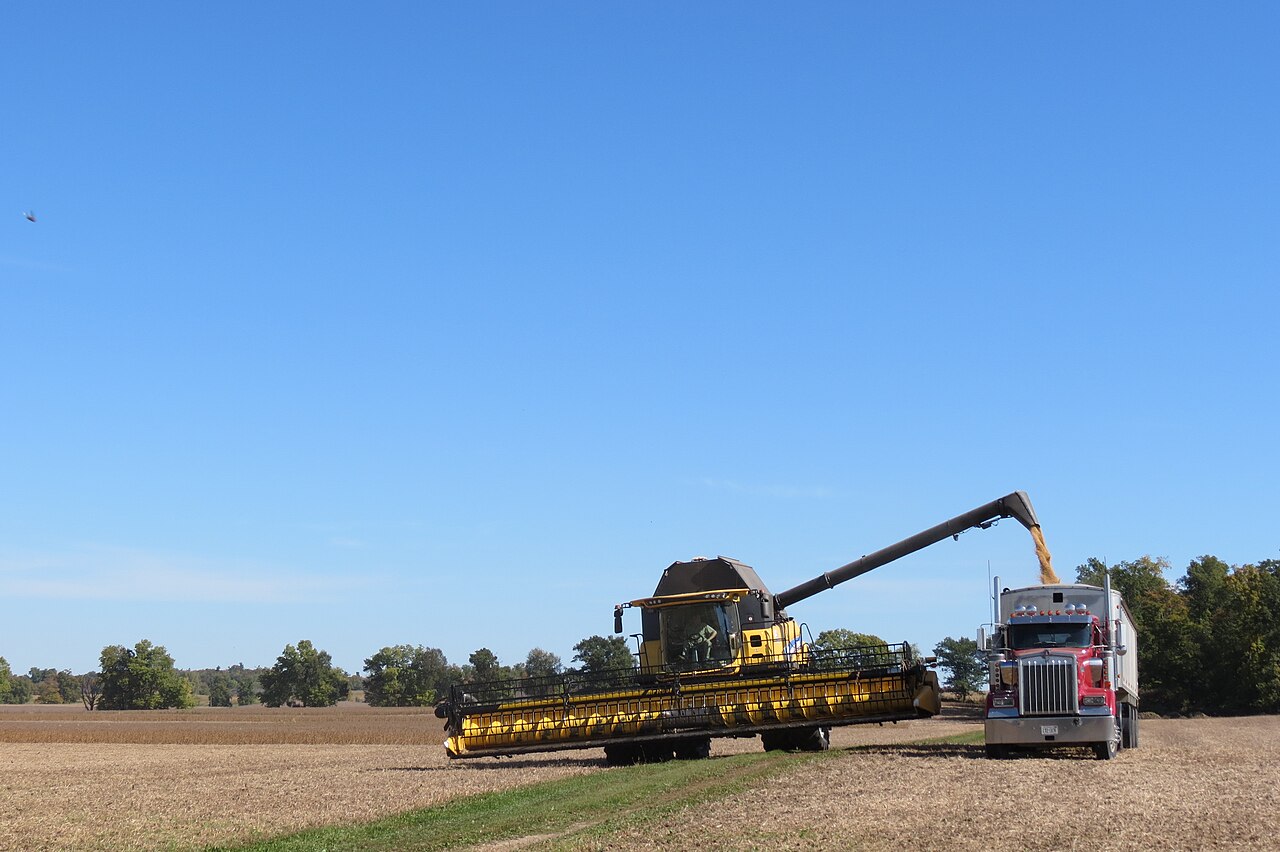
With diesel prices climbing, a free online calculator from the Soy Transportation Coalition (STC) lets farmers compare delivery points and see which buyer actually returns the most once the cost of hauling soybeans, corn, wheat and other grain is counted, Michigan Ag Today reported.
"Farmers must not only be mindful of the price offered, but also the costs associated with transporting their soybeans, or other commodities, to market," said Mike Steenhoek, the coalition's executive director. "In a few quick steps, the STC calculator assists farmers in measuring not only how much money will be received, but also how much will be spent." The tool is at soytransportation.org/calculator.
In Steenhoek's example, a market 10 miles away bids $12 a bushel for soybeans and one 50 miles away bids $12.15. With diesel at $3.75 a gallon in October 2025, the farther buyer came out ahead, $10,792 a load against $10,767.40. With diesel at $6.30 in October 2026 and everything else the same, the result reversed: the nearer market returned about $10,759 a load and the distant one $10,750.
The swing was $33.60 a load. A farm hauling 150 loads in a harvest under the same conditions would see a difference of $5,040, the coalition said, though actual results depend on each farm's prices, distances, fuel costs and other inputs.
Steenhoek said fuel is not the only factor in choosing where to deliver grain, but it is one farmers should recheck whenever costs change.
Photo: Stephieaw / Wikimedia Commons (CC BY-SA 4.0)
Source: Michigan Ag Today



Comments
(0)