
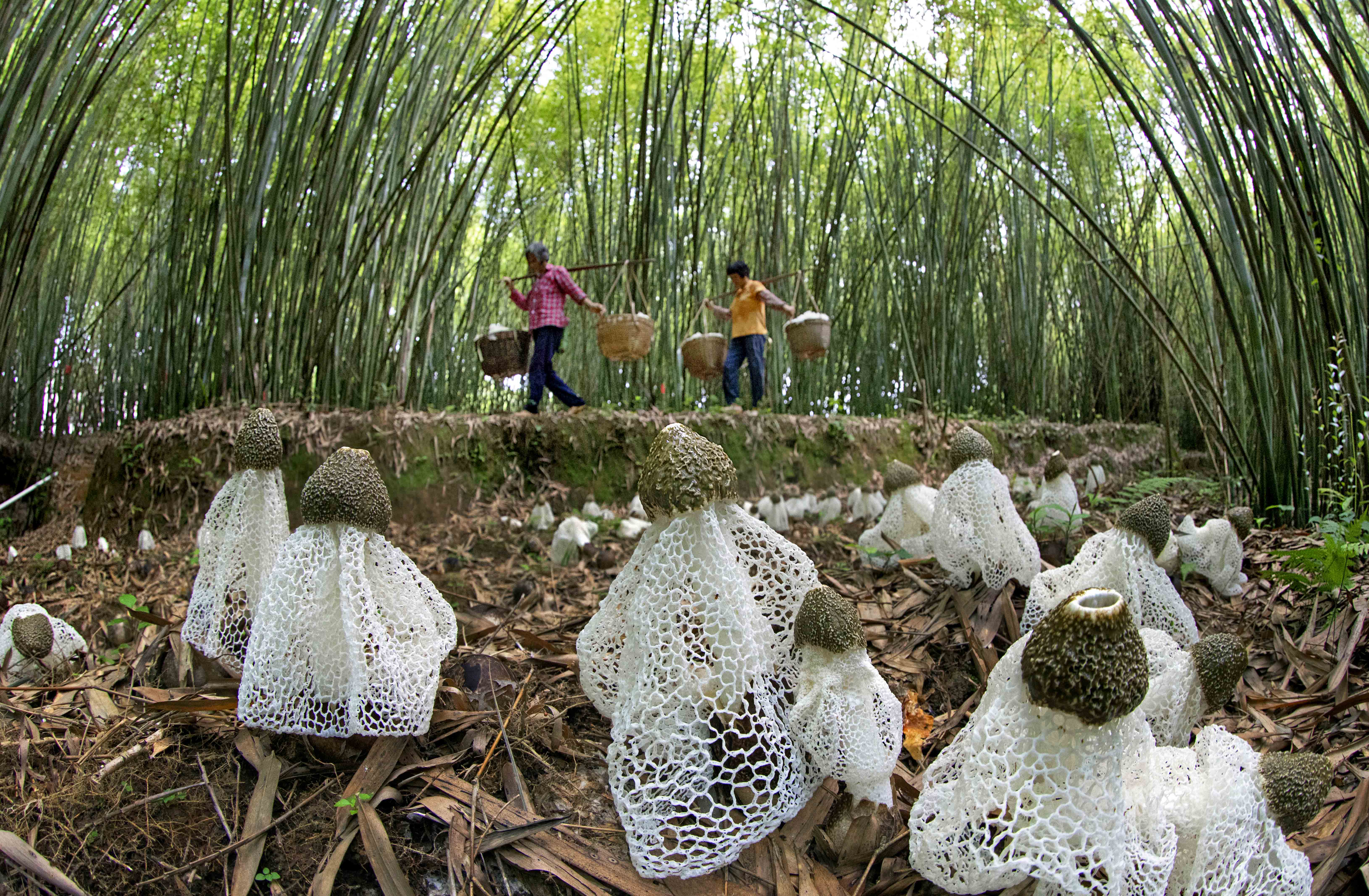
More than five billion people depend to some extent on forests and trees for their livelihoods, and forests supply a large share of the food eaten in many rural communities — yet almost none of that shows up in national statistics or farm policy. A global report published by the Food and Agriculture Organization of the United Nations (FAO) on Tuesday asks governments to change that.
The report, Forests for food: Nourishing people, sustaining the planet, was prepared jointly with the Landscape Alliance. It sets out how forests reduce hunger and poverty and calls on countries to write them into agrifood system policies rather than treating forestry and farming as separate files.
"By working together and fully integrating forests into national, regional and global strategies, we can build agrifood systems that are more efficient, inclusive, resilient and sustainable," FAO Director-General QU Dongyu wrote in the foreword. "Conserving and sustainably managing forests is fundamental to nourishing people, sustaining the planet and improving the well-being of present and future generations."
The numbers behind the argument are substantial. More than 50,000 wild species are used for food, medicine and other purposes, at least 10,000 of them eaten directly. In some forest-dependent communities, forest foods supply up to 80 percent of daily protein. Forest fruits carry minerals and vitamins, nuts and seeds supply calories, oil and protein, roots and tubers supply carbohydrates, and wild leaves are rich in vitamin A, calcium and iron — the micronutrients most often missing from vulnerable diets.
Forests also underwrite farming itself. Forested watersheds supply fresh water to more than 85 percent of major cities and support crop production, livestock and fisheries through water regulation, soil protection, nutrient cycling, pollination and pest control. In many regions forests generate up to 20 percent of rural household income and act as a safety net when harvests fail. Around 1.8 billion people still cook with woodfuel, and more than a billion rely on medicinal plants gathered from forests.
The losses are equally large. The world lost an average of 10.9 million hectares of forest a year over the past decade, and the report warns that deforestation and degradation cut biodiversity, weaken ecosystem services and ultimately reduce agricultural productivity. It arrives at a moment when, according to the latest UN figures, about 645 million people faced chronic hunger in 2025.
The report makes 12 recommendations, among them adopting integrated and context-specific policies, diversifying production systems, raising public investment in sustainable agriculture and forest management, building forest-food data systems, and strengthening partnerships between governments, civil society and business. It also reviews how the Committee on World Food Security's 2017 recommendations on sustainable forestry have been applied, drawing on case studies from China, the Dominican Republic, Morocco, Türkiye and Uruguay.
For a farmer, the practical point is that trees on and around farmland are not a competing land use but part of the food system — a source of fruit, fodder, fuel, soil cover and income between harvests. The report's argument is that agricultural planning that leaves them out is measuring only part of what the land produces.
Source: FAO Newsroom


Comments
(0)