
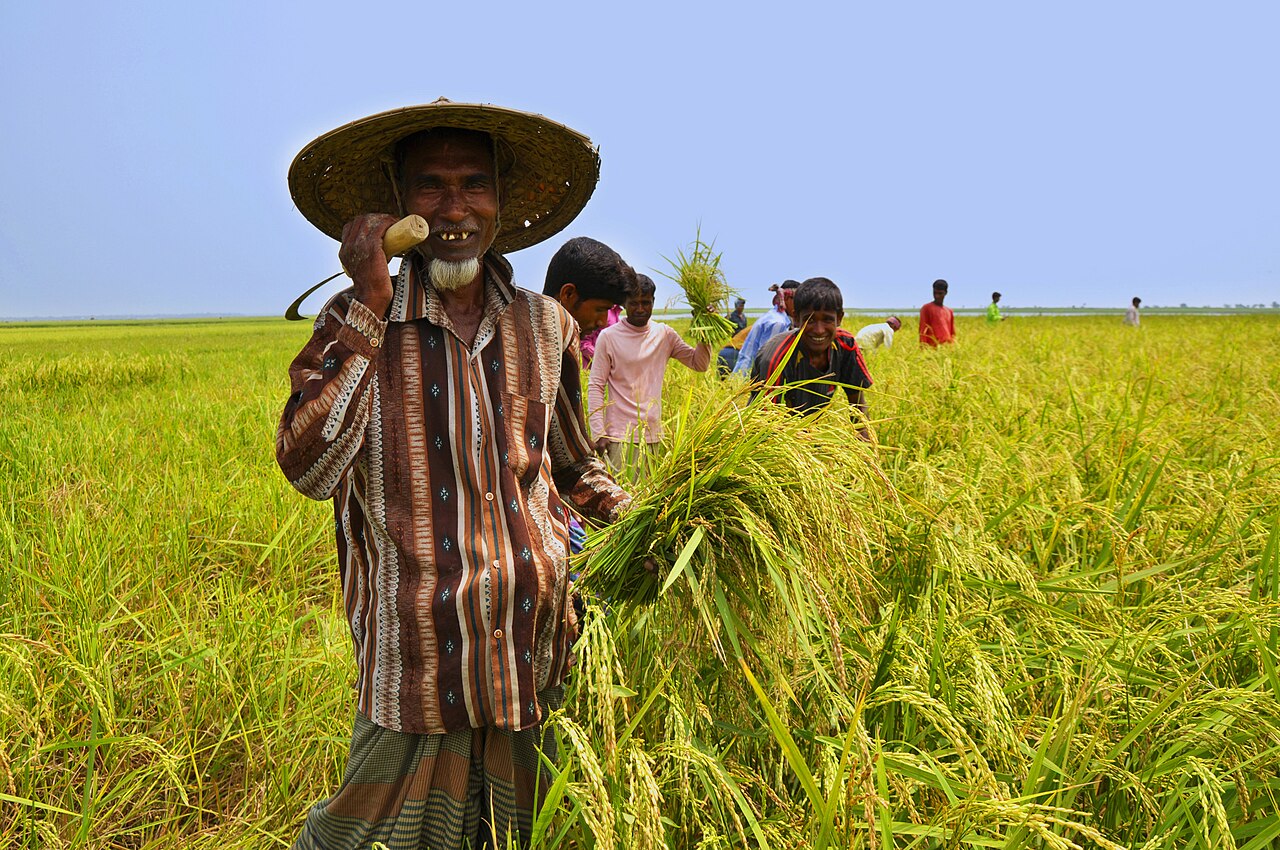
Food security means that everyone, at all times, can get enough safe and nutritious food. For Bangladesh it is the measure of everything its agriculture does.
The four pillars
- Availability: enough food grown or imported — rice, wheat, vegetables, fish and meat.
- Access: food that every class of people can afford and reach, the poor included.
- Utilisation: food of good nutritional value, safely produced and properly used.
- Stability: a supply that holds through floods, cyclones, price shocks and crises.
Where the country stands
- Production has grown: rice output reached 38.6 million tonnes in 2022–23, and the country is self-sufficient in its staple.
- Nutrition lags: fruit, milk, meat and pulses remain out of many diets; about 30 per cent of children are malnourished, by FAO figures.
- Distribution is uneven: food is easy to find in the cities, harder in remote districts; transport and supply chains need work.
- Climate is the threat: floods, droughts and cyclones destroy crops, and salinity is eating into coastal land.
The challenges
A growing population on shrinking farmland; climate change; malnutrition and inequality; and post-harvest loss for want of storage and distribution.
What secures it
Higher and more diverse production; climate-resilient varieties and irrigation; storage and cold chains; nutrition programmes for the poor; and a farm sector that can pay its farmers. Bangladesh has learned to grow its rice; the next task is to feed its people well.
Photo: A farmer harvesting paddy from his field — Balaram Mahalder / Wikimedia Commons (CC BY-SA 3.0)
Comments
(0)