
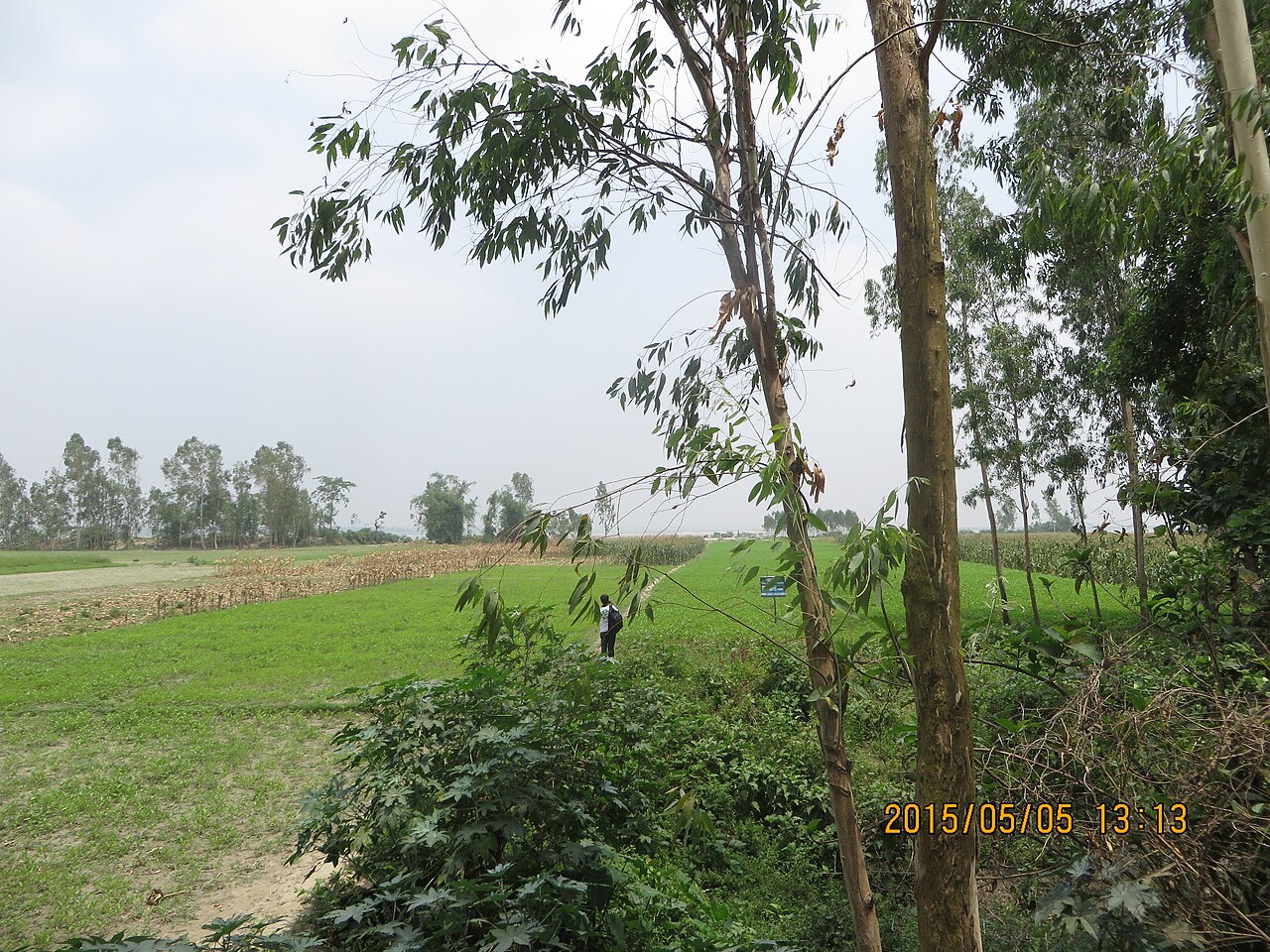
Stand at the edge of a village field on a March morning and you see two seasons at once. On one side the wheat and chickpea have turned gold and are waiting for the sickle. On the other, the boro rice is a deep, heavy green, and the farmer is losing sleep over whether there will be enough water to keep the field flooded. Mango trees are thick with blossom, the ponds have shrunk to their beds, and the first real heat of the year is in the air. Bringing the winter harvest home and preparing the ground for the summer crops both fall in the same four weeks, which is why March is one of the busiest months in a Bangladeshi farmer's year.
The end of Falgun, the start of Chaitra
On the Bengali calendar, March is split between two months. According to the monthly farm bulletin of the Agriculture Information Service (AIS), Falgun runs from 14 February to 14 March, and Chaitra, the last month of the Bengali year, from 15 March to 13 April. The AIS puts it plainly: in Chaitra the work of the winter crops and the summer crops has to be done together, so the farmer's workload climbs.
The winter season, rabi, covers wheat, mustard, chickpea, lentil, potato and the cool-weather vegetables. The kharif season covers the crops of the hot and wet months, and agronomists call its first half kharif-1. March sits on the border between the two. Every month the Department of Agricultural Extension (DAE), through its publishing arm the AIS, issues crop-by-crop advice for farmers across the country. This feature follows that advice through the fields, crop by crop, for the month of March.
Boro rice: water comes first
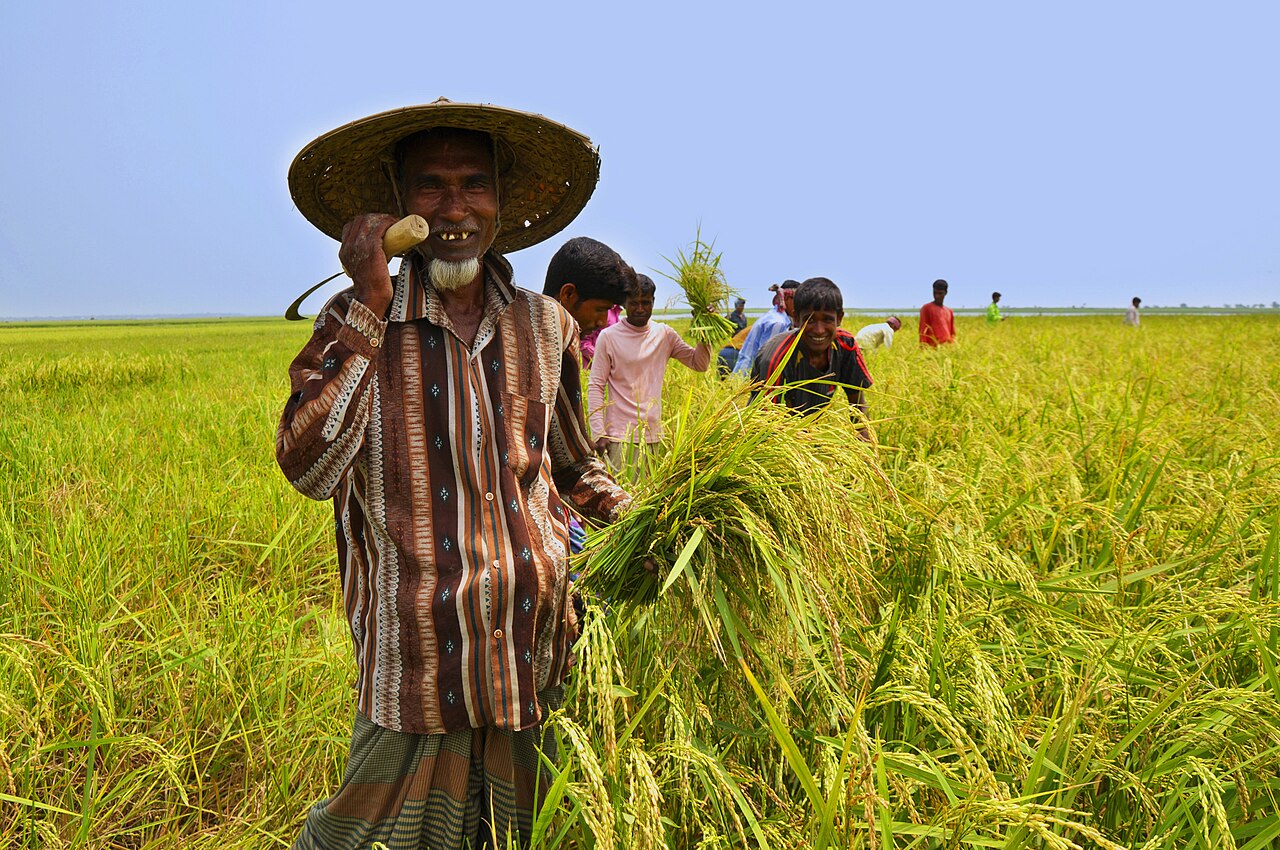
Boro is the country's largest rice season, and in March the crop is at its most delicate stage. Before the ear emerges, a young panicle forms inside the stem; farmers call this the booting stage. The AIS advises keeping 3 to 4 inches of standing water in the field from booting until the grain reaches the milk stage, when the kernels are still soft and filled with a milky liquid. If the field dries out in this window, the number of empty grains rises: the husk forms, but there is no rice inside.
There is separate advice for those who transplanted late because of the cold. When their seedlings are 50 to 55 days old, the last instalment of urea should be top-dressed, meaning scattered over the standing crop. Potash should also be given as needed, since it strengthens the stem and helps the grain fill. But urea must not be overdone, and the reason becomes clear in the next section.
Several diseases appear in the boro fields at this time. The AIS names four: ufra, blast, bacterial leaf blight and tungro. Blast is a fungal disease that leaves eye-shaped spots on the leaves, and when it attacks the neck of the panicle the whole ear snaps and turns white. Leaf blight dries the leaves from the tip downward. Tungro, a viral disease, leaves plants stunted and yellow. When any of them shows up, the safest course is to call in the union's sub-assistant agriculture officer without delay.
Brown planthopper: a small insect, a large loss
Late in the boro season the pest that worries farmers most is the brown planthopper. It lives at the base of the rice plant, just above the water, so it is hard to see from the ridge. It sucks sap from the stems, and where it gathers the rice dries out in round brown patches that look scorched, a symptom known as hopperburn. Research in Bangladesh has found that soft, dark-green rice pushed with heavy doses of urea is exactly what the insect prefers.
That makes balanced fertiliser the first line of defence. The second is water management: when an attack begins, draining the field and keeping it dry for some days lowers the humidity at the base of the plants and with it the insect population. The third is the light trap. A lamp lit beside the field after dusk, with a pan of water beneath it, draws the insects in and shows how many are about. Wider spacing between rows at transplanting lets light and air reach the base of the plants and slows the pest's breeding. If the attack passes the danger level, an insecticide approved by the agriculture office should be aimed at the base of the plants.
Seedbeds for summer rice
While the boro ripens, preparation for the next rice crop begins. This is the time to prepare seedbeds for summer rice, known as aus. A seedbed is a small patch where seed is sown thickly so that seedlings can be raised and later pulled and transplanted into the main field. A bed that is well puddled, mixed with a little organic manure and raised above the surrounding ground does not waterlog, and the seedlings come up strong.
The key decision here is the variety. The advice is to choose a high-yielding variety, and one that suits the local soil and water. The upazila agriculture office and the Bangladesh Rice Research Institute can say which varieties do well in which area. Good seed is half the work, so it is worth checking the source and the germination rate before buying.
Wheat: time to cut, time to dry
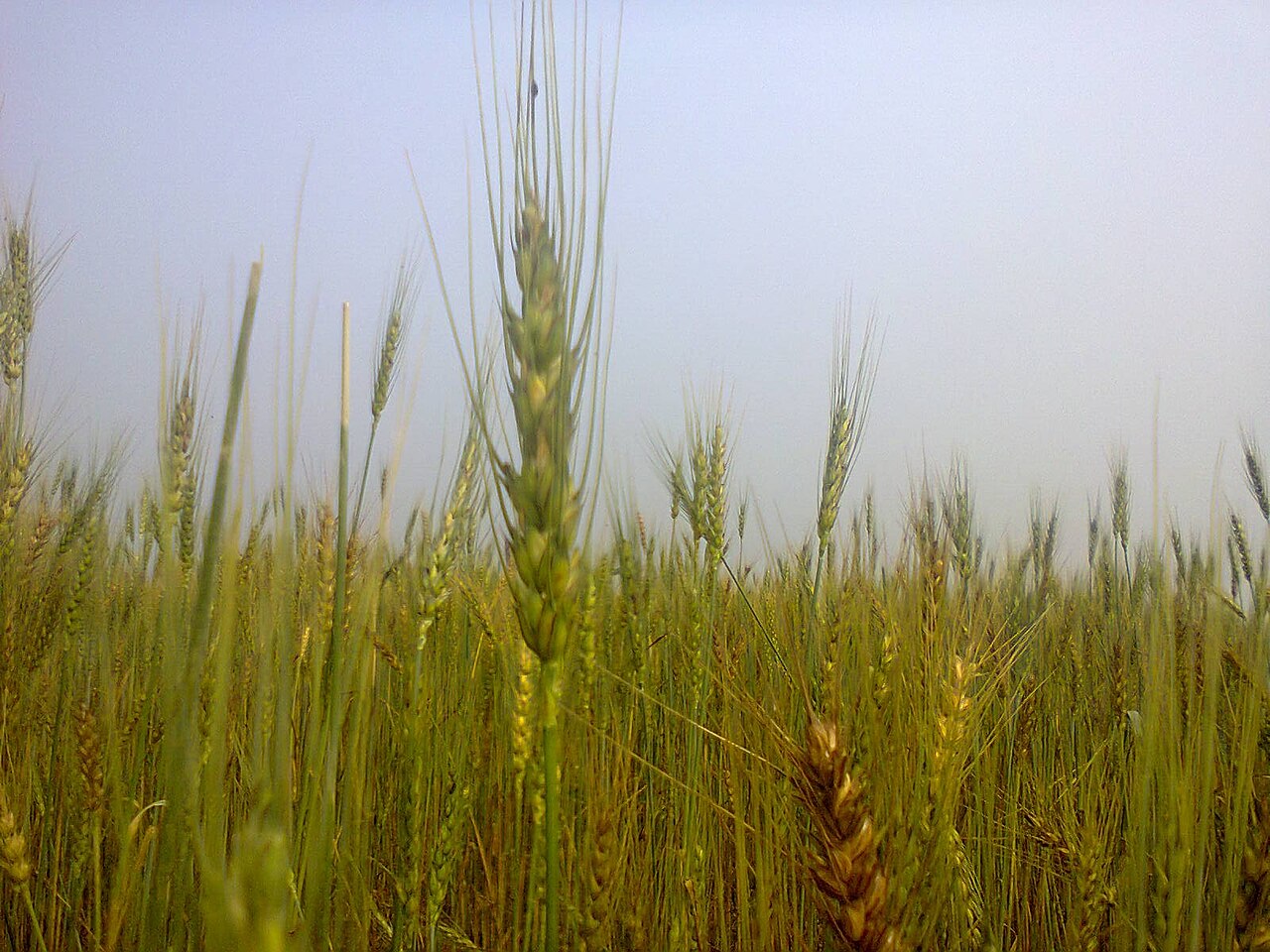
March is harvest time in the wheat fields of the north. The AIS gives a homely test for the right moment: bite a grain, and if it cracks audibly between the teeth it is hard enough to cut. Where a combine harvester is used, the advice is to harvest in the morning or the late afternoon. Late-sown wheat, once ripe, should be cut, threshed, winnowed and dried thoroughly.
Grain that is not properly dried is attacked by insects and mould in storage. Drying it in the sun for several days, letting it cool, and storing it in airtight containers keeps it sound. Grain kept for seed should be picked out separately from the plumpest kernels. Clearing the field after harvest and getting it ready for the next crop is also March work: once the stubble and weeds are removed and the land is ploughed, kharif crops such as jute, aus or mung bean can go in on time.
Jute and summer maize
Sowing jute is another big job in the March fields. According to the AIS, jute can be sown from mid-Falgun to the end of Chaitra. The land should be finely tilled and well drained. A spacing of 30 centimetres between rows and 7 to 10 centimetres between plants works well. Fifteen to twenty days after the seedlings come up, the AIS recommends a top-dressing of 300 grams of urea per decimal, a decimal being one hundredth of an acre.
For those who want to grow summer maize, the AIS is clear: sow now. The seed rate is 100 to 120 grams per decimal. If cobs from the winter maize crop are still in the field, they should be harvested once the husks turn straw-coloured, and dried well. Across much of the country maize is now a major source of cattle and poultry feed, so well-dried grain is in steady demand.
Pulses: the season for mung and black gram
Land that lies empty for a few weeks after wheat or mustard can carry an extra crop of mung bean or black gram. According to the AIS e-Krishi guidance, the kharif-1 sowing window for mung is the whole of Falgun, that is, mid-February to mid-March, which makes the first half of March the last chance to sow it. The nodules on the roots of pulse crops capture nitrogen from the air and add it to the soil, so the next crop benefits too.
For the first few weeks, mung and black gram fields must be kept free of weeds, because young seedlings cannot compete. If the soil is dry, a light irrigation should be given on time, but standing water kills pulse plants. Chickpea is a different case. It is a rabi crop, sown at the start of winter, and in March it is usually ripe and ready to pull. The main task in chickpea fields this month is to harvest the crop on time and dry it well.
Sunflower and soybean
Among the oilseeds, sunflower and soybean are slowly gaining ground in the south and on the river islands, the chars. Land preparation for these two crops can begin in March. Before sowing, the soil should be ploughed and harrowed several times until it is loose and crumbly. The field should be level so that irrigation water reaches every corner and surplus water drains away.
Both crops need balanced fertiliser. Setting the dose after a soil test lowers the cost and raises the yield, and soil testing is available through the upazila agriculture office. If weeds are not controlled in the first month after the seedlings emerge, the yield drops sharply. Where rabi-sown sunflower is still in the field, the heads should be cut once their backs turn from yellow to brown.
Time to sow the summer vegetables
As prices of winter cabbage, cauliflower and radish fall in the markets, vegetable growers turn to the summer crops. In the words of the AIS, those who want to grow summer vegetables must start sowing or transplanting this month. Bottle gourd, pumpkin, bitter gourd, okra, aubergine and a range of leafy greens are on the list.
Climbing vegetables such as bottle gourd, pumpkin, bitter gourd and cucumber are sown in pits: a hole is dug, filled with soil mixed with organic manure, and heaped into a low mound where a few seeds go in together. Rotted cow dung or compost in the pit helps the soil hold moisture, and the vines grow faster. Trellises or stakes should go up in time for the vines to climb. Okra and aubergine planted in rows are quicker to tend and to pick.
As the heat builds, the soil dries fast, so regular irrigation and weeding are routine work in the vegetable plots this month. Loosening the top layer of soil after each watering helps it hold water longer. Meanwhile the winter cabbage, cauliflower and radish still in the ground should be lifted and sent to market without delay. Left too long, cauliflower heads loosen and radish turns fibrous, and both lose their price.
In gourds, pumpkins and cucumbers, the fruit fly becomes a serious problem once flowering begins. The fly lays its eggs inside the young fruit, which then rots and drops. Picking up infested fruit and burying it, and setting pheromone traps in the field, are the familiar remedies. A pheromone trap holds a chemical lure that mimics the insect's own scent, drawing in the male flies and trapping them, which reduces the need to spray.
Protecting the mango, litchi and jackfruit blossom
March means blossom and tiny fruit on every tree, and the biggest enemy at this time is the mango hopper. This small insect sucks the sap of the blossom and young leaves, so the flowers wither and drop. The sweet liquid it excretes grows a black sooty mould that coats the leaves and blossom. The AIS advises that when hoppers attack, they should be controlled with an approved insecticide.
The Bangladesh Agro-Meteorological Information Service also gives the timing: spray once when the flower spikes are 3 to 4 centimetres long, and again when the fruits reach the size of a pea. It is better not to spray at full bloom, when bees and other pollinating insects are busy in the orchard. Powdery mildew and anthracnose can also strike mango now. The first leaves a white, powdery coating on the blossom; the second leaves black spots on flowers and young fruit. Approved fungicides exist for both.
Jackfruit fruit rot, in which the young fruit turns black and drops, is a familiar problem of the season. The AIS recommends spraying Bordeaux mixture, an old and proven fungicide made from copper sulphate and lime. Litchi trees also need watching for pests and disease to protect the blossom and fruit set. Regular watering at the base of all fruit trees at this time reduces fruit drop, because in dry weather a tree sheds some of its young fruit on its own.
For those planning a new orchard, March is a month of preparation. Choosing the site, laying out the plot, and digging pits and filling them with organic manure can all be done now. According to the Bangladesh Agro-Meteorological Information Service, the right time to plant mango saplings is May to June and August to September. With the pits ready in advance, saplings can go in as soon as the rains arrive, or earlier where irrigation is available.
Now is the time to prepare the pond
By the end of the dry season many ponds have shrunk to their beds, and for fish farmers this is the best time to prepare them. The AIS advises that once a pond has dried out, the rotten mud should be dug out of the bottom and lime applied at 1 kilogram per decimal. Rotten mud holds harmful gases and disease organisms, and lime reduces the acidity of the soil and kills germs.
A few days after liming, clean water can be let in and organic manure applied to grow natural food in the water. This natural food is the mass of tiny plants and animals, barely visible to the naked eye, that tint the water a light green and form the first food of young fish. In ponds that already hold fish, feeding and growth pick up as the water warms, so the amount and quality of feed should rise. If the water has fallen very low or gone bad, part of it can be replaced.
Cattle, goats and poultry as the heat arrives
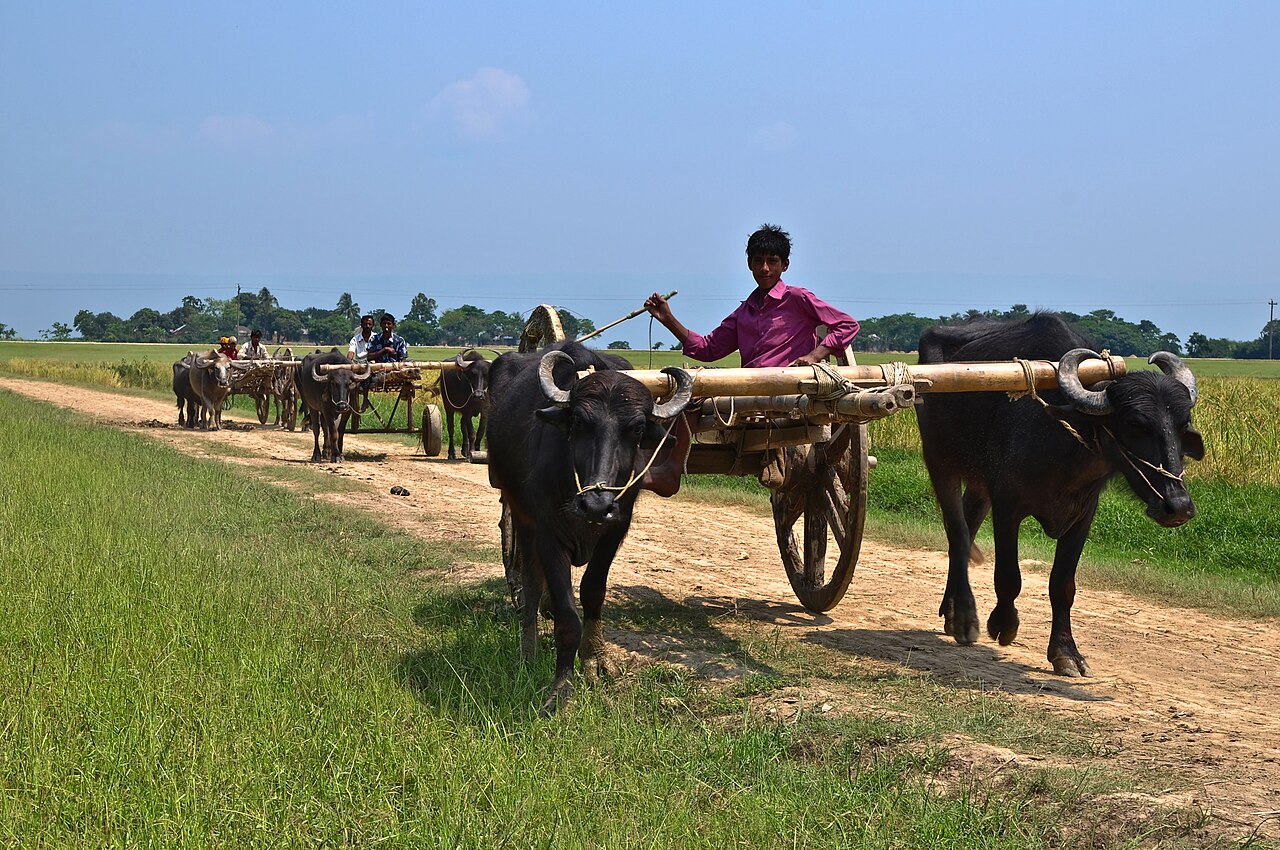
The heat of Chaitra wears down not just people but livestock too. The AIS monthly advice notes that Chaitra is hot and that cattle need rest at this time. Keeping bullocks off ploughing and heavy work in the midday sun, keeping animals in the shade, and giving clean water several times a day are the basic rules of the month.
Cattle and goats need a more nourishing ration now. Alongside dry straw, green grass, concentrate feed, oil cake and a mineral mix keep the animals in condition and stop milk yields from falling. The risk of disease rises as the seasons change, so animals should be checked and vaccinated on schedule. The upazila livestock office can say which vaccine is due when.
For poultry farmers, the AIS warning is that the switch from winter to summer is a time for extra care. Good ventilation in the sheds, plenty of cool water, vitamins where needed and timely vaccination help the birds cope with heat stress. Spreading straw or sacking over a tin roof lowers the temperature inside a little.
Keeping an eye on the sky
From late March the nor'wester season, kalbaishakhi, sets in. Black clouds build in the afternoon, a sudden squall arrives, and sometimes hail. For ripe wheat, ripe chickpea or boro rice in flower, a single storm can do real damage. Hail strips grain from the rice ears and knocks young fruit off mango trees; wind topples banana plants and the trellises of climbing vegetables. It is safer to cut a ripe crop and bring it home quickly than to leave it standing.
Forecasts from the Bangladesh Meteorological Department now reach farmers regularly by mobile phone, radio and television, and the agro-meteorological service issues upazila-level farm advice. When a storm is forecast, it is better not to spray pesticide or spread fertiliser that day, since rain washes both away and wastes money and labour. Staking banana and papaya plants, firming up trellis posts and covering threshed grain at night are small jobs that prevent large losses on a stormy night.
One more task is often forgotten this month: saving seed for the next season. Picking the healthiest plants in one's own field, setting aside their pulse and vegetable seed, drying it well and storing it in airtight containers cuts the next year's seed bill. But the difference between high-yielding and hybrid varieties matters here: seed saved from a hybrid crop does not give the same yield the following year, so hybrid seed has to be bought fresh each time.
Why March decides the year's harvest
Work done on time in March pays off over the months that follow. With the right water in the boro field, the grain is full at harvest in Baishakh. Wheat dried properly keeps well in the store all year. Blossom that survives brings mangoes to market in Jyoishtho. A pond prepared now can be stocked before the monsoon. And a job that slips this month drags on through the whole season.
When a problem appears in the field, farmers can contact their union's sub-assistant agriculture officer or the upazila agriculture office. Advice is also available by calling the Agriculture Call Centre of the AIS on 16123. For fish and livestock there are the upazila fisheries and livestock offices. Making a short list at the start of the month of which field needs what, and when, takes much of the strain out of Chaitra.
Photo: A farmer in a jute field, Afifa Afrin / Wikimedia Commons (CC BY-SA 3.0)
Comments
(0)