
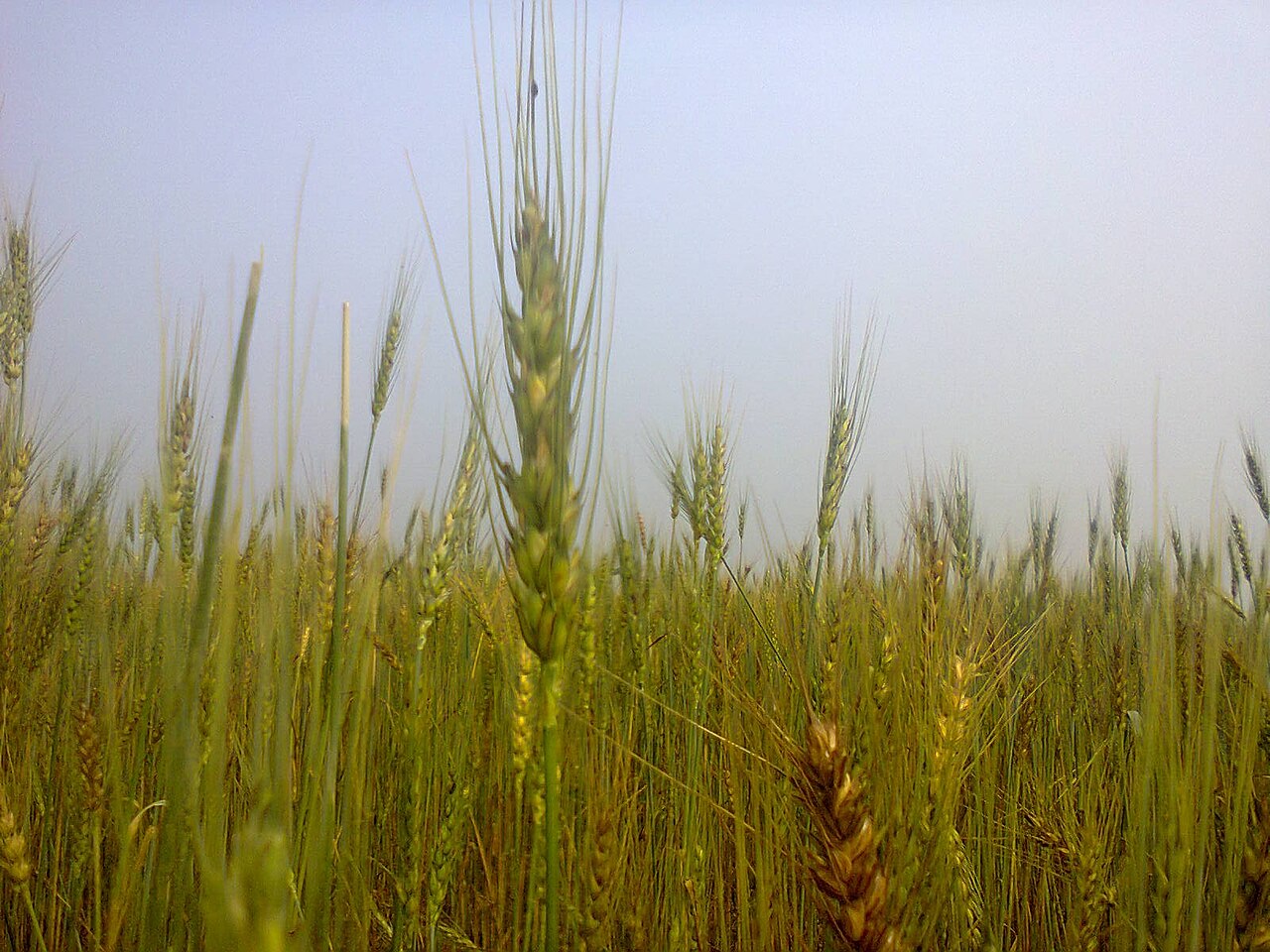
Step into a field on a February morning and you meet two seasons at once. The mist has not quite lifted, yet the midday sun already carries some heat. On one side the yellow mustard is drying to brown and the wheat ears are filling with hard grain; on the other the green boro rice seedlings grow bushier by the day, and the mango trees smell of blossom. At this turn from winter to summer the farmer has many jobs at once: harvesting here, sowing there, tending a standing crop somewhere else. In the Bengali calendar the month spans the end of Magh and the start of Falgun, which begins on 14 February. Plan well and work on time, and February's labour secures next season's harvest and income. Every month the Agricultural Information Service, the agriculture ministry agency that carries the advice of the Department of Agricultural Extension (DAE) and other state farm institutes to farmers, publishes a list of seasonal tasks in its magazine Krishikatha. Using that advice, here is February's work in the fields, crop by crop.
Why February is so busy
Bangladesh's farming year is usually divided into three seasons: rabi from mid-October to mid-March, kharif-1 from mid-March to mid-July, and kharif-2 from mid-July to mid-October. February falls at the very end of rabi, just before kharif-1 begins, so on the same land one crop is leaving while the next is being prepared. Harvest the winter crop late and the summer crop goes in late; sow the summer crop late and it becomes hard to bring home before the monsoon waters arrive. A month's delay ripples through the next two seasons, which is why farmers count February among their busiest months.
Boro rice: water, fertiliser and pests
In February boro rice is growing in the fields across most of the country. Boro is Bangladesh's biggest rice season and it depends entirely on irrigation, so the first job this month is to hold water in the field properly and make sure the growing plants get enough. The Agricultural Information Service advises keeping standing water in the field from panicle initiation, when the ear begins to form inside the stem, until the grain reaches the milk stage. A water shortage at this point means short ears and empty, chaffy grain.
That does not mean keeping the field flooded all the time. The Bangladesh Rice Research Institute (BRRI) has long promoted alternate wetting and drying. About 15 days after transplanting, a perforated plastic pipe is pushed into the field; when the water inside it drops about 20 centimetres below the soil surface, the field is irrigated again. Citing BRRI research, The Business Standard reported that the method can save up to 25 per cent of irrigation water and cut irrigation costs by 20 to 25 per cent. Where diesel or electric pumps are one of the heaviest costs of growing boro, that saving goes straight into the farmer's pocket. The one exception: the field must stay wet while the ears emerge and the rice flowers.
Urea, TSP and potash should be applied as needed. The Agricultural Information Service says the last instalment of urea should be top-dressed when the seedlings are 50 to 55 days old. Top-dressing means scattering fertiliser over the standing crop rather than working it into the soil before planting. The Agricultural Information Service also advises weeding the field and draining off the standing water before applying fertiliser. Weeds take a share of the fertiliser, and part of any urea scattered onto standing water is lost by floating off or escaping into the air. In the haor wetlands boro is planted early and there is a race to bring it home before the early flash floods of Baishakh; there, any delay in February's care can upset the whole season.
This is also when stem borers, which tunnel inside the stem and kill the shoot, and leaf folders, which roll the leaf and eat its green tissue, can strike. Insecticide is sometimes needed, but the DAE puts integrated pest management first. That means light traps at night to check which insects are about, perches for insect-eating birds, protecting beneficial insects, and spraying the right dose only when damage passes a threshold. Farmers are also told to seek advice from the local agriculture office quickly if they see signs of blast, bacterial leaf blight, tungro or ufra disease.
Wheat: weeds, irrigation and disease watch
For wheat growers in the north and west, February is the month the grain forms. Keeping the field weed-free and properly irrigated matters most now. In its advice for Magh, the Agricultural Information Service says wheat should be irrigated at 55 to 60 days, as the ears emerge; a shortage then leaves the grain shrivelled. Rats also multiply in wheat fields at this time, and they are best tackled by neighbours together rather than one farmer alone.
Among diseases, watch for powdery mildew and brown rust. Powdery mildew coats the leaves with a white, powdery fungal layer; brown rust, or leaf rust, leaves reddish-brown, dusty spots. Act as soon as symptoms appear. Farmers also need to be alert to wheat blast, first found in Bangladesh in 2016, which spreads fast in warm, humid weather once the ears are out. Infected ears turn white and dry out prematurely above the point of attack, and the grain inside does not fill. Anyone who spots such bleached ears should tell the upazila agriculture office at once, because the disease is hard to stop once it spreads.
From the second half of Falgun, the end of February and the start of March, early-sown wheat begins to ripen. The Agricultural Information Service repeats an old and reliable test for when to cut: bite a hard grain from the ear, and if it cracks with a crunch, the crop is ready. Where a combine harvester is used, the advice is to cut in the morning or late afternoon, so the grain does not shatter in the fierce midday sun.
Maize and jute: one crop out, another in
Winter, or rabi, maize is ripening now. The Agricultural Information Service advises harvesting when the husks on 70 to 80 per cent of the cobs have turned the colour of straw, and drying the grain thoroughly before storage, since damp grain grows mould. This is also sowing time for summer, or kharif, maize, and the hybrid varieties developed by the Bangladesh Agricultural Research Institute (BARI) are named as suitable for the season.
Jute growers' time is coming too. According to the Agricultural Information Service, the right time to sow jute runs from mid-Falgun to the end of Chaitra, roughly mid-February to mid-April. Sown in lines, jute needs 25 grams of seed per decimal of land. Line sowing makes weeding and care less laborious and gives every plant an even share of light and air, so it makes sense to plough and ready the jute land in late February.
Pulses and oilseeds: time to bring them home
This is the right time to harvest lentil, mung and chickpea. Once pulse plants ripen, the pods split and the seeds drop to the ground, so timing matters. After harvest, clear the field and ready it for the next crop. Pulses have an extra virtue: friendly microbes on their roots capture nitrogen from the air and hold it in the soil. The Agricultural Information Service advises leaving the base of the plants in the field at harvest, so that nitrogen stays in the ground for the next crop.
With mustard, timing is even finer. Once the pods are fully dry, the slightest touch splits them and the seed is lost, so the crop must be cut before the pods dry out completely. The Agricultural Information Service advises cutting oilseed crops when about 80 per cent of the crop is mature, which keeps seed loss low. Stacking the cut plants for a few days before threshing helps the seed come away with less trouble.
After mustard, the land should not lie idle. In many areas boro follows mustard; elsewhere mung or jute. Land is also being prepared at this time for sunflower and soybean. For these two oil crops, the right fertiliser is the key to a good yield, and the safest course is to test the soil and follow the recommendation of the upazila agriculture office.
Vegetables: winter crops out, summer seeds in
In the vegetable plot, February's change of season is plainest of all. Cabbage, cauliflower, carrot and radish are ready to lift. Leave them too long and cauliflower heads loosen, radish turns fibrous, and market prices fall, so it pays to harvest as soon as they mature.
At the same time it is sowing time for summer vegetables. Bottle gourd, pumpkin, okra and bitter gourd can go in now. The Agricultural Information Service also suggests starting amaranth stems (data), water spinach, aubergine and pointed gourd. Work in plenty of organic manure before sowing. Once the seedlings are up, keep them weeded and manage irrigation carefully, because the soil starts to dry fast from late February. For climbers such as bottle gourd, pumpkin and bitter gourd, many farmers first raise seedlings in small polythene bags and move them to planting pits later; fewer seedlings die, and the land stays free a little longer for the previous crop. It is worth putting up trellises and bamboo frames now, before the vines start to run.
As winter ends, fruit borers attack tomatoes more heavily. In its Magh advice, the Agricultural Information Service recommends pheromone traps and neem extract. A pheromone trap holds a chemical that mimics the insect's own scent; male moths are lured in and caught, which cuts breeding. In potato fields, if late blight appears, rotting leaves and stems, fungicide should be applied on the recommended schedule, and potatoes should be stored properly once lifted.
Orchards: the month of mango and litchi blossom
February is blossom month. Mango, jackfruit and litchi trees are flowering now, and protecting that blossom is what secures the season's fruit. Insecticide and fungicide both have a role, but timing is everything.
Mango blossom is prone to anthracnose now, which blackens the flower clusters until they dry and drop. The Agricultural Information Service advises spraying affected trees with a fungicide such as Tilt 250 EC or Dithane M-45 after the blossom appears but before the flowers open. The mango's other great enemy is the hopper, a sap-sucking insect that drains the blossom and makes it fall. An Agricultural Information Service article advises spraying a cypermethrin-group insecticide at 1 millilitre per litre of water once when the blossom is 10 to 25 centimetres long but not yet open, and again when the fruit is the size of a pea.
The Agricultural Information Service gives the fungicide doses too: half a millilitre of Tilt 250 EC per litre of water, or 2 grams of Dithane M-45 per litre. When the fruit reaches pea size, it advises another spray of a mancozeb-group fungicide mixed with the insecticide, so the young mangoes are not scarred by anthracnose. Spraying above the dose brings no benefit; it only raises the cost and harms the environment.
Mango trees also have their own rules on water. An Agricultural Information Service article on orchard care says it is best not to irrigate for a month before flowering, because watering then pushes out new leaves and reduces the number of flower clusters. From fruit set until the monsoon rains arrive, however, irrigating once a month is recommended. Later, when fruit flies and mango weevils become a threat, fruit bagging, wrapping each young mango in a special paper bag, is described as the most effective and profitable protection.
Not spraying while the flowers are fully open matters, because that is when honeybees and other pollinators visit; harm them and fewer fruit set. For jackfruit, Bordeaux mixture is advised against fruit rot. Anyone planning a new orchard can plant saplings now, as long as they can be watered regularly, since dry months lie ahead.
Fish: waking up the pond
In winter, cold water means fish eat little and grow slowly. As temperatures climb in February, both appetite and growth pick up, so regular water changes and feeding matter now. The Agricultural Information Service notes that fish grow fast at this time and need suitable feed.
Organic manure is added to ponds to raise natural food, the tiny plants and animals that float in the water. For anyone preparing or renovating a pond, the Agricultural Information Service advises 1 kilogram of lime and 10 kilograms of cow dung per decimal. Lime corrects acidity and reduces germs; dung boosts natural food. To keep the water in good condition, the Agricultural Information Service also advises scattering 1 kilogram of quicklime per decimal. If sores appear on fish at the end of winter, it is best to consult the upazila fisheries officer without delay.
Cattle and poultry: care in changing weather
The shift from winter to summer raises the risk of disease in livestock and poultry. Add green grass to the dry straw in the diet of cattle and goats. Fresh grass supplies vitamins and minerals and improves milk and meat output. Timely vaccination and a clean shed are essential for keeping disease away.
The Agricultural Information Service advises preventive vaccination for poultry and cattle at this time, and vitamins where needed. The upazila livestock office can advise on which vaccines are due and when. Days are warming but nights are still cold, so poultry houses should be kept free of cold draughts at night while staying well ventilated by day. As the days warm, animals and birds drink more, so clean drinking water should be available in sheds and poultry houses all day.
February's work at a glance
The jobs are spread across the month, but a rough order helps. Combining the Agricultural Information Service's advice for Magh and Falgun, February's main tasks look like this:
- Boro: at 50 to 55 days, weed, drain and top-dress the last urea; keep water in the field from panicle initiation to the milk stage.
- Wheat: irrigate at 55 to 60 days; watch for disease and rats; cut at month's end when the grain crunches.
- Rabi maize: harvest when 70 to 80 per cent of husks are straw-coloured; sow kharif maize.
- Jute: ready the land late in the month; line-sow from mid-Falgun.
- Pulses and mustard: cut on time, leave the plant bases in the soil, prepare the land for the next crop.
- Vegetables: lift winter crops; sow gourds, pumpkin, okra and bitter gourd; set pheromone traps in tomatoes.
- Mango and litchi: fungicide and insecticide before the flowers open, never during full bloom.
- Ponds: change water, feed, add lime and organic manure.
- Livestock and poultry: green grass with the straw, vaccination, clean housing.
Work done on time, income next season
February's list is long, but behind every task lies one rule: time lost cannot be recovered. Once mustard pods split, the seed cannot be gathered; once mango blossom falls, that season's fruit is gone; once boro runs short of water at flowering, empty grain will not fill. Done on time and done right, February's farm work raises yields and farmers' income.
Weather and soil vary from place to place, so no single rule fits everyone. For advice specific to their area, farmers can contact the sub-assistant agriculture officer in their union or the upazila agriculture office. They can also call the Agricultural Information Service's Krishi Call Centre on 16123 for help with crop problems. Get each job done on time and in the right way, and the busy fields of Falgun hold the promise of full granaries in Chaitra and Baishakh.
Photo: A wheat field, মিলন / Wikimedia Commons (CC BY-SA 4.0)
Comments
(0)