
Bangladesh is an agricultural country. Most of its people make a living from the land, and the farm sector underpins its food security, its jobs and its growth.
The contribution
- GDP: agriculture provides about 13–15 per cent of national output (2023 estimates), led by rice, wheat and maize.
- Employment: some 40–45 per cent of all jobs, and the main livelihood of the countryside.
- Food security: rice, wheat, potato and vegetables grown at home have cut dependence on imports.
- Exports: tea, jute, leather and fruit earn foreign exchange; jute remains the historic export.
- Raw materials: jute, cotton and sugarcane feed the jute, sugar and textile industries.
- Poverty: rising farm output has cut rural poverty; small farms and livestock have made many families self-reliant.
- Agro-processing: a growing industry supplying home and export markets.
- The local economy: markets, transport, distribution and retail all turn on the harvest.
The challenges
Crop losses to a changing climate; shrinking farmland; too little modern technology and machinery; farmers who cannot get a fair price; floods and droughts.
What is needed
Research and better technology; irrigation and soil conservation; organic and environmentally sound production; easy credit and subsidy for small farmers; competitiveness in export markets.
Agriculture is the backbone of the economy. Strengthen it, and the whole country stands straighter.
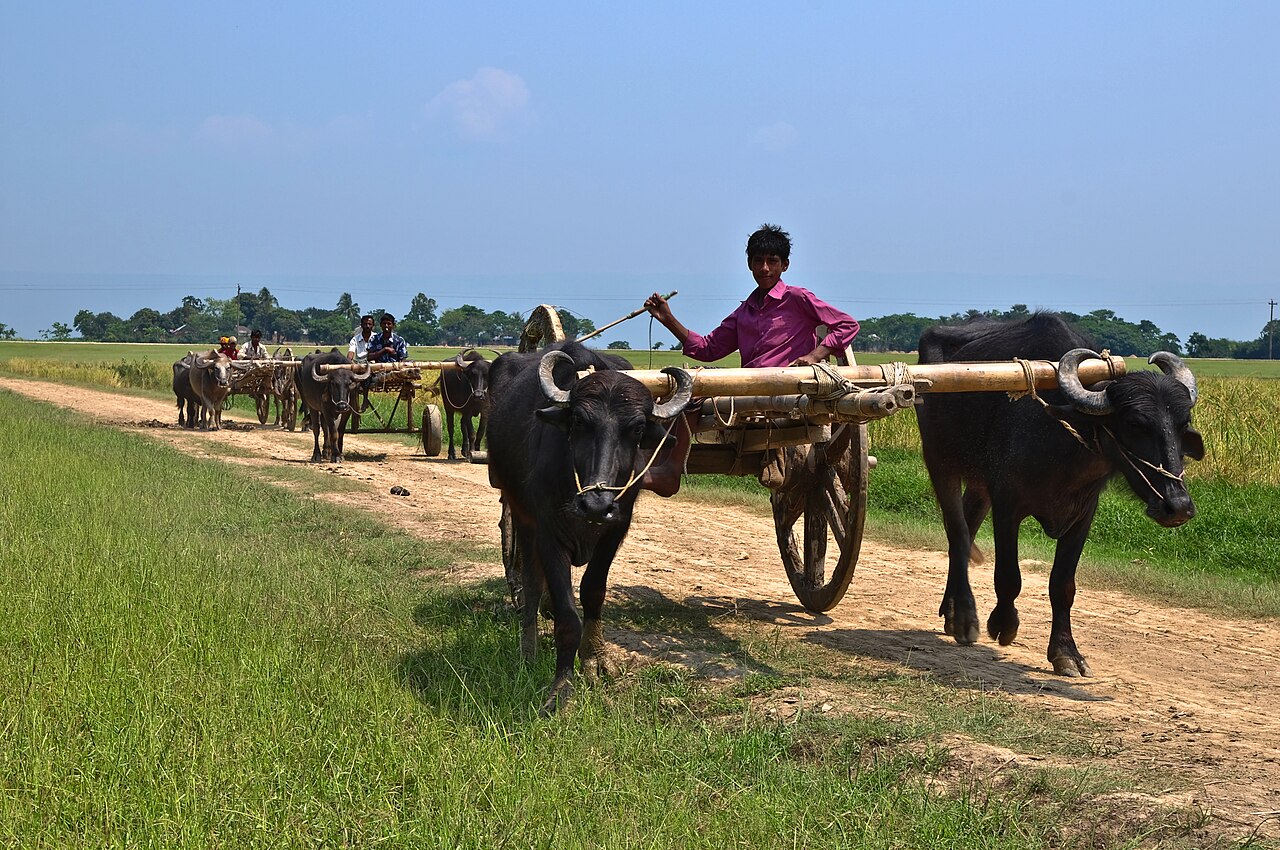
Photo: Buffalo carts carrying paddy in the haor — Balaram Mahalder / Wikimedia Commons (CC BY-SA 3.0)
Comments
(0)