
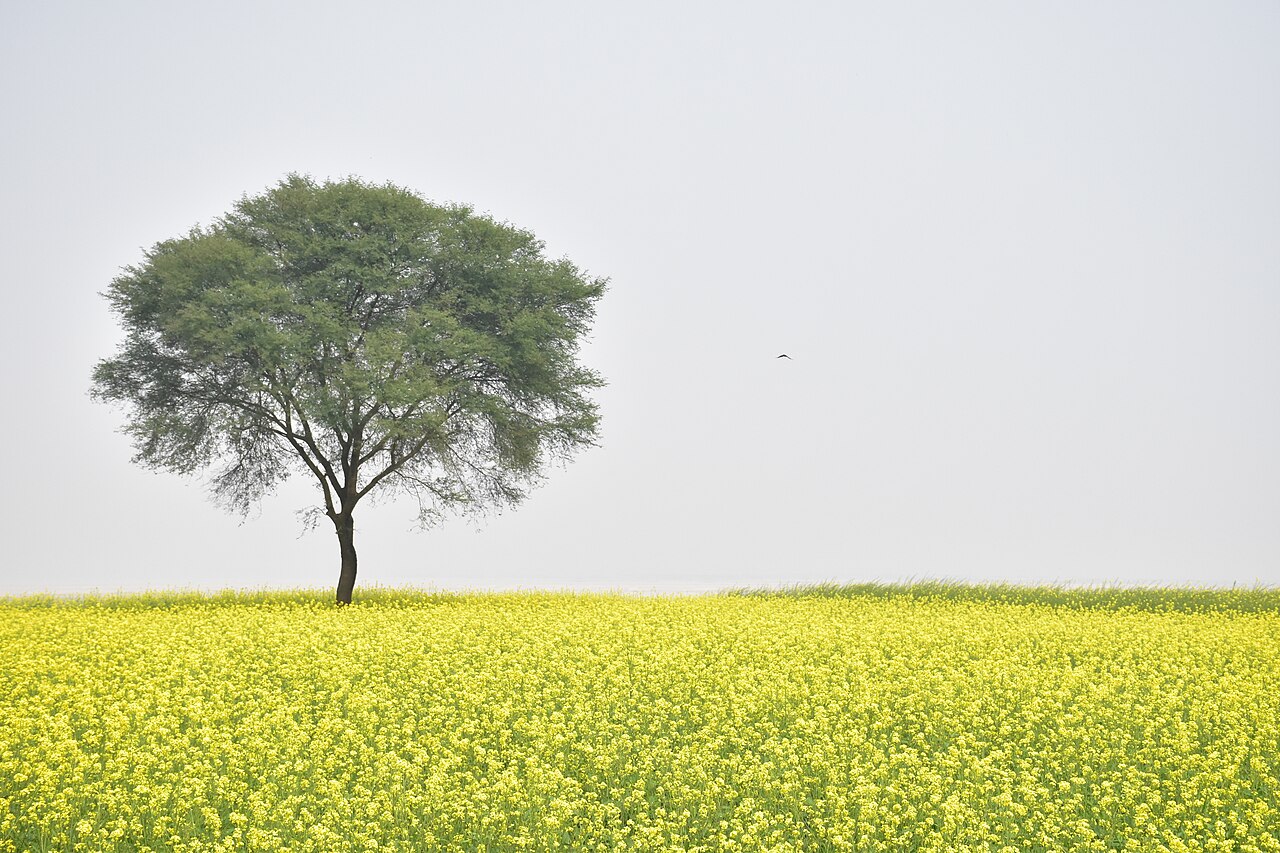
Walk into the fields at dawn and dew hangs on the tips of the young rice seedlings, while in the distance a yellow mustard field blurs in the fog. A farmer wrapped in a shawl walks the ridge of his seedbed, checking whether the cold has turned his seedlings yellow. January is the most important stretch of Bangladesh’s winter, or rabi, farming season; in the Bengali calendar it covers the end of Poush and the start of Magh. Wheat, potato, mustard, pulses and winter vegetables stand in the fields, while the year’s biggest rice season, boro, is just getting under way. The care, planting and management of these weeks decide the harvests of the months ahead.
A cold month, a busy field
January is usually the coldest month in Bangladesh. Cold waves sweep through more than once, and in the north dense fog can hide the sun for days. On 8 January 2018 the temperature at Tetulia in Panchagarh fell to 2.6 degrees Celsius, the lowest ever recorded in the country. Cold like that is as hard on crops, cattle and pond fish as it is on people.
Every month the Agriculture Information Service, part of the Ministry of Agriculture, publishes advice on the month’s farm work in its magazine Krishikatha, and field staff of the Department of Agricultural Extension carry it to farmers. What follows sets January’s tasks out crop by crop, drawing on that advice for Poush and Magh and on the natural cycle of the crops.
Boro rice: caring for the seedbed
Around half of Bangladesh’s rice comes from the boro season, so the country’s food security starts, to a large extent, in January’s seedbeds. The main tasks there are:
- Keep water on the seedbed without interruption.
- Treat disease or pest attacks in the seedbed at once.
- When seedlings are 30 to 35 days old, get ready to transplant them to the main field.
The biggest winter risk is cold injury. In severe cold, young seedlings turn yellow, stop growing and sometimes die. The advice of the Department of Agricultural Extension and the Bangladesh Rice Research Institute is to cover seedbeds with clear polythene during cold waves, so that warmth is held in. The cold water in the seedbed should be drained in the morning and replaced with fresh water, and each morning the dew that collects on the seedlings should be shaken off; two people pulling a rope across the tops of the seedlings will do it.
In many areas farmers now build seedbeds under polythene stretched over a bamboo frame, which they call polythene-shed seedbeds. The daytime sun warms the inside, night fog does not settle directly on the seedlings, and they stay green and fresh through the cold. During a long cold wave, when the cover stays on round the clock, both ends are left partly open so that air can move inside.
The Agriculture Information Service’s advice for Poush says a small dose of urea and gypsum in the seedbed brings good results, helping seedlings yellowed by cold to green up again. Too much makes them soft and spindly, so the rule is a light hand.
Boro rice: preparing the land and transplanting
Alongside the seedbeds, work on the main fields begins in January. The land is ploughed well and levelled with a ladder, so that irrigation water stands evenly everywhere. In an uneven field water pools in some places and dries out in others, and the seedlings grow unevenly. Before the final ploughing the right amount of fertiliser goes in; how much a field needs is best decided from a soil test or the upazila agriculture office’s recommendation.
According to the Agriculture Information Service, seedlings 40 to 45 days old give good results in winter boro. Planting in lines 25 centimetres apart, with 15 centimetres between hills and two or three healthy seedlings per hill, gives a good yield. Line planting also makes later weeding, fertilising and pest checks much more manageable.
After transplanting, urea is applied in three splits: the first 15 to 20 days after transplanting, the second at 30 to 40 days and the third at 50 to 55 days. In many areas farmers use urea briquettes instead of granular urea, pushing them into the soil between hills within 7 to 10 days of transplanting; because the briquettes dissolve slowly, less fertiliser is wasted. For pests, the advice is integrated pest management first, meaning clean cultivation, catching insects by hand or with nets, and protecting beneficial insects, with chemical pesticides as the last resort.
Irrigation is the biggest cost of growing boro. Under the alternate wetting and drying method developed by the Bangladesh Rice Research Institute, water is not kept standing in the field all the time. A perforated pipe is set into the soil to show the water level, and the field is irrigated again only once the water has dropped to a set depth below the surface. It saves irrigation water and fuel without cutting the yield, and farmers can learn about it from the upazila agriculture office before transplanting.
Choosing a variety is also a January decision. Boro farmers grow BRRI dhan28, BRRI dhan29 and many other varieties from the Bangladesh Rice Research Institute, and new ones are released every year. Which will yield best in a given area, and whether an early or late variety makes sense, depends on the height of the land, access to irrigation and the plan for the following crop. The local agriculture officer’s advice is useful here.
Winter vegetables: care to the finish
January is the peak of the vegetable season. Cauliflower, cabbage, radish, carrot, bean, brinjal and tomato stand in the fields and need continued care. Straw or leaf covers help protect seedlings and young plants from severe cold and fog.
Soil moisture falls in winter, so the Agriculture Information Service advises irrigating vegetable fields as the crop requires. If a handful of soil squeezed in the fist crumbles apart, it is time to water. Weeds should be cleared promptly, since they take the water and nutrients meant for the vegetables.
The tomato fruit borer is one of the month’s main problems. The Agriculture Information Service recommends setting 15 pheromone traps per bigha to control it. A pheromone trap holds a chemical signal that mimics the scent of the female moth; males are drawn in and caught, and breeding falls. Neem-based products can be used as well. At the end of the season, pulling up tomato plants with half-ripe fruit still on them and hanging them upside down in a cool room lets the tomatoes ripen slowly and keep for a long time.
In onion and garlic fields this is the time to earth up around the plants, irrigate and top-dress. Mid-season and late rabi vegetables also need irrigation, fertiliser, staking and trellising.
Wheat: three critical moments for water
Wheat sown in November and December grows fast in January, and giving it the water it needs is the month’s main job. With wheat, though, timing is everything.
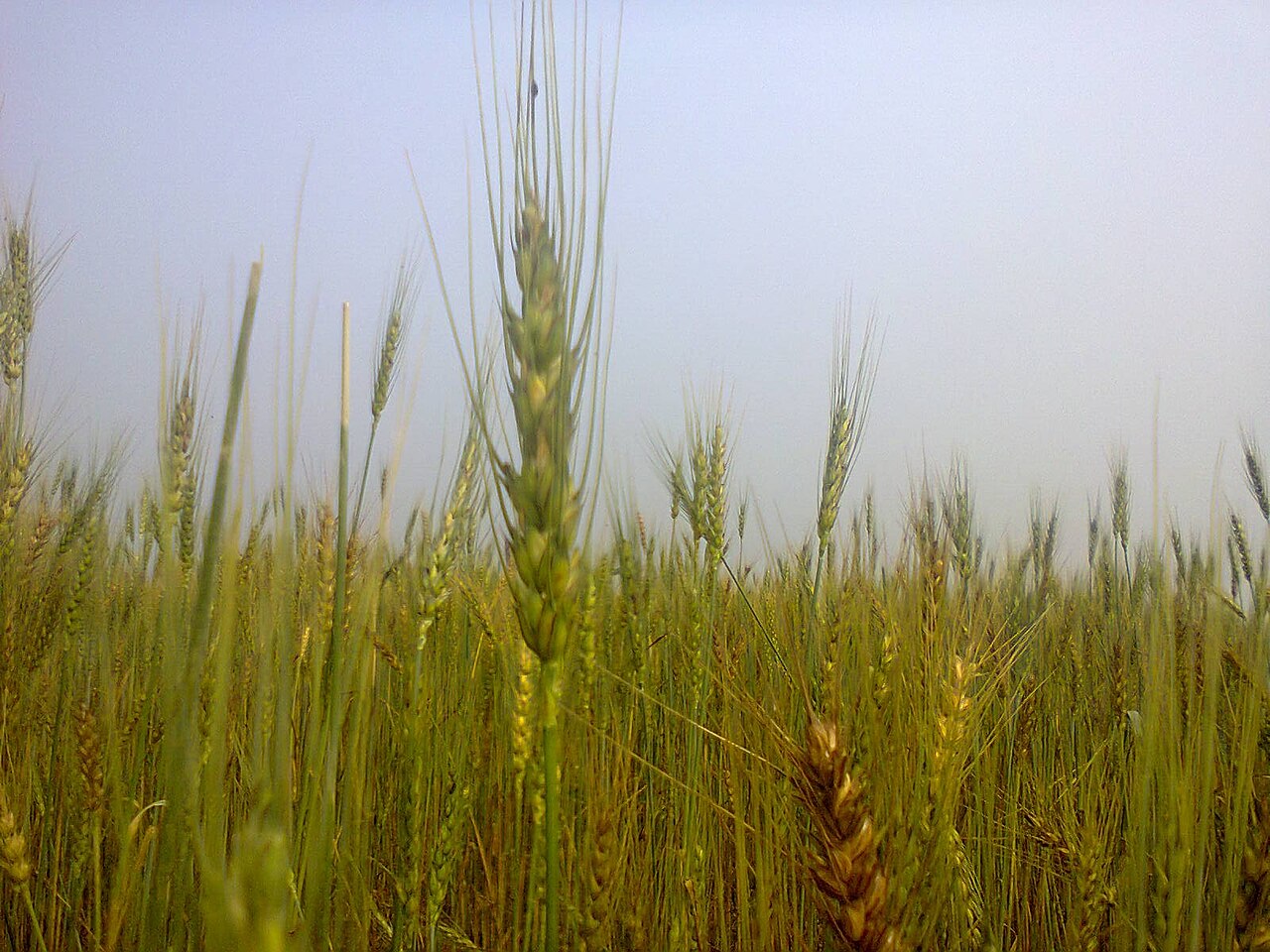
According to the Agriculture Information Service, when the seedlings are 17 to 21 days old the field should be weeded, 30 to 35 kilograms of urea per hectare applied and the first irrigation given. At this stage new roots emerge from the crown of the plant, and if the soil is dry the plant is weakened. The second irrigation comes when the crop is 55 to 60 days old, or as the ears emerge. Another irrigation at grain filling plumps up the grain and raises the yield.
Wheat also faces a newer threat, blast disease. It was first detected in Bangladesh in 2016, the first outbreak of wheat blast in Asia. The risk rises when the weather is warm and humid as the ears emerge; infected ears bleach white and dry out, and the grain fails to fill. From late January, the ears should be watched regularly and any suspicion reported to the agriculture office.
Where seedlings have come up too thickly they should be thinned so that each plant has room. Disease should be treated with a suitable pesticide when it appears, ideally after having it identified at the upazila agriculture office. Rats also become a menace in wheat fields at this time. When one farmer kills rats alone, more move in from the next field, so the advice is for neighbouring farmers to control them together.
Maize: soil to the base, fertiliser into the soil
Rabi maize stands between knee and waist high in January. The main jobs are applying the right amount of fertiliser and taking preventive measures against pests.
The Agriculture Information Service advises earthing up soil around the base of maize plants and working urea well into that soil. The fertiliser is not lost to the air or the sun, and the firmer base keeps plants from lodging in the wind. The crop is irrigated as needed and the dry lower leaves are snapped off and removed. Where potato, leafy greens or pulses have been planted between the rows as companion crops, they need looking after too.
Pulses: weeds, moisture and harvest
Lentil, grass pea (khesari), mung and other pulses need regular weeding, because the short plants are quickly smothered. If the soil dries out, a light irrigation keeps it moist, though standing water rots the base of the plants.
Early-sown pulses begin to ripen towards the end of January. The Agriculture Information Service advises harvesting once the crop is 80 per cent ripe, and cutting the plants a few inches above the ground rather than pulling them up. The roots stay in the soil; their nodules hold nitrogen fixed from the air, and as they rot that nitrogen feeds the next crop.
Mustard and oilseeds: from flower to seed
The loveliest sight in January’s fields is the yellow of mustard in flower. If the field is dry at flowering, it should be irrigated. Mustard aphids multiply at this time, and any pest attack calls for quick action. Honeybees pollinate the flowers and raise the yield, so if a pesticide is needed it is wise to follow an agriculture officer’s advice on protecting the bees.
Early mustard varieties ripen in January itself. Left too long, mustard and linseed pods burst open in the sun and the seed falls to the ground, so the Agriculture Information Service advises harvesting at 80 per cent ripeness. Once the mustard is cut, many farmers transplant boro into the same field.
Potato: the season of late blight
For potato farmers January is a month of worry. In foggy, overcast, damp weather, late blight can destroy a whole field within days. Correct irrigation and preventive measures against disease are therefore the month’s priority.
The Agriculture Information Service advises spraying without delay a fungicide such as Dithane M-45, Secure or Indofil at 2 grams per litre of water every 7 days to control late blight. Irrigation should stop in any field where the disease has appeared, since it spreads fast in wet conditions. Top-dressing with urea when the plants are 10 to 15 centimetres tall, earthing up, mulching and weeding continue alongside.
Early-planted potatoes are ready to lift towards the end of January, and the field should be checked carefully first. The advice is to cut the plants level with the ground when the crop is 90 days old and to lift the tubers 10 days later. The skins harden, they do not peel during lifting and fewer rot in storage. After lifting, the potatoes are dried in the shade and damaged or rotten tubers sorted out before they go into the house or the cold store.
Fruit trees: getting ready for mango blossom
Mango trees begin to flower from late January, and anthracnose can make both the blossom and the young fruit drop. The Agriculture Information Service advises spraying a fungicide once before flowering and again when the fruit is the size of a pea. Mango hoppers also need to be controlled at this time.
Fruit, medicinal and timber saplings planted last monsoon need care as well: loosen the soil around the base, clear weeds and water regularly through the dry season.
Pond fish: less food, more watching
As pond water cools in winter, fish move and eat less and grow more slowly. Even so, the water must be kept clean and the fish fed regularly. Feed should be matched to how much the fish actually eat, since uneaten feed rots on the bottom and fouls the water.
Dropsy, a swelling of the belly, can strike carp in winter. The Agriculture Information Service advises mixing 100 milligrams of Terramycin or streptomycin into each kilogram of feed and giving it for 7 days in a row, though it is best to consult the upazila fisheries officer before using any medicine. Ulcer disease is another familiar winter problem. To prevent it, fisheries officials advise adding 1 kilogram of lime and 1 kilogram of salt per decimal before the cold arrives, at the end of Ashwin or the start of Kartik (around mid-October). Farmers who missed that step should keep a close eye out for red spots or sores on their fish.
On a bright afternoon the pond water warms a little and the fish become more active, so on winter days feeding around midday rather than early morning means the fish eat better. Trimming branches of trees on the bank lets more sunlight onto the water and reduces the risk of fallen leaves rotting in it.
Cattle and poultry: protection from the cold
Keeping the cattle shed warm is essential. At night, closing the open side of the shed with sacking or polythene keeps cold draughts out. The Agriculture Information Service says it is very important in winter to cover cows with thick jute sacking. Straw spread on the floor keeps it dry.
Cattle need enough feed and clean water. Green fodder is scarce in winter, so concentrates and as much fresh grass as possible should be given alongside straw. A clean shed and good-quality feed are the first defence against disease. Pneumonia is more common in goats in winter; a runny nose, coughing or laboured breathing calls for prompt treatment on a veterinarian’s advice.
Poultry houses need winter preparation too: cover the windows with sacking at night and spread dry rice husk or sawdust on the floor. The Agriculture Information Service suggests giving chickens and ducks vitamins A, C, D, E and K and folic acid in winter to help prevent disease, on a veterinarian’s advice. Ducks should also be vaccinated against duck plague and cholera according to schedule.
One month’s work, a year’s harvest
January’s list of tasks is long and the weather is often against the farmer. But every job done this month pays off in the months that follow: healthy seedlings become the boro harvest of April and May, well-watered wheat becomes the golden ears of March, and potatoes saved from blight become a year’s stored food. The right farm work in January lays the foundation of the year’s yield.
January’s main jobs at a glance:
- Boro: cover seedbeds with polythene in cold waves, change the water and shake off dew each morning, prepare the land, transplant in lines.
- Wheat: first irrigation and urea at 17 to 21 days, then water again as the ears emerge and at grain filling.
- Potato: fungicide every 7 days against blight, no irrigation in affected fields, cut the plants at 90 days and lift 10 days later.
- Mustard and pulses: harvest at 80 per cent ripeness.
- Vegetables: irrigate as needed, weed, set pheromone traps for tomato.
- Pond and shed: clean water, measured feed, warm cattle and poultry houses, vaccinations on time.
When an unfamiliar disease or pest appears, it is safer to contact the union’s sub-assistant agriculture officer or the upazila agriculture office than to buy chemicals on guesswork. Free advice is also available by phoning the Agriculture Information Service’s Krishi Call Centre. In a month wrapped in fog, the right information at the right time is a farmer’s best help.
Photo: A mustard field in winter, Kamruzzaman Raihan / Wikimedia Commons (CC BY-SA 4.0)
Comments
(0)