
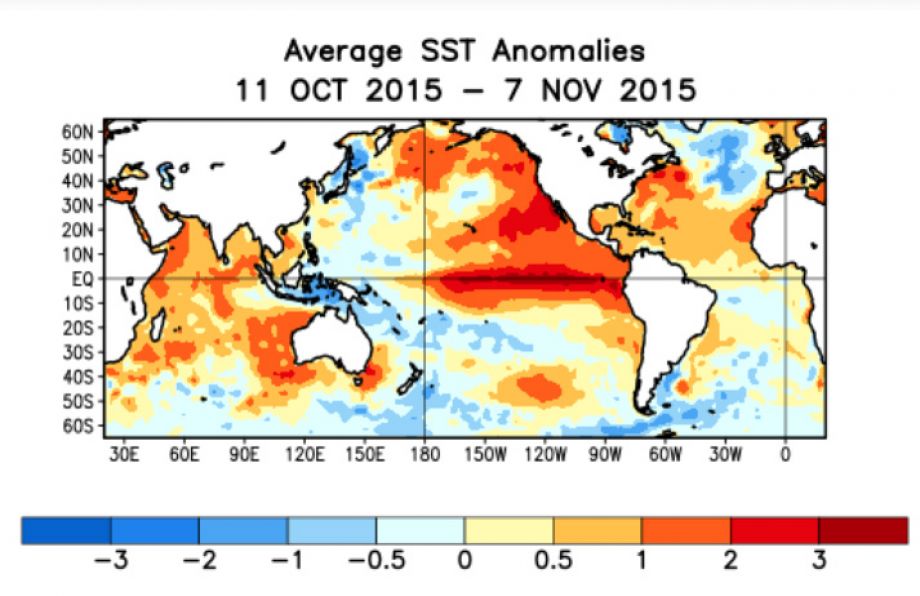
Researchers from CSIRO, Australia's national science agency, and the University of Melbourne have identified conditions that make it possible to predict some El Niño and La Niña events up to a year ahead, twice the roughly six months over which they can usually be forecast with confidence.
After analysing more than 7,500 historical forecasts of the El Niño-Southern Oscillation (ENSO) from climate models developed in nine countries, the team found that the state of the Pacific when a forecast starts, whether El Niño, La Niña or neutral, is a strong clue to how reliable that forecast will be 12 months later. Forecasts begun during La Niña conditions performed consistently well a year ahead, while those started from neutral conditions were far less reliable. The study was published in Science Advances.
"We can identify which forecasts deserve greater confidence and potentially warn the public about El Niño events much earlier," said lead author Dr Nandini Ramesh, a senior research scientist at CSIRO. She said the team is still a "few steps away" from applying the findings to the models used by forecasting agencies.
The research comes as the current El Niño keeps intensifying in the Pacific. World Meteorological Organization secretary-general Celeste Saulo said this week the event "could be unprecedented in strength", with impacts extending into 2027, and UN humanitarian chief Tom Fletcher called it a "wrecking ball" of heat, drought and flooding.
Earlier warning matters most for water and farming. Davide Faranda, research director at France's CNRS, said governments can store and distribute water more carefully, manage reservoirs and groundwater, adjust farming schedules and irrigation, and prepare communities for drought or floods. Farmers, he said, can cut losses by changing planting dates, irrigating at cooler times of day, storing water ahead of droughts and protecting crops and livestock from extreme heat.
El Niño cannot be stopped, but Faranda noted that a warming climate compounds its effects: 2025 was the third-warmest year on record, hotter than the El Niño year of 2016, despite a cooling La Niña.
Photo: NOAA / Wikimedia Commons (public domain)
Source: Euronews

Comments
(0)