
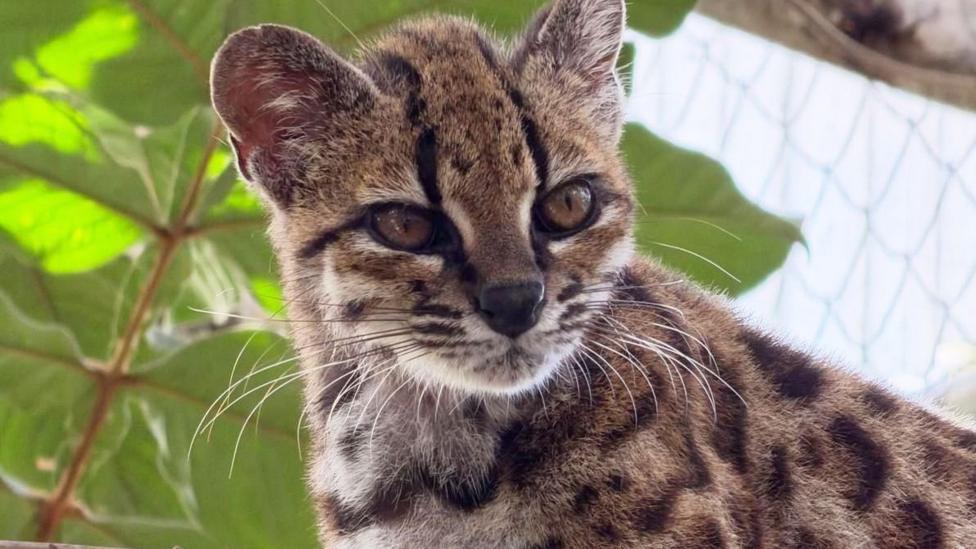
A small spotted cat recovered from the forests of Bolivia has been declared a species new to science. About the size of a domestic cat, the animal had been hiding in plain sight: its spots and stripes look so much like those of other wild cats that it was routinely confused with them. DNA analysis has now shown it belongs to a wholly separate lineage. The study, published in the journal Current Biology, names the animal Leopardus tilcayo.
Tiger cats are small, spotted wild cats found across South and Central America, from Costa Rica down to Bolivia and Argentina, and even experts struggle to tell them apart. Until recently only two species were formally recognised, the northern tiger cat or oncilla (Leopardus tigrinus) and the southern tiger cat (Leopardus guttulus); the clouded tiger cat (Leopardus pardinoides) was later accepted as a third. The new research suggests the true count is five, not three.
The discovery began with a ten-year-old cat nicknamed "Tigrino" at a Bolivian sanctuary. A local resident had rescued it from the forest, at first taking it for a domestic kitten; as it grew, it became clear that it did not behave like one. Paola Nogales-Ascarrunz, a researcher at the Universidad Mayor de San Andrés in La Paz, noticed the animal looked unusual while volunteering at the sanctuary. She had also heard of sightings of small wild cats in the dense forests of the country's Yungas region that nobody had investigated.
To solve the puzzle she teamed up with researchers in several countries, who traced the family history of the tiger cats using DNA from living animals and museum specimens. So far the rescued cat is the only confirmed member of the species, though the scientists believe more live in the wild. "There are very few records or photos, and there were no specimens in museums. It was hidden, in a way, because nobody was looking for it," said Eduardo Eizirik, a conservation geneticist at the Pontifical Catholic University of Rio Grande do Sul in Brazil.
Tiger cats are considered at risk of extinction from deforestation, habitat loss and illegal hunting. Dr Caroline Sartor, a co-researcher at the University of Oxford's Wildlife Conservation Research Unit, said the finding matters for conservation because a species cannot be protected until scientists know what it is and where it lives. Identifying it is only the first step; its range, ecology and the threats it faces in the wild still have to be worked out. These are cat-sized animals, she noted, so it is tempting to assume everything about them is known, yet the discovery shows how much biodiversity in parts of the world is still waiting to be found.
The result may reshape cat taxonomy more broadly. All wild and domestic cats belong to the family Felidae, which officially has 41 recognised species; the new find, and the likelihood of several tiger cat species, could push that to 44 or 45. Andrew Kitchener, a mammal specialist at National Museums Scotland who was not involved in the study, said the small spotted cats of South America have long been known as a "taxonomic nightmare" because they look so similar and museum specimens are scarce. Whole-genome sequencing and more wild samples from known localities are finally untangling the knot, he said, and further surprises may follow.
Jonas Lescroart of the University of Antwerp in Belgium said the work also underlines the value of natural history collections: without permanently preserved specimens there might not have been enough data to interpret the Bolivian animal correctly. For conservation planners the lesson is direct. Only once each species is understood can protection plans be drawn up for the cats and their forest habitat, and these small predators have long received far less attention than their larger relatives, the lions, leopards and tigers.
Source: BBC Bangla


Comments
(0)