
Researchers at North Carolina State University have named the insect behind more than a decade of unexplained damage to blueberry roots: a longhorn beetle, Prionus imbricornis, whose larvae can grow to five inches long. North Carolina is the first state to document the species feeding on blueberry bushes.
Reports of unidentified Prionus larvae damaging blueberry roots go back to 2010. The trouble was finding and naming them. The larvae stay underground near the roots, and those of different longhorn species look much alike, so a visual identification is unreliable.
"Before now, researchers often just assumed the species of Prionus on their commodities based on adult identification," said Kenneth Geisert, a graduate student in the College of Agriculture and Life Sciences and the study's lead author. A wrong guess, he said, could mean a treatment that does not fit the problem and harm to non-target insects.
The team worked on six blueberry farms in Pender, Sampson, Bladen and New Hanover counties. They caught adults in black panel traps baited with sex pheromones, then used genetic barcoding, which compares short standard stretches of DNA with reference sequences from known species, to match larvae from the fields with adult beetles. The match with P. imbricornis was 98 to 99 per cent.
Females usually lay eggs in soil near the roots of hardwood trees, and the larvae feed on the roots, sometimes killing the tree. The adults do not feed.
Knowing the pest leaves growers with a hard problem. "There are no insecticides currently labeled against this pest in blueberries," said Lorena Lopez, an assistant extension professor and co-author. She has begun testing insecticides, with a focus on timing applications to the beetle's reproductive cycle so that larval development is disrupted before the roots are badly damaged.
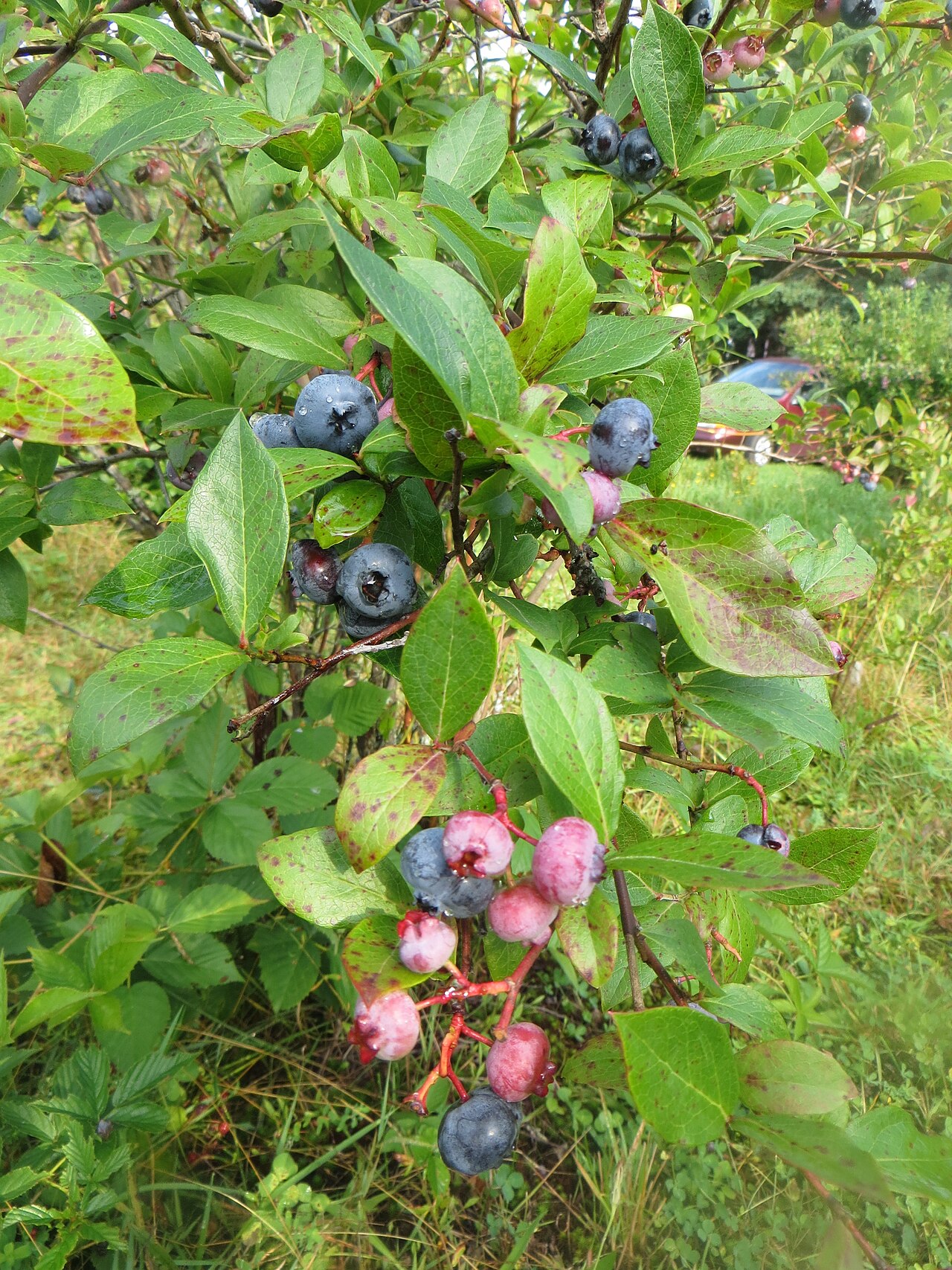
Photo: Jlamit / Wikimedia Commons (CC BY-SA 3.0), blueberries on a Michigan farm
Source: ScienceDaily Agriculture & Food

Comments
(0)