
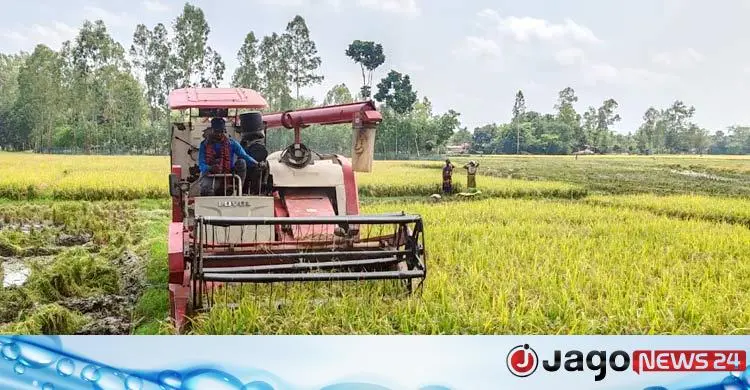
Farmers in Dinajpur face a severe shortage of labourers during the Irri-Boro harvest. Higher fuel prices, rain and a shortage of harvester machines mean that cutting rice now costs twice as much, leaving farmers in serious difficulty.
According to the district office of the Department of Agricultural Extension (DAE), 23 percent of the rice had been harvested by Wednesday, 13 May, with rain slowing harvesting and threshing. Farmers say pest attacks were low and rain reduced irrigation needs, but grains are lighter this year and untimely rain and wind flattened plants, cutting yields.
Machines versus workers
Harvesting by hand yields about one more sack (77.5 kg) of rice per bigha and all the straw, farmers say, while combine harvesters leave a sack less and damage the straw. But both options now cost double:
- Dabirul Islam of Sundarban village grew Boro on 5 bighas and had to pay Tk 16,000 an acre to labourers; harvesters charge the same.
- Rabiul Islam of Jamgram, Phulbari, said harvesters charged Tk 8,000 to Tk 10,000 an acre last year and Tk 16,000 this year.
- Abdur Rahman of Kamalpur said three of the five harvesters in his area are out of order.
- Anisur Rahman of Umarpail said leaseholders are losing money while landowners gain, and those who grew BRRI dhan90 have profited well because it is fetching a good price.
Why harvesters cost more
Harvester operators Ektarul Islam from Natore and Kashem Ali from Sylhet, working in Kamalpur union, said the government is no longer providing new subsidised harvesters, and the old machines often break down while spare parts are scarce and costly. Fuel prices are higher, operators' wages have risen, waterlogged fields need two helpers instead of one, and nobody will run a harvester in the rain for fear of lightning.
Official figures
DAE additional deputy director Md. Afzal Hossain said Boro was grown on 174,840 hectares in Dinajpur this season, with a production target of 770,050 tonnes. The district has 594 government-subsidised harvesters, and farmers have been advised to use machinery despite the labour shortage.
Source: Jagonews24. First published in Bengali on The Agro News.

Comments
(0)