
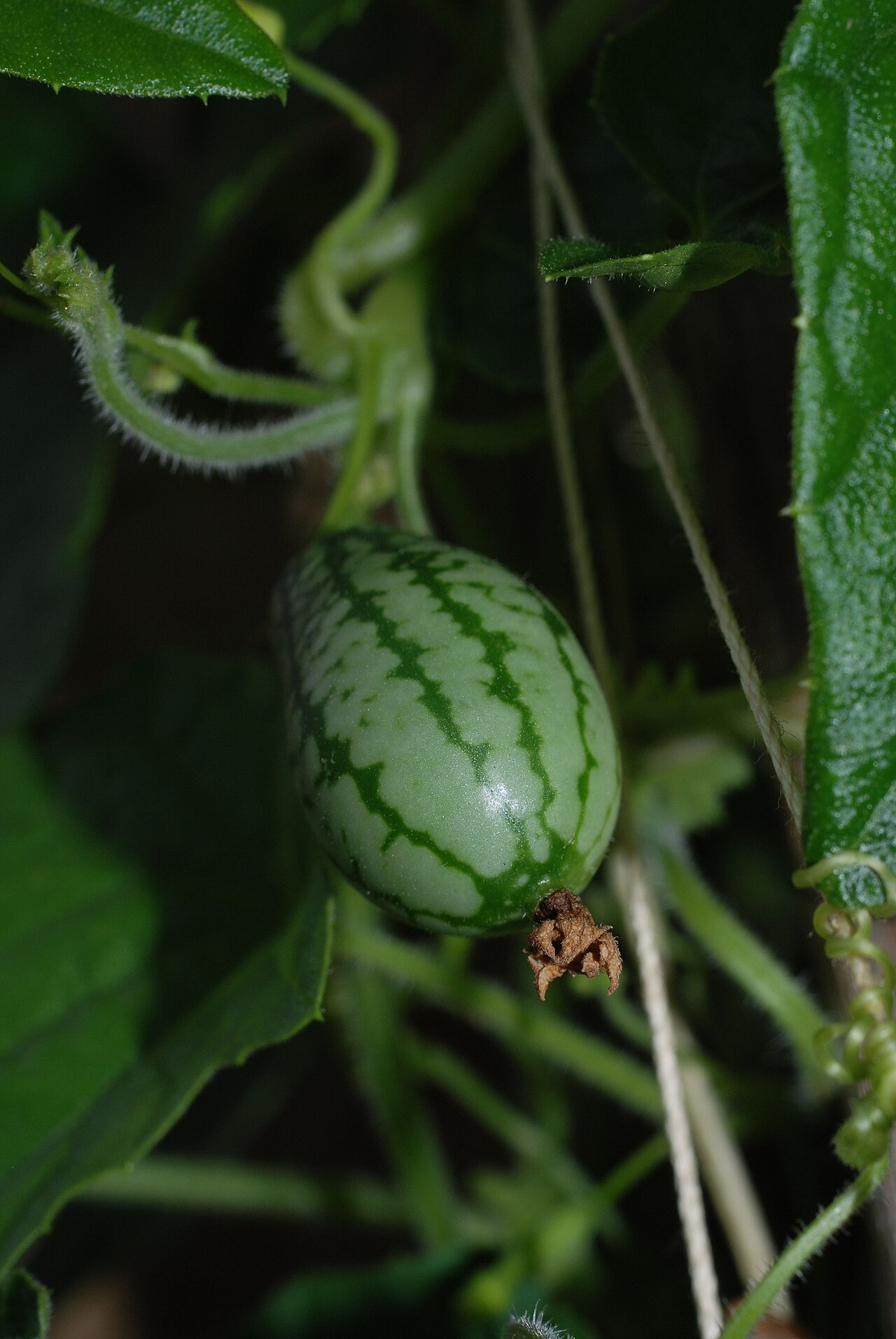
Cucamelons look like miniature watermelons the size of a grape, but taste of crisp cucumber with a sour, citrus tang. The plant, Melothria scabra, is a climbing member of the cucumber family from Mexico and Central America, and it is still rarely seen on South African shelves.
Rina Meijer of KleinKraak Boerdery, between Bapsfontein and Kempton Park in Gauteng, first saw the fruit in a photo on Pinterest. She bought seed, ran a small trial and, a year later, planted a bigger area. The farm now grows cucamelons on one hectare, delivers the fresh fruit to Tshwane Market for greengrocers and retailers, and sells pickled cucamelons at the Pretoria Farmers' Market and online. Fresh, they go into salads and drinks or are eaten as a snack; pickled, they turn more sour and are used in Mexican dishes.
The plant likes warmth: it does best above 20°C and, Meijer says, thrives around 30°C, and it is killed by frost. She sows seed directly into soil enriched with cattle manure from a neighbour, under irrigation, at the start of September. Germination is slow; after a month the plants are about 1 cm tall. Harvest starts three to four months after planting, in December, and ends when the first frost arrives in May. Although the plant is a perennial, she removes the dead plants and roots and sows again each September.
Once the vines reach the trellis they grow quickly, which also makes them suitable for vertical gardens. The fruit should be hand-picked when firm and the size of a grape or olive, which keeps the plants producing. In season she irrigates daily, about 500 ml of water. "Although cucamelons are relatively easy to grow, high yields and quality fruit depend on suitable site selection, trellising, irrigation, pest management, and harvesting practices," Meijer said.
Photo: Tigerente (fruit of Melothria scabra, the cucamelon) / Wikimedia Commons (CC BY-SA 3.0)
Source: Farmers Weekly South Africa



Comments
(0)