
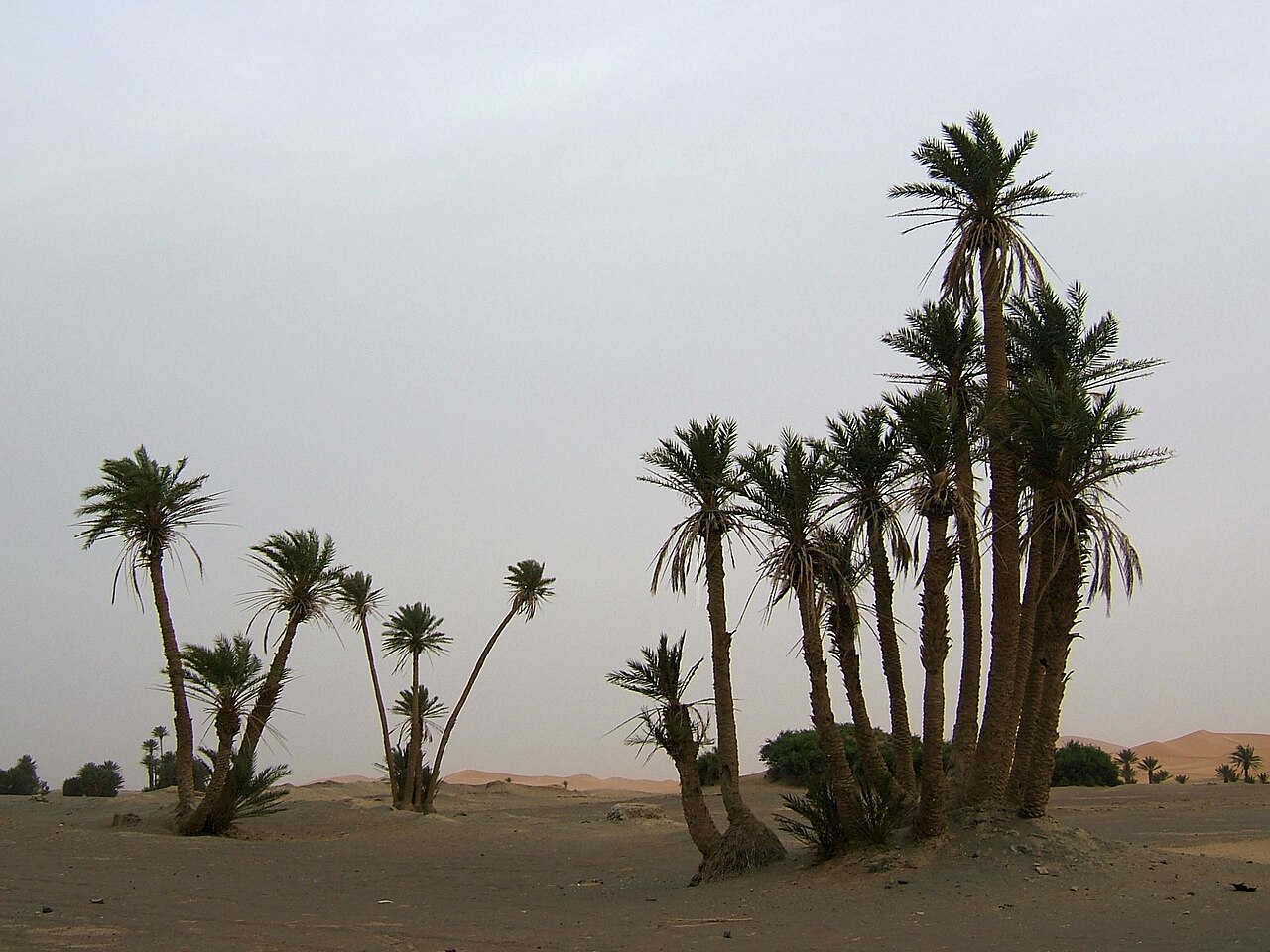
Anas ibn Malik relates that a man complained to the Prophet (peace be upon him) that another man's date palm stood in his orchard and stopped him building his wall. The Prophet asked the palm's owner to give it to him in return for a date palm in Paradise. The owner refused.
Hearing of it, the Companion Abu Dahdah stepped in. He offered the owner one of his own orchards in exchange for the palm, and the man agreed. Abu Dahdah handed over the orchard, took the tree, and told the Prophet he had bought it for an orchard and now wished to give it to the man building the wall.
The Prophet said more than once: 'How many heavy clusters of dates hang for Abu Dahdah in Paradise!' Abu Dahdah went home and told his wife: 'Umm Dahdah, come out of the orchard; I have sold it for a date palm in Paradise.' She replied: 'Surely the trade has been profitable.'
Behind his decision, the writer says, lay faith in the hereafter and the wish to help another. The Quran says: 'You will never attain righteousness until you spend from what you love.' (Surah Al Imran, verse 92) Abu Dahdah's act puts that principle into practice.
Though the family's home orchard was gone, his wife did not see it as a loss, an example, the writer says, of spouses standing by each other's good decisions. She stresses that the story is not a general command to give up all one's wealth; its lesson is that wealth should not stand between a person and the welfare of others or the pleasure of Allah, and that giving according to one's means is a mark of the believer.
Hadith sources: Musnad Ahmad, hadith 12482; Sahih Ibn Hibban, hadith 7159. Written by Nahida Sultana, Islamic scholar and essayist.
Photo: Date palm (Phoenix dactylifera), MPF / Wikimedia Commons (CC BY 2.5)
Source: Prothom Alo

Comments
(0)