
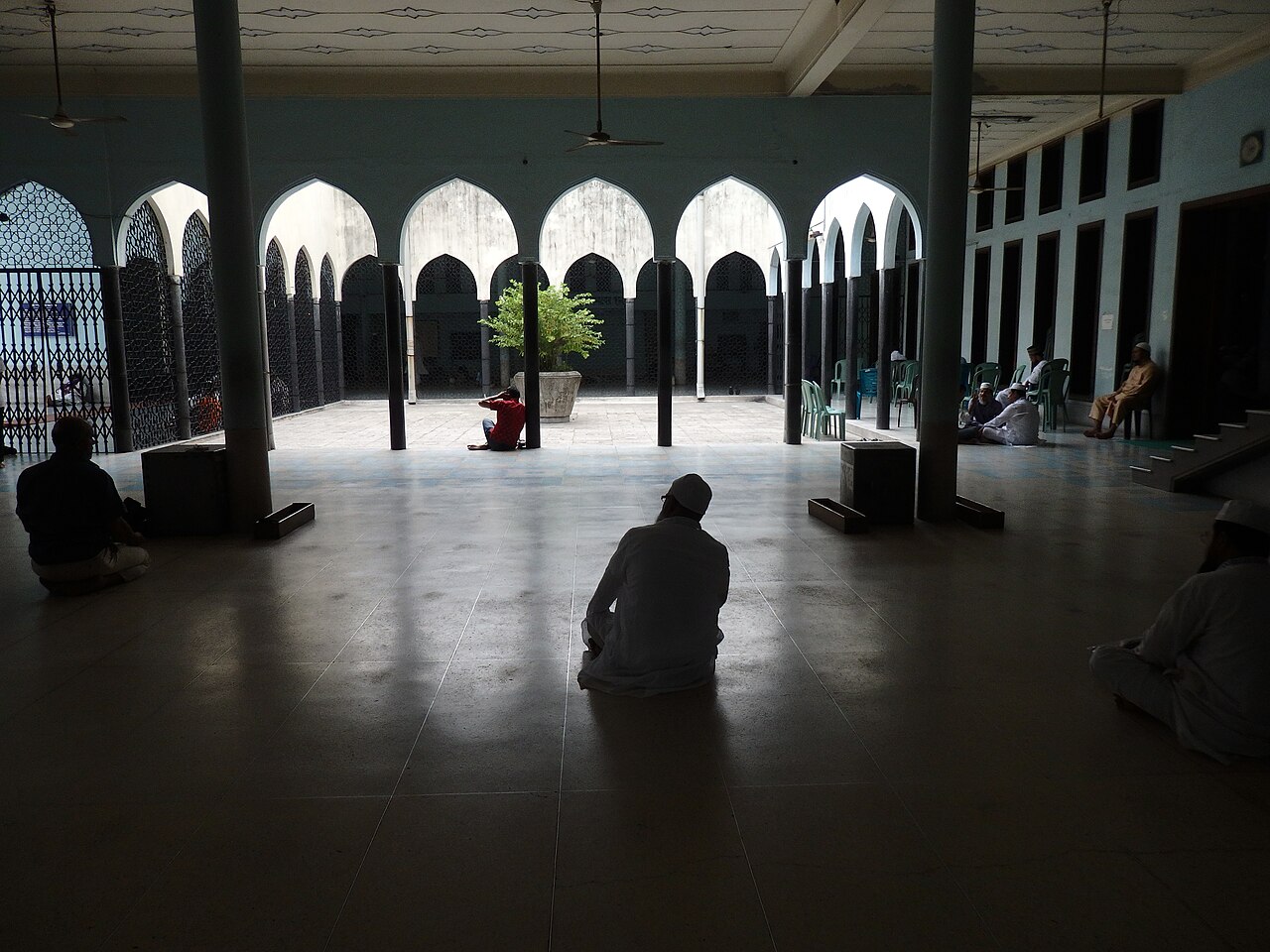
The mosque is one of Allah's symbols, and the Quran says: 'Whoever honours the symbols of Allah, that is from the piety of hearts.' (Surah Al-Hajj, 32) The Prophet (peace be upon him) said mosques are built for the remembrance of Allah, prayer and the recitation of the Quran (Sahih Muslim, 285). Writing in Desh Rupantor, H M Moniruzzaman explains that anything that disturbs those purposes is forbidden there.
First among them is raising one's voice. In a hadith in Ibn Majah (750), the Prophet told Muslims to keep mosques free of small children and the insane, and of trading, settling disputes, raised voices, punishments and drawn swords. A long hadith in Jami' at-Tirmidhi (2210, 2211) lists the rise of shouting in mosques among the signs of the Last Day.
Announcing lost or found property is also forbidden. Abdullah ibn Amr relates that the Prophet prohibited buying and selling, announcing lost property and reciting poetry in the mosque (Sunan Abi Dawud, 1079). According to Sahih Muslim (568), anyone heard announcing a lost item in the mosque should be told: 'May Allah not return it to you, for mosques were not built for this.'
Scholars have cautioned even about loud dhikr, the writer notes: if it disturbs those praying, reciting, worshipping or in i'tikaf, it too becomes forbidden (Fatawa Mahmudiyya, 639). If dhikr calls for such care, ordinary conversation calls for more.
Quiet, permissible worldly conversation that disturbs no one is allowed for those who come to the mosque to pray. Sahih Muslim (670) records that after Fajr the Prophet would sit where he prayed until sunrise, while his Companions talked in normal voices, told stories of the Jahiliyya and laughed, and he smiled. Going to the mosque just to gather and chat about worldly matters, however, is not permitted (Radd al-Muhtar, 1/662).
Written by H M Moniruzzaman for Desh Rupantor.
Photo: Baitul Mukarram National Mosque, Dhaka, mohigan / Wikimedia Commons (CC BY-SA 3.0)
Source: Desh Rupantor

Comments
(0)