
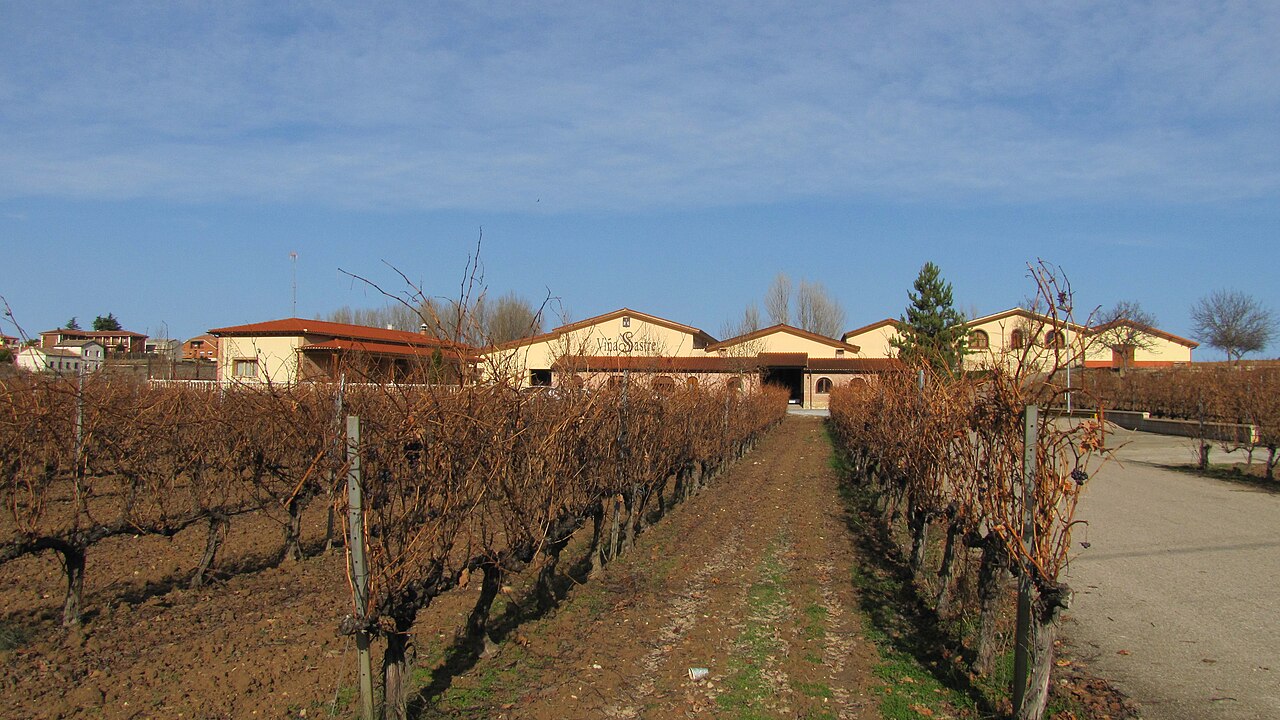
A four-legged robot called Agrhound has begun walking through vineyards and berry farms in Spain, in a research project testing whether legged machines can scout crops on ground too steep or uneven for the wheeled robots usually used in farming.
The project is led by CTAEX, Spain's National Agri-Food Technology Centre in Extremadura, with wine producer Bodegas Familiares Matarromera, berry grower Social Berries 4.0 and technology partners SpectralGeo, SOLTEL and Fundación Prodti. It has Spanish and European public funding and runs until early 2029.
The robot carries cameras and sensors. Because it places each foot separately, it can cross slopes, loose soil and the narrow, irregular rows found in many vineyards, where wheeled or tracked machines struggle. As it walks the rows, its data go into artificial intelligence models trained to judge plant vigour, physiological state and expected yield.
The first field trials are in two very different places: among Tempranillo vines on Matarromera's sloped, terraced estate in Ribera del Duero, and among blackberries grown under macrotunnels, the long plastic-covered tunnels used to protect berry crops, at a Social Berries 4.0 farm in Huelva in southern Spain.
Project lead Luis Muñoz said the aim is to bring the reliability legged robots already show in industrial inspection into agriculture. No performance data have been published, because the trials have only just begun; this stage is meant to prove the robot can cover real vineyard rows and tunnel beds through a full season, including wet soil and tight turns.
Legged robots cost more to build and maintain than wheeled ones, since each leg needs its own motors and balance control, and their batteries usually last less. Later phases are expected to add a spectral camera that maps fruit ripeness in real time and, eventually, a robotic arm to collect plant or fruit samples for the laboratory, so one machine could flag stress or disease, estimate ripeness and take samples without a worker walking the rows.
Photo: Pravdaverita (vineyards in Ribera del Duero) / Wikimedia Commons (CC BY 3.0)
Source: Global Agriculture

Comments
(0)