
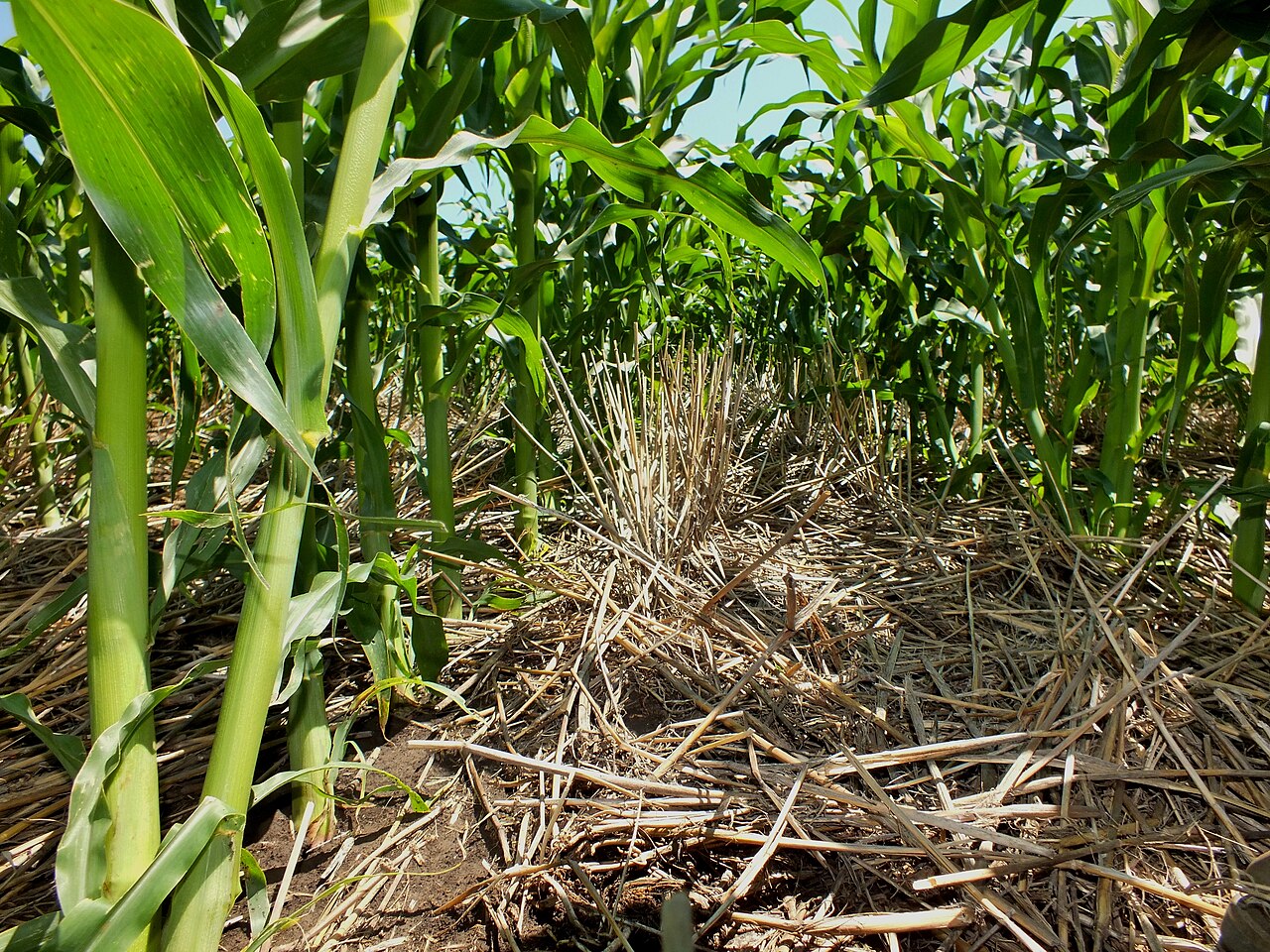
Corn stalks and leaves left after harvest hold a store of fertilizer that farmers have already paid for, and researchers at the University of Illinois are studying how to get it back. Rising yields have made the job bigger, since modern hybrids and higher plant populations leave more residue to manage each year.
"For every bushel an acre that we get in yield, we have 44 or more pounds of dry residue coming out of the back of the combine," said Ava Isaacs, a first-year PhD student in the university's crop physiology lab, which works with professors Fred Below and Connor Sible.
She put figures on what is locked away: 20 pounds of nitrogen, 4 pounds of P2O5 and 23 pounds of K2O per ton of residue. A 230-bushel-an-acre crop, she said, leaves five and a half tons of residue, nutrients that could be used the following year.
Farmers have usually managed residue with tillage or chemical treatments. Rising fuel and fertilizer costs are pushing growers to look at biological products that speed up decomposition. Researchers note these can often go on during a routine herbicide or burndown pass, which saves a trip across the field.
Robert Phillips, a field agronomist with Integrated Seed Solutions in Flanagan, Illinois, recalled adding an extra 50 to 60 units of nitrogen to break down residue when a unit cost 17 cents. "Now we're talking $1.17 a unit of nitrogen," he said. "It's not economical and not sustainable." He uses a product called Carbon Cycle and credits it with more humus and better soil health.
Field observations suggest biological residue management can improve soil structure and organic matter, and some point to less pressure from certain soil-borne diseases. Researchers say more work is needed to understand those effects, so the case for any one product is not yet settled.
Photo: USDA NRCS South Dakota / Wikimedia Commons (Public domain)
Source: Farms.com

Comments
(0)