
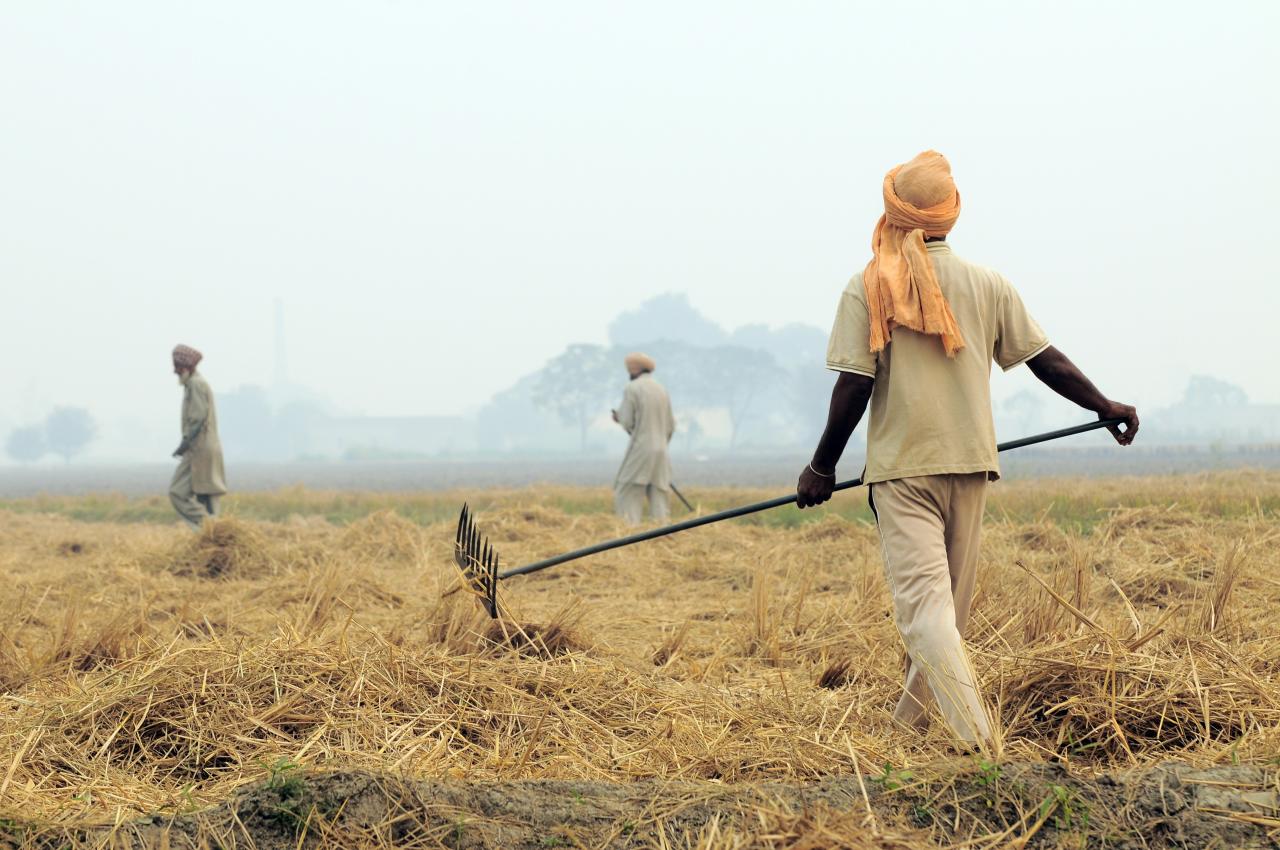
A field study in Haryana has found a visible decline in stubble burning where crop residue is being sold for co-firing in coal power plants, but warns that the gains depend on a more reliable and inclusive supply chain, Down To Earth reports.
In November 2025 the Indian government told thermal power plants to co-fire coal with biomass pellets and torrefied charcoal from municipal waste, at a minimum of 7% around the National Capital Region and 5% elsewhere. According to the National Biomass Atlas of India, the country generates about 228.5 million tonnes of surplus biomass residue a year, with a gross power potential of 28.45 GW, roughly a tenth of the record peak demand of 270.8 GW met in May 2026.
Researchers at the Ashoka Centre for a People-centric Energy Transition surveyed 155 people in Panipat, Sonipat and Karnal districts over 45 days in January and February: 100 farmers, 20 aggregators, 15 transporters and 20 processors.
Selling residue can bring farmers extra income, and the state offers an incentive of ₹1,200 an acre a year to take part in residue management. Yet 61% of farmers had to pay aggregators to handle their residue. The study points to last-mile logistics: few aggregators operate locally, and the window before the next sowing is short. Overall, 87% of farmers reported health improvements linked to residue management.
The chain also creates rural jobs, including seasonal aggregation work for men with little formal education and a mix of skilled and unskilled posts at processing plants, while women remain under-represented and are mostly in administrative roles.
Bottlenecks persist. Inadequate storage, wet feedstock and supply disruptions during the monsoon complicate procurement and processing, and many units run below capacity because supplies are irregular. Low procurement prices and delayed payments add to the difficulties, and transporters face high fuel costs.
Photo: CIAT / Wikimedia Commons (CC BY-SA 2.0)
Source: Down To Earth

Comments
(0)