
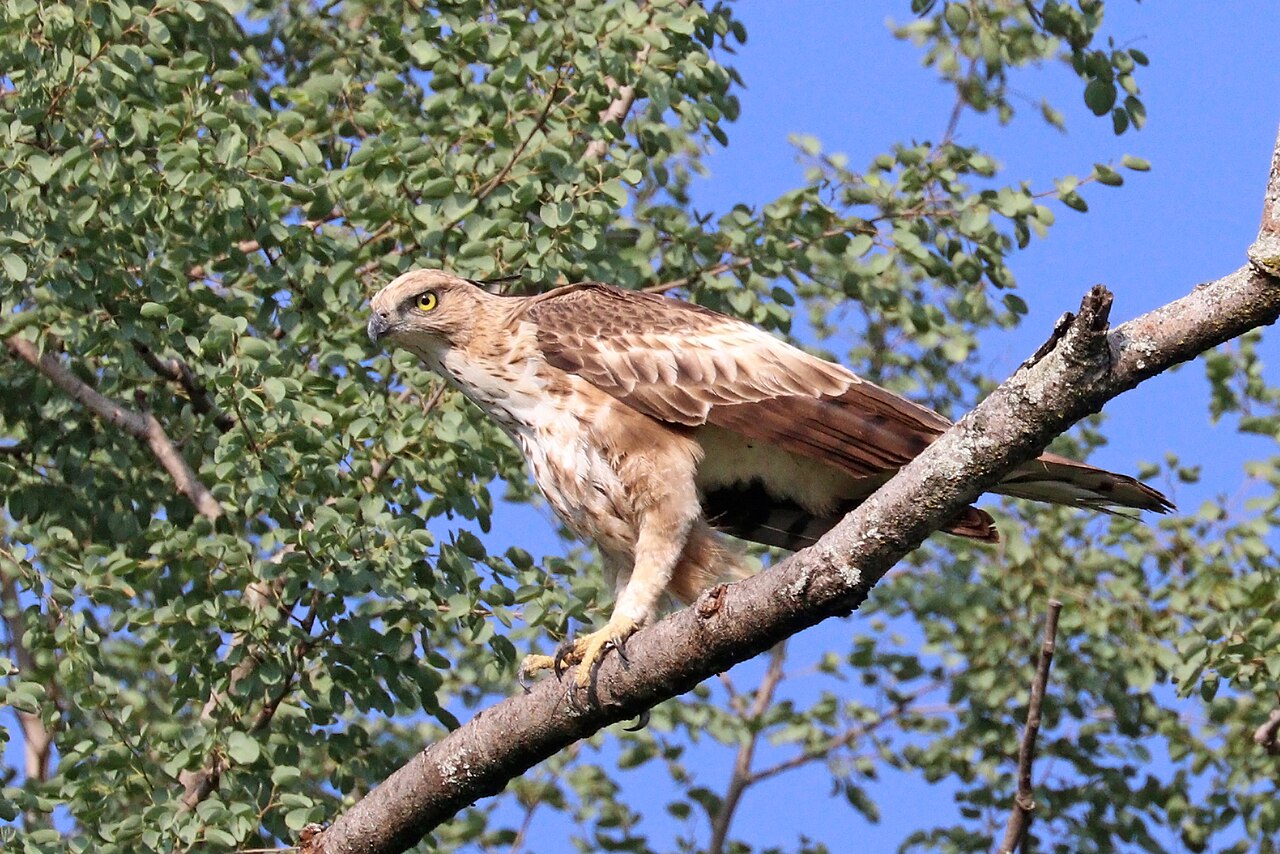
The changeable hawk-eagle is a rare resident bird of prey in Bangladesh. It is also called the black or crested hawk-eagle, and in West Bengal shabaj sadal. Its scientific name is Nisaetus cirrhatus, and it is found in Bangladesh and across South and Southeast Asia.
Dr A N M Aminur Rahman has written in Desh Rupantor about seeing the bird three times in three places. In March 2014, on the bank of the Jamtoli canal at Katka in the Sundarbans, he found a dark blackish-brown bird on a keora tree and took 49 pictures in about five minutes. On 14 January 2017, travelling from Mongla to Laudob, he photographed a brown bird 27 times as it flew from a tall tree, and realised it was the pale form of the same species.
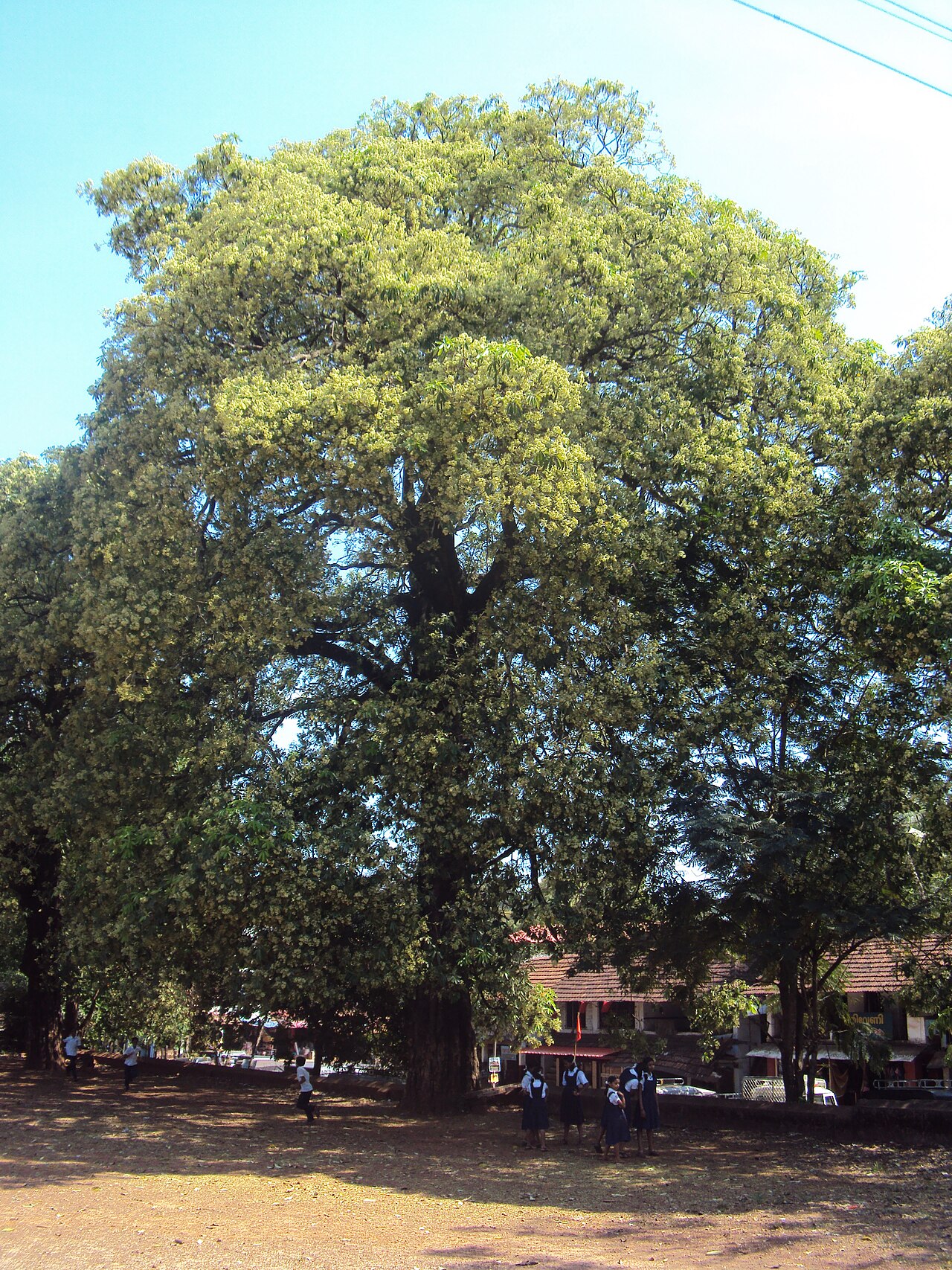
The third time, on 3 February 2024, at a pond beside an abandoned resort near Sherpur town, he saw a pale bird incubating on a high branch of a huge rain tree while a dark bird stood guard on another branch. When the pale bird rose, the dark one took its place on the nest: a pair made up of one bird of each form.
As he describes it, the bird is 51 to 82 centimetres long and weighs 1.3 to 1.9 kilograms. Its plumage changes four or five times a year, so it looks different at different times, though the pale and dark phases are the most common. The pale form has a brown back and whitish, heavily streaked underparts; the dark form looks black but is really a deep blackish brown. The legs are long and lemon-yellow, the beak black, and males and females look alike.
It ranges alone or in pairs over open woodland, farmland near forests and the edges of beels and reservoirs, feeding on rats, geckos, frogs, small snakes and fish. In the breeding season the male calls loudly, ki-ki-ki-ki-kiu.
It breeds from January to April, building a nest of twigs and green leaves at the top of a tall tree. The female lays a single egg a season and incubates it alone; it hatches in about 40 days, and she then broods the chick for at least 25 days. The chick is fully feathered at about 52 days old.
This article is based on Dr A N M Aminur Rahman's piece in Desh Rupantor.
Photo: Charles J. Sharp / Wikimedia Commons (CC BY-SA 4.0)
Source: Desh Rupantor

Comments
(0)