
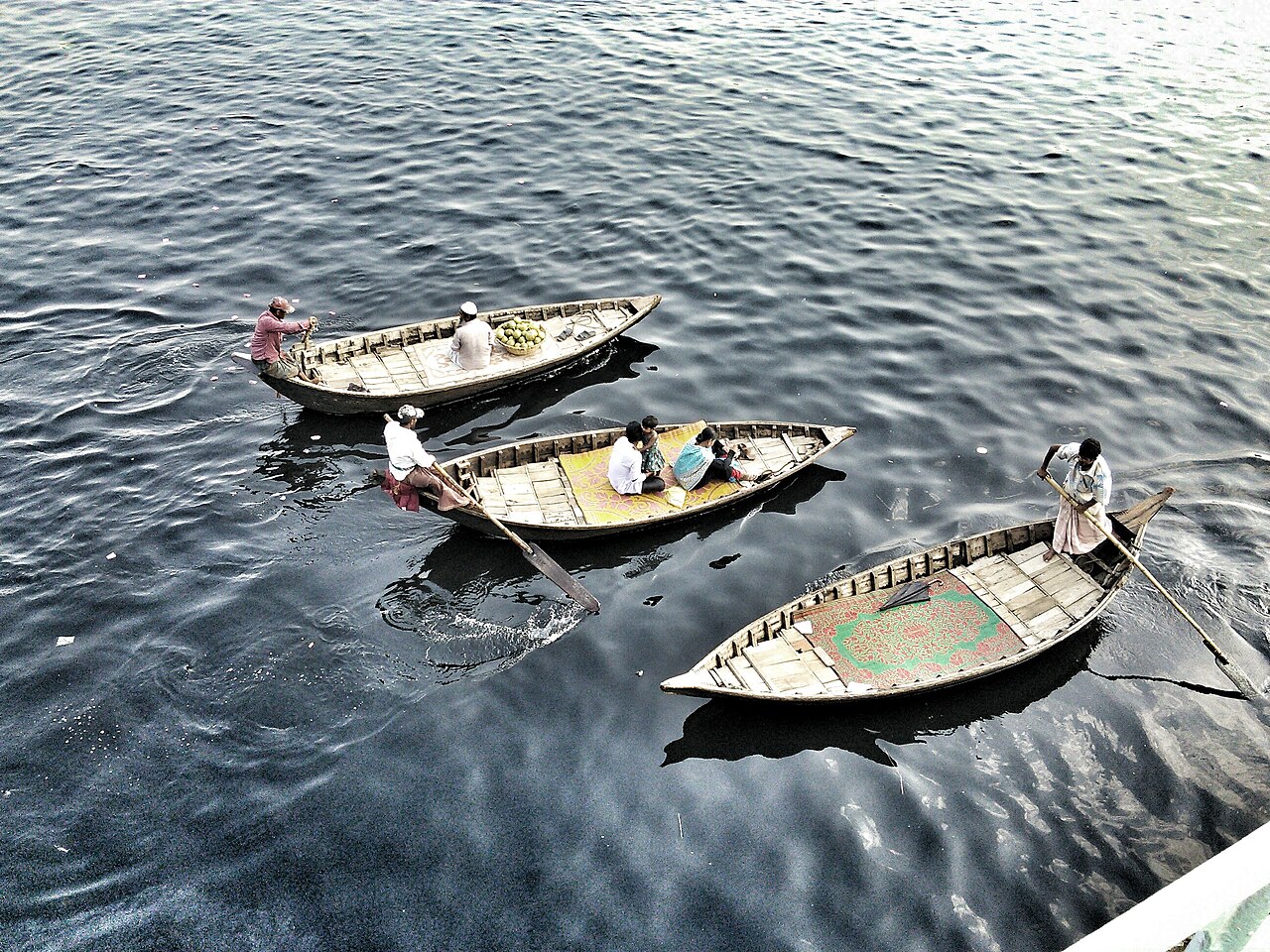
In 2002 Bangladesh became the first country in the world to ban polythene shopping bags. Courts have since banned dumping plastic in rivers and on their banks and ordered plastic cleared from major rivers. Yet the country's rivers are drowning in plastic, an investigation by The Daily Star has found.
A 2022 study by the Environment and Social Development Organisation (ESDO) put the country's plastic waste at about 3,000 tonnes a day, and found that about 1.4 million polythene bags are thrown away in Dhaka every day after a single use. A 2020 World Bank report put Dhaka's daily plastic waste at about 646 tonnes, three and a half times the 2005 level, with only 37 percent recycled, almost all of it by the informal sector in places like Islambagh in Old Dhaka.
Dr Ahmed Kamruzzaman Majumder, dean of the science faculty at Stamford University, said his team had found plastic 15 feet deep in the Buriganga's bed; labels showed some items had been dumped 15 to 17 years ago, yet they still looked new. PET, used in bottles and food packaging, takes an estimated 450 years to break down, shedding microplastics and chemicals all the while.
A 2023 study by researchers from Jahangirnagar University, Sher-e-Bangla Agricultural University and BCSIR found 0.65 to 3.82 microplastic particles per gram in Buriganga fish, 3.75 to 4.28 in crabs and up to 8.17 in the riverbed sediment, along with high levels of chromium, lead, arsenic and cadmium. Another study in 2025 found 23.25 particles per litre in Sundarbans water, more than in Kaptai Lake or Tanguar Haor.
Jahangirnagar University environmental scientist Dr Shafi Mohammad Tareq said microplastics are now found in fish, salt, oil and sugar, yet no safe level has been set. Research on the health effects continues; a 2025 Stanford Medicine article pointed to possible links with reproductive, digestive and respiratory problems, with children most at risk.
The bans exist but are not enforced. In early September the High Court ordered all plastic and other waste on the Buriganga's banks at Islambagh, Lalbagh and Kamrangirchar removed within 15 days, but no sign of it has been seen. The national action plan aimed to phase out 90 percent of single-use plastic by 2026. Environment State Minister Sheikh Fariduli Islam said mobile courts against illegal factories were being prepared and that single-use plastics would soon be banned on university campuses and at tourist spots.
ESDO secretary general Shahriar Hossain called for a polluter-pays policy, so that companies whose products pollute rivers bear the cost of cleaning them. Of the 17 single-use items on a government list, he said, nine are already banned; what is needed now is enforcement.
This report is based on reporting by Pinaki Roy for The Daily Star.
Photo: Sarah.1001022 / Wikimedia Commons (CC BY-SA 4.0)
Source: The Daily Star

Comments
(0)