
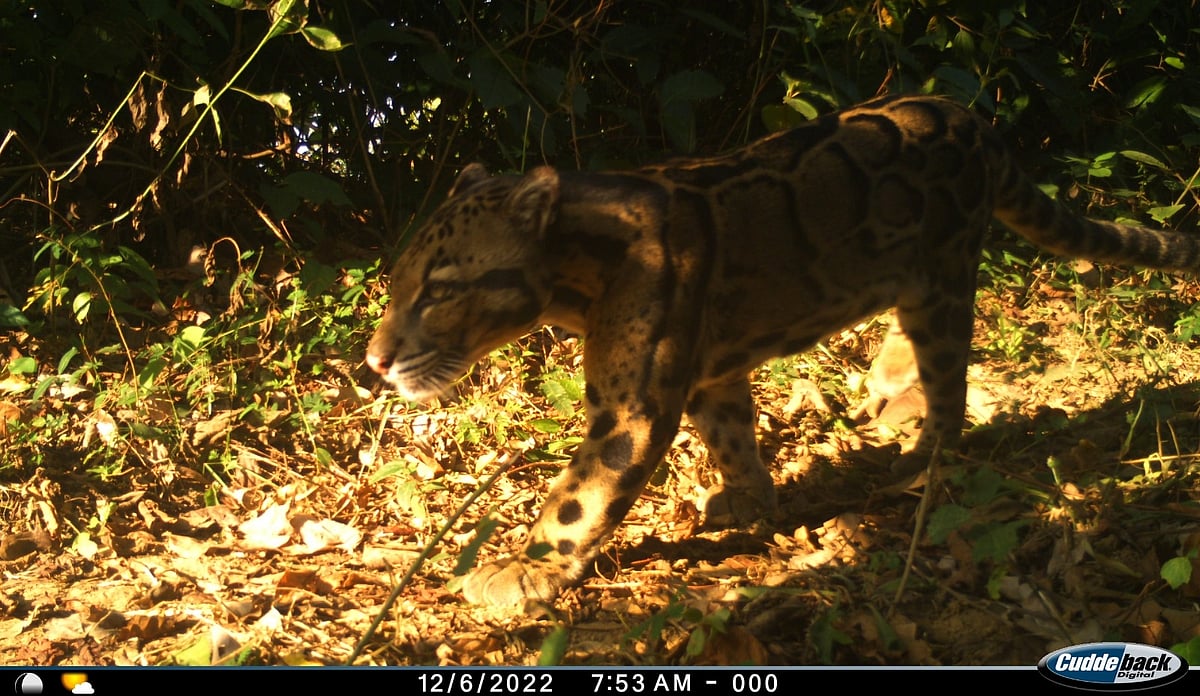
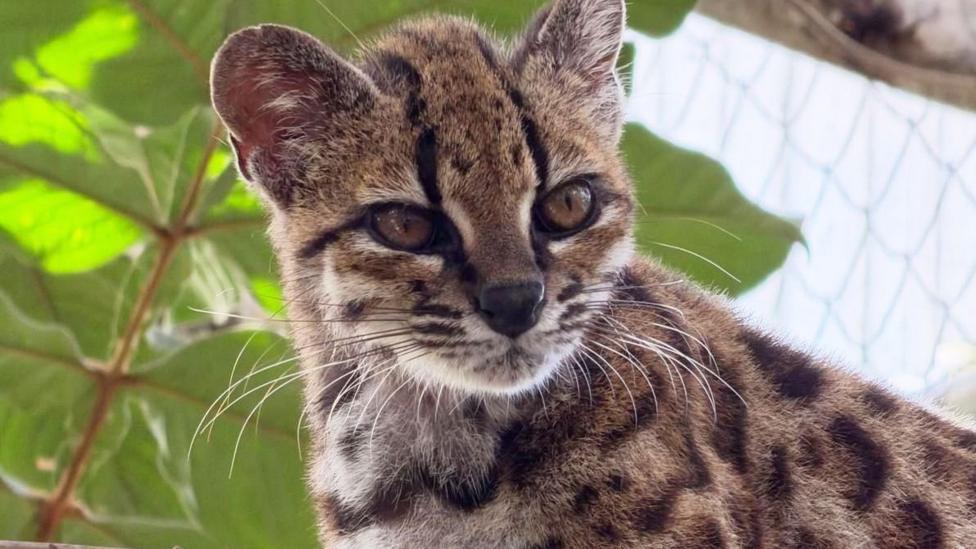
Seen occasionally in the deep forests of the Chittagong Hill Tracts, the clouded leopard has for the first time been recorded by researchers' camera traps in a reserved forest of Cox's Bazar. The study, published early this month in the journal Global Ecology and Conservation, also documented 21 other wild mammal species in Inani National Park, including the hoolock gibbon, capped langur, slow loris, jungle cat and leopard cat. The IUCN lists the clouded leopard as critically endangered in Bangladesh and vulnerable globally.
The Forest Department, the zoology departments of Dhaka and Jahangirnagar universities, Chittagong University's Institute of Forestry and Environmental Sciences and Germany's University of Göttingen ran the study over 13 months, from November 2022 to November 2023. Bipul Krishna Das, director of the Forest Department's Bangladesh Wildlife Centre and a member of the team, said 15 cameras covered 32 locations in the 7,085-hectare park; three cameras captured five images of the leopard, and pugmarks and scat confirmed its presence. Wildlife was most abundant where the forest has streams and standing water.
About 3,000 hectares, or roughly 44 per cent of the park, is suitable leopard habitat, the study says; dense scrub under tree cover, where the cat was most often found, covers 2,887 hectares. A medium-sized cat that spends most of the day in trees, it hunts monkeys, birds and small mammals, and ankle joints that rotate almost 180 degrees let it run head-first down vertical trunks. A clouded leopard rescued from traffickers in Rangamati in 2023 is kept at Dulahazara Safari Park.
Other species recorded include the Asian elephant, pig-tailed macaque, porcupine, rhesus macaque, jackal, common palm civet, small and large Indian civets, wild boar, crab-eating mongoose, hog badger, Irrawaddy squirrel, tree shrew, barking deer, ferret badger, lesser false vampire bat, brown squirrel and red giant flying squirrel.
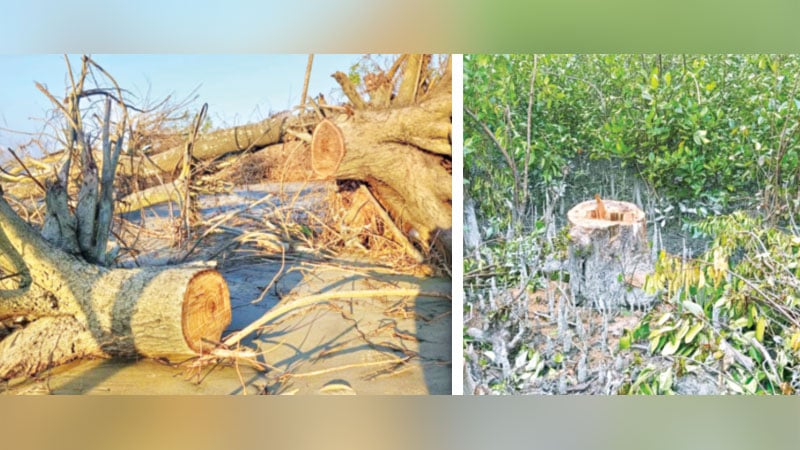
Over the past decade Rohingya settlements, railway construction and the grabbing of thousands of acres of forest have steadily eroded the biodiversity of Cox's Bazar's forests. The study warns that human settlement, expansion of the refugee camps, felling for fuelwood and illegal encroachment by farmland pose a severe threat to habitat; where people move about or farming dominates, the number and diversity of wild animals were alarmingly low.
Wildlife researcher Reza Khan said the leopard is now the top predator in the Inani forest and that the government should map its range, protect it specially, halt timber extraction and relocate any settlements within it. The researchers recommend stopping encroachment and land grabbing, protecting the hill streams and canals that are the animals' only source of fresh water, creating a buffer zone around the park and involving local people in conservation. Without action now, they warn, the rare mammals of this coastal forest could be lost for good.
Source: Prothom Alo
Comments
(0)