
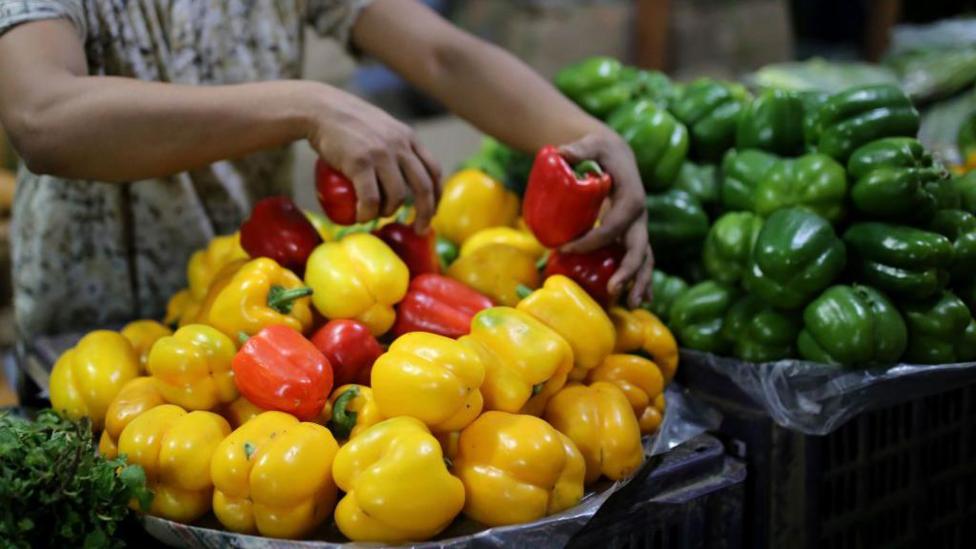
Capsicum, a vegetable native to Mexico and Peru, has become a popular crop in Bangladesh, and with demand rising its cultivation in fields and in pots is spreading, the Department of Agricultural Extension says. Bangladesh Bureau of Statistics data put production at about 475 tonnes in the 2024-25 financial year, against roughly 150 tonnes in 2021-22. The department says output has more than tripled in a few years and that Bhola district accounts for 55 percent of the national total.
Md Khairul Islam Mallik, the department's deputy director in Bhola, says capsicum is grown on about 180 hectares in two upazilas of the district. It is also cultivated in parts of Sylhet, Naogaon, Chuadanga, Kurigram and Jashore, and this year first plantings have been reported from Cumilla and several other places. Locally grown capsicum began appearing in markets around 2014-15, according to the department, and production has risen steadily since.
Talha Zubair Masroor, director of the department's project to set up tissue-culture laboratories and horticulture centres, says capsicum has become an essential ingredient in salads, pizza, shashlik and other fast food, creating a permanent market in the cities and beyond; yellow, orange and red fruit fetch the highest demand and good prices year-round. "Demand is growing fast but production is still limited, so there is a large gap in the market and a dependence on imports. That reality has created a big opportunity for us," he said.
Manik Raja, who farms at Sharsha and Jhikargachha in Jashore after training from the department, says starting on six or seven bighas a few years ago cost about Tk 24 lakh; sales came to about Tk 35 lakh in the first year and have averaged around Tk 50 lakh a year since. Once the polyhouse or net house is built, he says, later years cost little. This year he has about 14 bighas under capsicum, mostly yellow; yellow and red fruit sell at the field gate for Tk 150 to 200 a kilo, and the government supplies polyhouses and other modern equipment.
The crop has its own rhythm. Fruit appears two months after transplanting, takes about three months to turn from green to its final colour, and a single plant keeps producing for at least nine months; a mature capsicum weighs about 250 grams. Between capsicum seasons Manik Raja sows rice and ploughs it into the soil as green manure, and grows tomato, broccoli, coloured cabbage and cucumber on the same land. The crop is mostly grown under polynet or in greenhouses, where temperature, humidity and light can be controlled to secure quality.
The department says river silt, green manure and regular fertiliser can yield 30 to 35 tonnes a hectare and that growers typically earn Tk 14 to 18 lakh per hectare, though the crop is costly and laborious and farmers tend to spend the whole season in the field. Industrial groups have begun importing seed as the area expands, and three varieties developed by the Bangladesh Agricultural Research Institute are being distributed through BADC. The Agricultural Information Service notes that capsicum carries vitamins A and C, collagen and capsaicin, and that because it grows easily in pots the public could be encouraged to eat more of this sweet pepper.
Source: BBC Bangla


Comments
(0)