
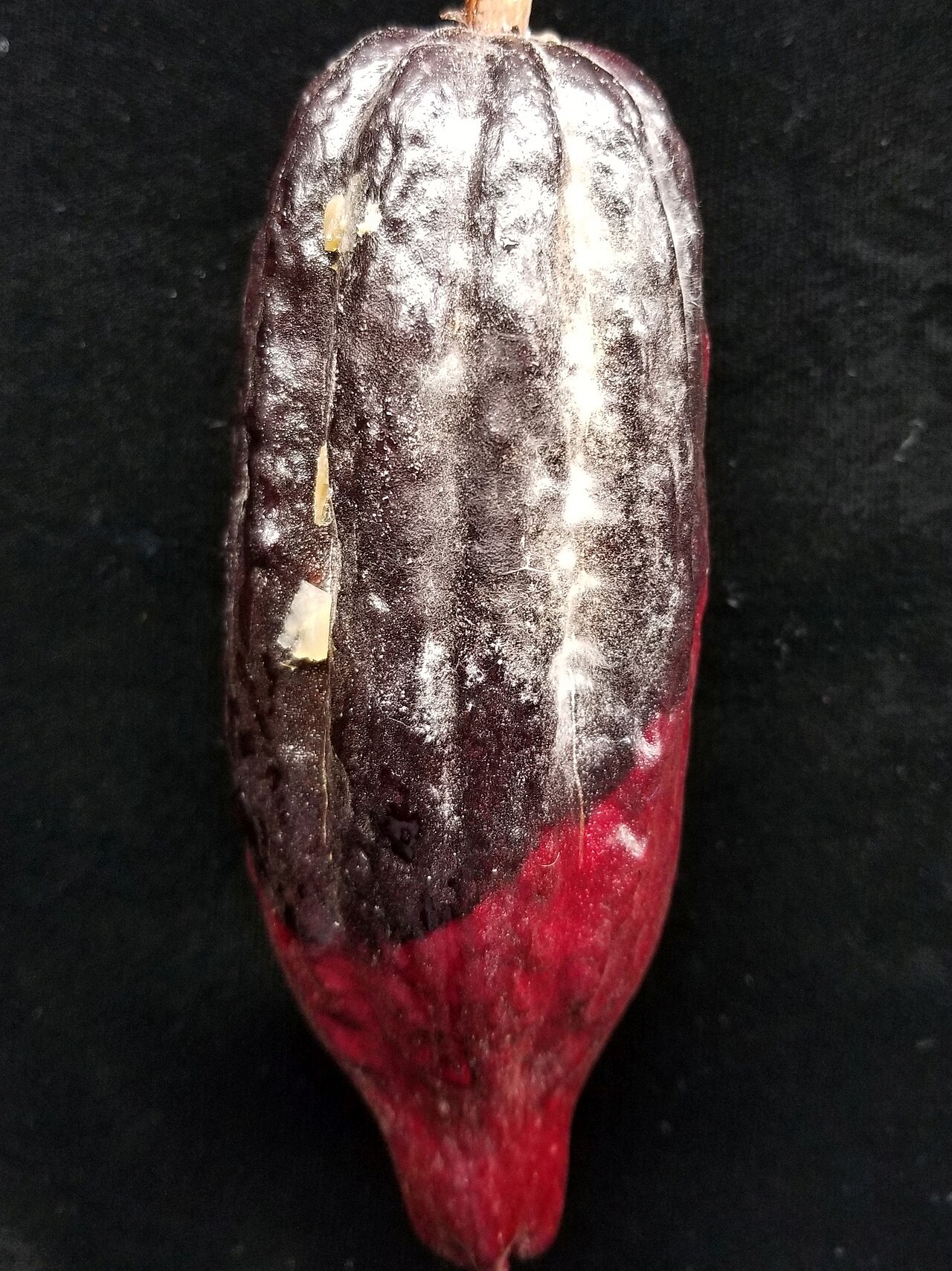
Extreme rainfall harms cocoa yields in the tropics more than rising temperatures or water shortages, according to a study by Harvard University researchers published in the journal PNAS. Shortfalls in cocoa production threaten nearly six million farmers who depend on the crop as their main source of income.
The scientists analysed rainfall patterns in Ghana, Indonesia and Ecuador, three of the world's leading cocoa producers. Heavy downpours physically damage the flowers and young pods, disrupt the tiny insects that pollinate cocoa, and create the wet conditions in which fungal diseases thrive, above all black pod, whose spores are splashed from pod to pod by the rain. Co-author Peter Huybers said infection appears about a week after a rain event.
The authors say much extreme rain is predictable because it is tied to climate patterns such as El Niño. During El Niño, West Africa and Indonesia usually get less rain, while coastal Ecuador and East Africa see severe downpours. Outside El Niño years, the heaviest wet-season rains have been growing more intense in West Africa, where about 70 percent of the world's cocoa is grown, said corresponding author Anna Lea Albright. In Ecuador, which supplies about 12 percent of world cocoa, heavy coastal rain between February and April hits yields six to eight months later.
The findings matter now because a strong El Niño is building towards an expected peak in December.
Other specialists urged caution. William Melo Zipacón of the Alliance of Bioversity International and CIAT said the damage is greater where farms use susceptible clones, have too little shade and are poorly pruned, and that the study links weather to lower yields without showing how much is due to flower damage, pollination or disease. Rey Gastón Loor, who leads the cocoa programme at Ecuador's National Institute of Agricultural Research, said wet spells can delay flowering rather than cut the harvest, but agreed that low-lying farms need drainage when water stands for three or four days.
Huybers said a cocoa-specific risk alert would help farmers act in time, linking rain forecasts to the best moments for pruning, sanitation, fungicide sprays and drainage work. The team is already working with partners in Ecuador and West Africa to turn heavy-rain forecasts into advice for growers.
The report was written by Zoraida Portillo for the Latin America and Caribbean edition of SciDev.Net.
Photo: Scot Nelson / Wikimedia Commons (CC0)
Source: SciDev.Net

Comments
(0)