
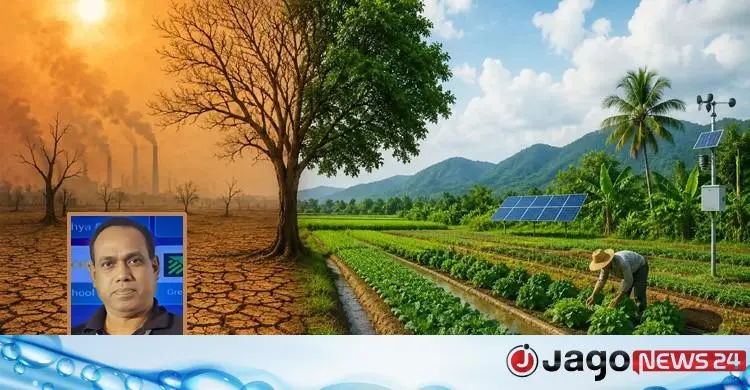
Climate change is no longer a future threat; it is today's reality. Rising global temperatures are affecting agriculture, food security, water, biodiversity and livelihoods, and Bangladesh, because of its geography and farm-based economy, is among the most vulnerable countries. Erratic rainfall, prolonged drought, flash floods, river erosion, cyclones, rising salinity and heatwaves are making production uncertain, and farmers' costs are rising faster than their yields and incomes.
How the climate is hitting farms
- Boro, Aus and Aman rice, wheat, maize, pulses, oilseeds, vegetables and fruit all depend heavily on the climate. High temperatures disrupt rice pollination, cut yields and damage grain quality.
- Heatwaves reduce the productivity of livestock and poultry, and pests and diseases are spreading to new areas.
- Salinity is making farming harder in coastal areas, while long droughts in the north increase dependence on groundwater irrigation.
- The farming calendar is shifting: rains no longer arrive when expected, disrupting sowing, planting, irrigation and harvesting.
The writer argues that measuring losses is not enough; adaptation must be at the centre of national agricultural strategy, and crop insurance should be introduced in high-risk areas.
An adaptation agenda
- **Weather information:** accurate short- and medium-term forecasts delivered through digital and mobile advisory services to guide sowing, irrigation, fertiliser and pest management.
- **Resilient varieties:** faster development and spread of drought-, salinity-, heat- and flood-tolerant varieties, and quicker transfer of research institutes' technologies to the field.
- **Water:** modern irrigation, rainwater harvesting, water-saving cultivation and sustainable groundwater use.
- **Soil health:** soil test-based fertiliser management, organic and green manures and integrated nutrient management instead of excessive chemical fertiliser.
- **Technology:** Artificial Intelligence (AI), the Internet of Things (IoT), drones, remote sensing and satellite data to give farmers real-time information on soil moisture, nutrients, weather and disease.
- **Insurance:** a more effective agricultural insurance system with quick, simple compensation after climate disasters.
- **Skills and policy:** training, extension, digital education and local knowledge combined with modern technology; young people drawn into smart farming; and coordinated planning across agriculture, water, environment, disaster management and climate finance, with more research, private investment and use of international climate funds.
Conclusion
Stopping climate change is a global responsibility, but local adaptation is the most effective response to its impacts. Bangladesh's agriculture has overcome many hardships, and combining that experience with modern technology, research and far-sighted policy can meet the challenge. Food security, environmental protection and economic stability, the writer concludes, all depend on climate-adaptive agriculture, and today's planning and investment will decide the food security of future generations.
Source: Jagonews24. First published in Bengali on The Agro News.

Comments
(0)