
The International Maize and Wheat Improvement Center (CIMMYT) has released five new maize inbred lines, CML661A to CML665B, for use by public and private breeding programmes as parents of hybrids aimed at smallholder farmers facing heat, drought, pests and disease.
CIMMYT maize lines (CMLs) are released only after intensive testing in hybrid combinations under drought, heat, disease and other stresses as well as good conditions, and after checking whether each works best as a seed or pollen parent. All five have been assigned to CIMMYT's heterotic groups A or B, shown by the letter at the end of each name, so that breeders know which lines to cross them with. CIMMYT stresses that a release does not guarantee good performance everywhere; it means the line is promising as a parent for specific mega-environments.
CML661A is a drought-tolerant line with tolerance to fall armyworm, an orange flint type with long cobs that is best used as the female parent because of its good seed yield. CML662B has good overall combining ability and has produced many good hybrids in regional trials. CML663B is heat tolerant with moderate resistance to Fusarium ear and stalk rots, and is a parent of released hybrids CAH204 in India and Nepal and CAH219 in India, Nepal, Pakistan and China.
CML664A and CML665B combine high yield potential with heat tolerance and resistance to foliar diseases. CML665B has an upright upper-leaf plant type and is already a parent of the licensed hybrid CAH205.
Seed is available in limited quantities from the CIMMYT Germplasm Bank on request, and pedigree details are published in the centre's data repository. Because CML663B is already a parent of hybrids released in India, Nepal and Pakistan, its heat tolerance and rot resistance are already reaching South Asian fields through those hybrids.
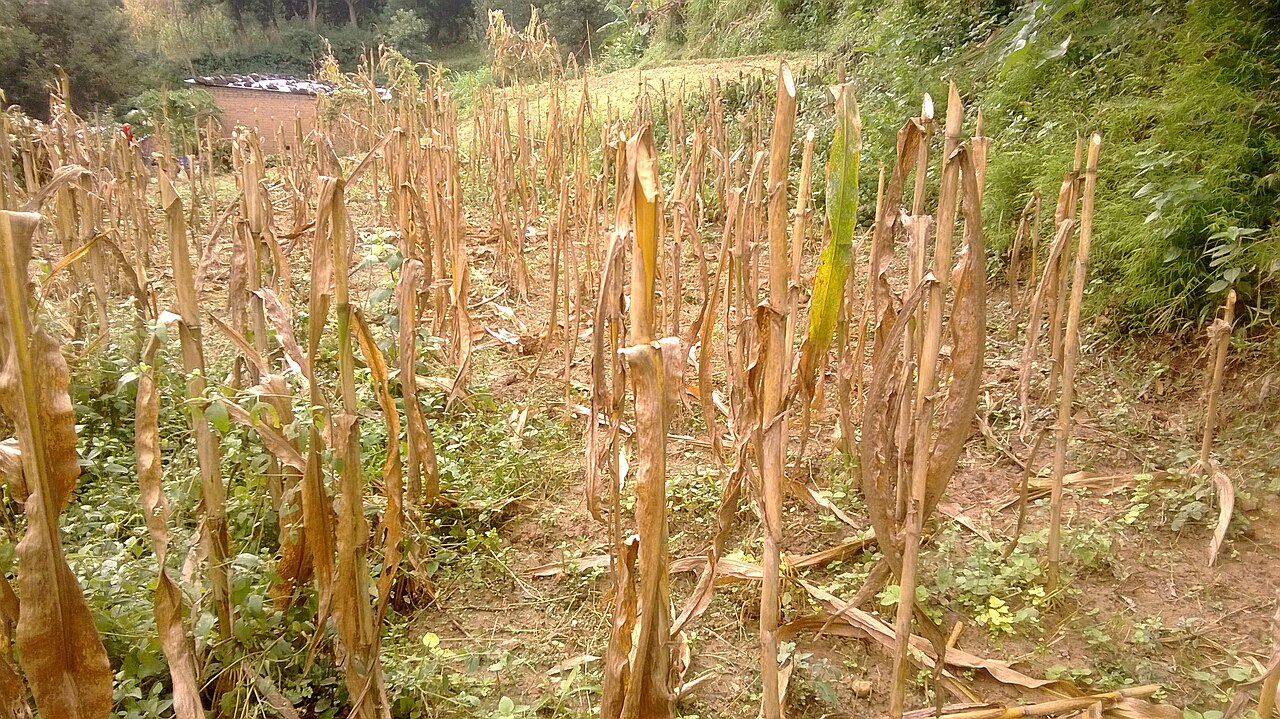
Photo: Krish Dulal / Wikimedia Commons (CC BY-SA 3.0)
Source: CIMMYT
Comments
(0)