
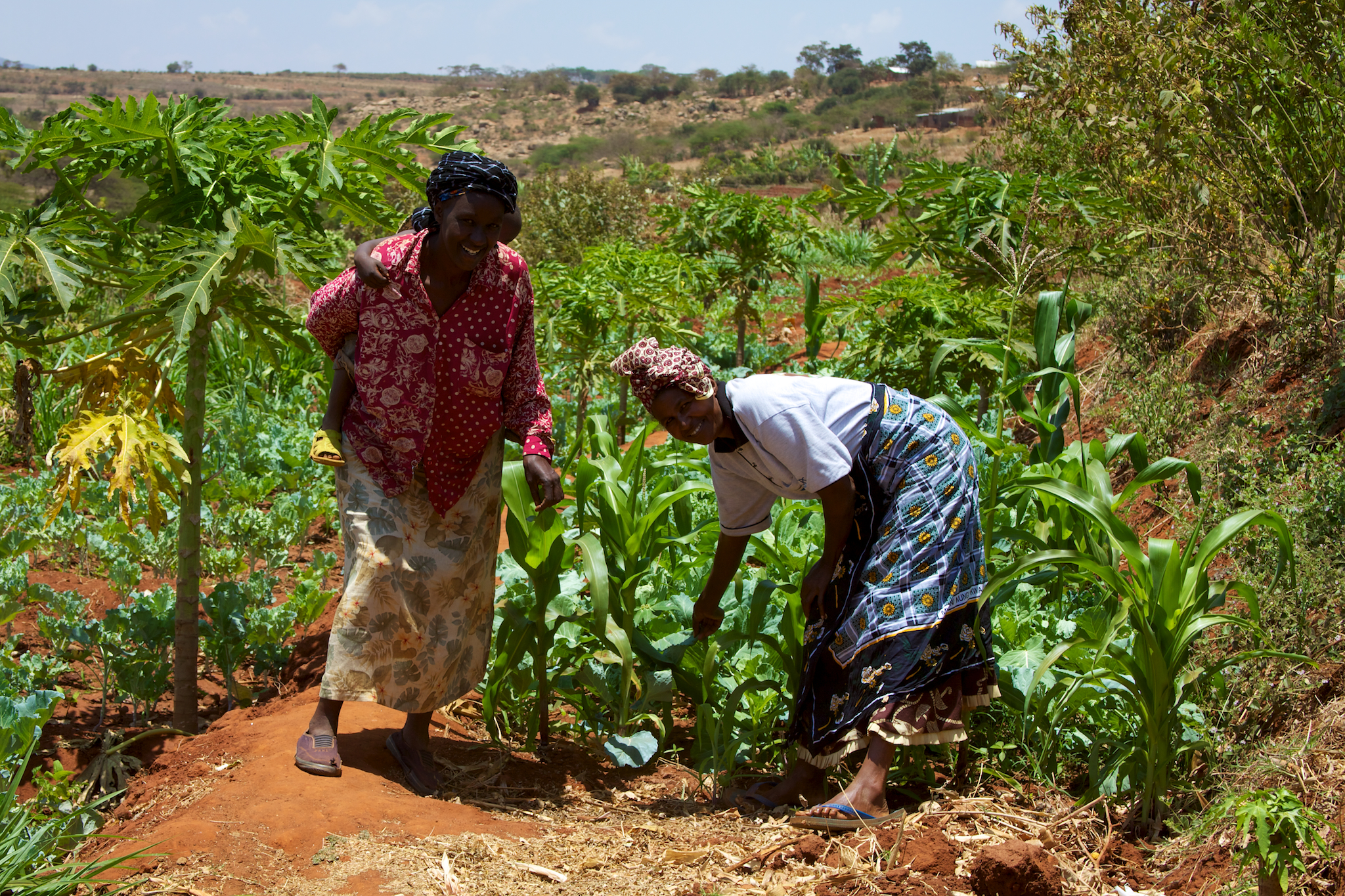
Which farming innovations from CGIAR and its partners have Kenyan farmers actually taken up over the past 20 years? A stocktaking exercise led by CABI, with the Kenya Agricultural and Livestock Research Organization (KALRO), the University of Nairobi and LEAD Analytics, for the CGIAR Standing Panel on Impact Assessment (SPIA), has spent 2025 and 2026 trying to answer that.
The team traced how researchers and partners promoted, adapted and scaled innovations in crop breeding, natural resource management, livestock, digital tools and policy, and how farmers and others adopted them. Agriculture contributes about 22 percent of Kenya's GDP, directly and through linked sectors, and employs more than 40 percent of the workforce and over 70 percent of rural people. This year the country also launched its National Agri-food Systems Investment Plan 2026-2030.
At a two-day validation workshop in Nairobi in August, researchers, officials and development partners challenged the findings. Eileen Bureza of the Ministry of Agriculture and Livestock Development said the biggest gap is between innovations developed in research and those that reach farmers; against Kenya's population, she said, the number of people using some of them "looks like a drop in the ocean".
Dr Godwin Macharia, Assistant Director of Crop Production and Seed Systems at KALRO, pointed to examples that worked: high-yielding, rust-resistant wheat varieties released with CIMMYT, and biofortified beans with CIAT, including the Nyota variety, which is spreading across Kenya. Anthony Kioko, chief executive of the Cereal Growers Association, cited an ICRISAT pigeon pea variety, ICEAP 01552, that farmers named "Mpesa" for the income it brought, because breeders talked to farmers directly and let them judge its value.
Farmer organisations and NGOs at the workshop named farmer engagement, market readiness and sustained support as what decides whether an innovation spreads, and asked for an approach that looks beyond the field to aggregation, processing, marketing, consumer preferences and profit. Their feedback will refine the final list of innovations, judged on potential to scale, measurability and relevance to national priorities, and SPIA will publish the stocktake data openly.
The account was written by CABI.
Photo: McKay Savage / Wikimedia Commons (CC BY 2.0)
Source: Global Agriculture

Comments
(0)