
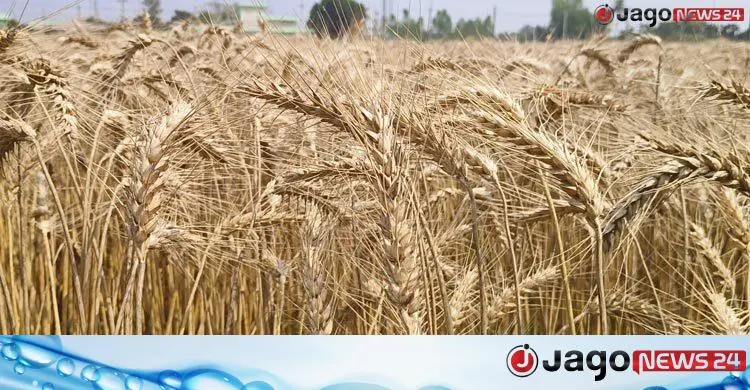
Demand for flour in Bangladesh is huge. The country needs about 8 to 8.2 million tonnes of wheat a year, most of it imported, costing about 250 billion taka in foreign currency annually. To ease that burden, scientists at the Bangladesh Wheat and Maize Research Institute (BWMRI) in Dinajpur have developed five wheat varieties that can yield almost twice as much as ordinary varieties.
The new varieties
Within a few years of its founding, the institute's scientists have developed 38 high-yielding wheat varieties in addition to the five new ones, named BWMRI-1, 2, 3, 4 and 5. The institute says spreading them would cut import dependence and raise production by up to 20 per cent.
Field data show ordinary varieties yield an average of 3.86 tonnes per hectare, while the new varieties yield 5.5 to 6 tonnes. Their features include:
- short duration, allowing three to four crops a year on the same land;
- tolerance of heat, drought and salinity, so they can be grown in coastal saline areas;
- resistance to blast, rust and other pests and diseases;
- high zinc content, which benefits public health.
Farmers' experience
This season, seed of the new varieties was given to about 5,300 farmers as demonstrations and incentives, and they got good yields at low cost with little pest or disease pressure.
Farmer Dabirul Islam of Ramdubi in Dinajpur Sadar said low yields had made him cut his wheat from five bighas to 10 decimals, but the new varieties yielded much more. They needed irrigation only three times in the whole season, less fertiliser and pesticide, and he plans to grow two more bighas. Sanchay Kumar of Nashipur said he grew one bigha for his own use and now expects a surplus to sell. Monsur Ali of Dashmile said the new wheat was trouble-free and more productive, and Shahidul Islam of Ramchandrapur in Kaharol said demonstration seed had given a much better yield, and other farmers now want seed.
Getting seed to farmers
Experts say breeding is not the end; getting improved seed to ordinary farmers is now the big challenge. If the Bangladesh Agricultural Development Corporation (BADC) and the Department of Agricultural Extension (DAE) quickly produce and supply seed of the five varieties, the country could move far towards self-sufficiency in wheat.
BWMRI Director General Dr Mahfuz Bazzaz said national wheat yield averaged 3.86 tonnes per hectare last year, while the new varieties produce 5 to 6 tonnes, which could raise total output by 20 per cent. Needing less irrigation and pesticide, they can also be grown in char, hill and Barind areas.
Source: Jagonews24. First published in Bengali on The Agro News.
Comments
(0)