
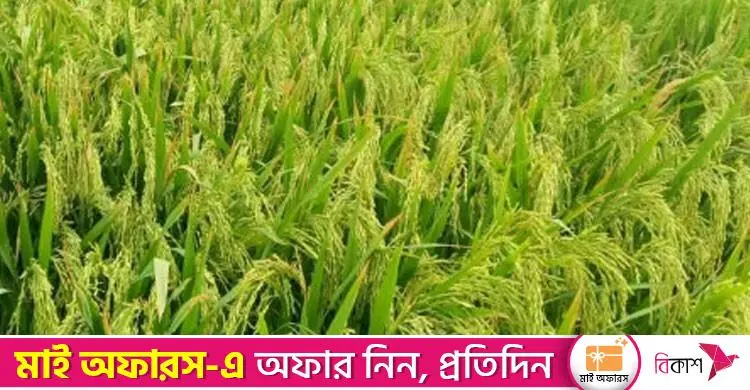
Six new rice varieties, including two hybrids, have been approved for cultivation, one of them rich in vitamin E. The high-yielding varieties developed by the Bangladesh Rice Research Institute (BRRI) were released nationwide at the 115th meeting of the National Seed Board at the Ministry of Agriculture on Thursday (5 February), chaired by Agriculture Secretary Mohammad Emdad Ullah Mian and attended by BRRI Director General Dr Mohammad Khalequzzaman.
According to the ministry, the six include one vitamin E-rich variety, one salinity-tolerant variety, one blast-resistant variety, one cold-tolerant variety for the haor region and two lodging-tolerant hybrids. BRRI has now developed 127 rice varieties.
BRRI dhan115: black rice
BRRI dhan115 is rich in vitamin E and antioxidants and is the country's first high-yielding black rice, developed using anther culture. It yields an average of 7.4 tonnes per hectare with a life cycle of 137 to 142 days. Plants grow to about 100 cm; the grain is long and slender, the husk dark brown and the kernel black. A thousand grains weigh about 17.8 grams and amylose content is 23 per cent. The grain contains 14.98 mg/kg of vitamin E and 29.12 mg/kg of cyanidin-3-glucoside.
BRRI dhan116 and 117
BRRI dhan116 is a high-yielding late Boro variety with a similar long duration to BRRI dhan92, averaging 154 days. Its grain is medium slender and finer than BRRI dhan92. Sturdy stems resist lodging, the flag leaf is erect and long, and leaves stay green at maturity. In yield trials in ten regions it outyielded BRRI dhan92 by about 13.75 per cent, averaging 8.59 tonnes per hectare and reaching up to 10.36 tonnes under good management.
BRRI dhan117 is a short-duration, salinity-tolerant and blast-resistant Boro variety averaging 8.6 tonnes per hectare and up to 9.9 tonnes with good care. The grain is medium bold and golden, and its 129 to 135-day life cycle matches the popular BRRI dhan28.
BRRI dhan118 for the haor
BRRI dhan118 is a cold-tolerant variety for the haor region. Because it tolerates cold at the reproductive stage, it can be sown early (25 October to 1 November) without grain sterility, helping farmers avoid losing half-ripe rice to flash floods. It yields at least 6 tonnes per hectare, and 6.9 to 8.5 tonnes in 145 days when sown at the normal time of 15 to 20 November. The grain is medium bold and the cooked rice fluffy and white.
Behind Bangladesh's rice output
Including the new ones, 39 BRRI varieties tolerate flood, drought, salinity, waterlogging and other stresses. BRRI's varieties and technologies reaching farmers are why Bangladesh is now the world's third-largest rice producer. Per-capita farmland has fallen from 20 decimals in 1971 to 10 decimals, and while the population has grown two and a half times, food production has risen about fourfold.
Source: Jagonews24. First published in Bengali on The Agro News.
Comments
(0)