
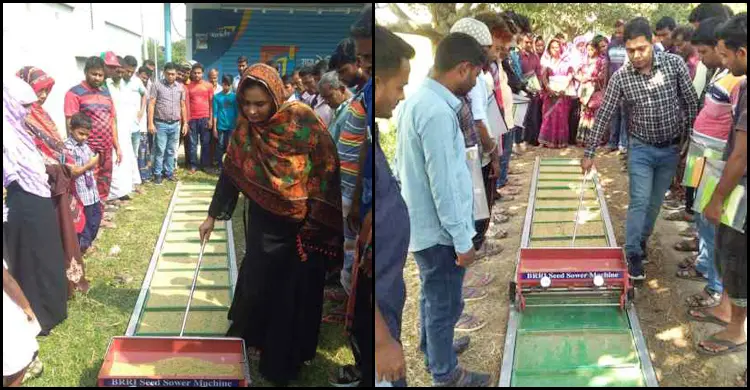
With farm labour scarce, machines are increasingly used for labour-intensive work. Sowing seed and transplanting seedlings are among the most important tasks in rice farming, and conventional transplanting needs many labourers. With this in mind, the Bangladesh Rice Research Institute (BRRI) has developed a seed sower machine, and the research work is complete.
The seed sower
The machine is suited to sowing seed for machine transplanting. Based on adaptive research and stakeholder feedback, it is now ready for farmers and can sow 7,000 to 7,300 seeds an hour evenly with little labour. Fifty units have been prepared and handed to the Department of Agricultural Extension (DAE) for five adaptive trials. Benefits include savings in time, cost and labour, controlled and even sowing, uniform seedling growth and fewer missing hills, and it is expected to help popularise rice transplanters.
BRRI director general Dr. Md. Shahjahan Kabir said the seed sower will soon reach farmers, several companies are ready to distribute it nationwide, and BRRI hopes to spread it together with its transplanter, which leaves no gaps when planting, from next season.
The SFMRA project
The work is part of the project "Strengthening Farm Machinery Research Activity for Mechanised Rice Cultivation (SFMRA)", covering 12 upazilas in 12 districts of seven divisions: Gazipur, Gopalganj, Faridpur, Barishal, Habiganj, Rajshahi, Sirajganj, Rangpur, Feni, Cumilla, Satkhira and Kushtia. Other results include:
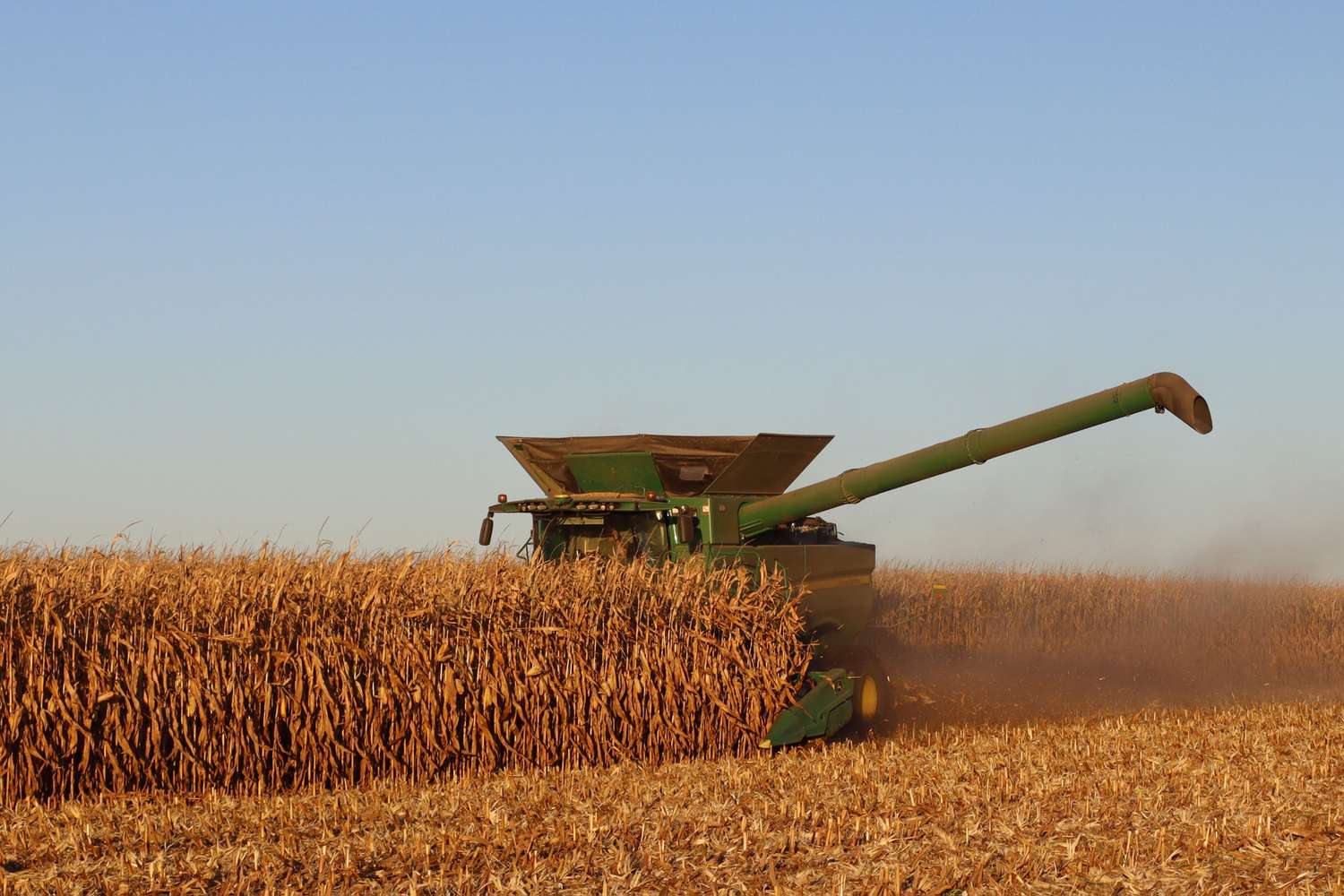
- **BRRI whole-feed combine harvester:** field-tested in Boro and Aman; works in muddy fields with 16 to 20 cm of water, cuts crops 115 to 125 cm tall and lodged crops, harvests an acre an hour, uses 10 litres of fuel per acre per hour and loses less than 1 percent.
- **Power rice transplanters** with 30 cm and 25 cm row spacing, with work on seedling number and picker position; faults are being fixed.
- **Power weeders:** 16 models prepared, with skids added for soft soil; field and adaptive trials under way.
- **Solar light trap:** the 12-volt panel was converted to 6-volt output with two 6-volt batteries in parallel, doubling the amperage so the bulb stays lit even if one battery fails; a 6-volt 3-watt ultraviolet LED bulb now saves energy and burns longer.
Budget and goals
The project was approved at an estimated Tk 44 crore for July 2019 to June 2024. It is in the "B" category, with 25 percent less of the allocation released; this year's ADP allocation is Tk 13 crore. Its aims include developing nine suitable machines and technologies, 324 adaptive field trials, hands-on training for 6,480 operators, advanced farmers, mechanics and service entrepreneurs and 200 local manufacturers and extension staff, and higher training for 20 scientists and 20 workshop staff. Video documentaries of the machines are complete, a business model has been made for the whole-feed combine harvester and one is being prepared for the seed sower, through which rural women will be trained as entrepreneurs.
Source: Jagonews24. First published in Bengali on The Agro News.
Comments
(0)