
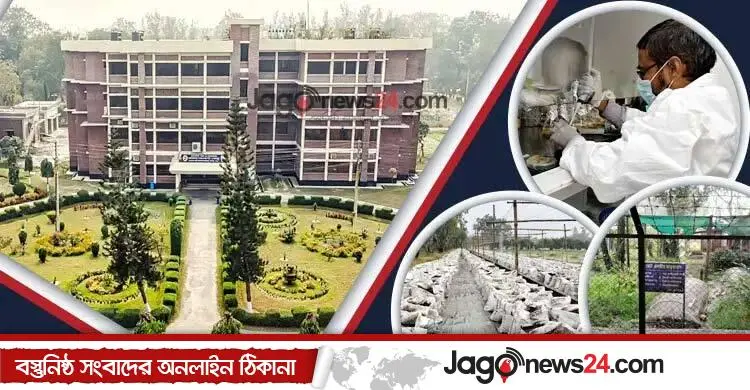
The Spice Research Centre in Bogura lists 58 varieties of 27 spice species among its innovations, and officials say it has also developed 66 improved technologies to support farming. Yet ordinary people see little benefit, and there is scant sign of them in the field, raising questions about how far the centre, run under the Bangladesh Agricultural Research Institute (BARI), is meeting its aims.
Varieties farmers do not know
Most farmers do not know the names of the varieties the centre has bred, and Department of Agricultural Extension (DAE) officials cannot give details of field cultivation beyond two or three spices. The Bangladesh Agricultural Development Corporation (BADC), responsible for seed multiplication and distribution, has bought no seed from the centre in the past two years.
Working since 1994, the centre has bred varieties of 27 spice crops including chilli, ginger, garlic, turmeric, onion, coriander, cumin, fenugreek, fennel, black cumin, mustard and cardamom. Papers for two or three new varieties are prepared each year, but there is no plan or monitoring to take them to the field.
The scale of the gap
Spice researchers say Bangladesh needs 5.85 million tonnes of spices a year and imports 4.496 million tonnes, leaving a further shortfall of 1.354 million tonnes; spice imports cost 80 to 90 billion taka a year. According to officials, spice production has grown about twelvefold, from 300,000 tonnes in 1995-96 to 3.593 million tonnes.
Chief scientific officer Dr Ashikul Islam claims the centre's varieties are grown in Pabna, Faridpur, Meherpur, Cumilla and the Chittagong Hill Tracts. But in the field, most farmers do not get government seed and save their own or buy it at market. Two ginger growers in Sherpur, Bogura, said they had never received a research variety and had only heard of growing ginger in sacks.
Extension has stalled
A DAE official said the centre does not send varieties, so there are no trainings or demonstrations. Sohel Md Shamsuddin Firoz, DAE deputy director in Bogura, said there is no official tracking of how the varieties spread, and motivation work happens only when funds are available. BADC acting deputy director (seed) Komol Kanti Barman said BADC bought no spice seed from Bogura in 2024 and the centre had not contacted it.
Dr Ashikul Islam said there is no budget beyond research, so extension cannot be done, and the centre has no plots or outreach of its own. He claims to have originated sack-based ginger growing, which he calls a modern method that uses fallow and idle land.
About 95 per cent of the farmers the reporter spoke to had never met anyone from the centre. Sources put its annual budget at 15 to 20 million taka; chief scientific officer Dr Zulfikar Haider Prodhan declined to give figures. Officials also could not explain why research continues year after year on cardamom and black cardamom, which they admit cannot succeed in local soils.
A call for accountability
Every year before Eid-ul-Adha, ginger, garlic and onion prices double, while farmers still grow varieties 20 to 30 years old. K G M Faruk, Bogura secretary of the Campaign for Good Governance (SUPRO), said varieties are being bred in the lab but do not exist in farmers' fields, with no extension plan, budget or monitoring, which naturally raises questions about accountability.
Source: Jagonews24. First published in Bengali on The Agro News.
Comments
(0)