
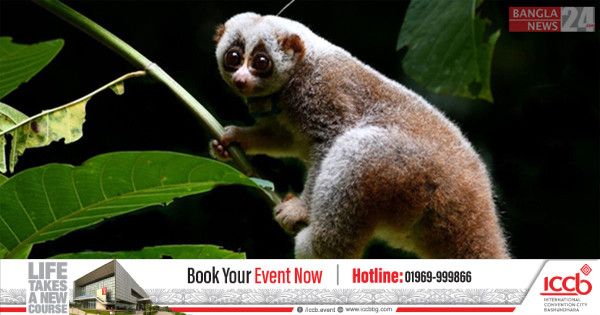
The Bengal slow loris — lajjabati banor in Bengali — is a nocturnal resident of Lawachara National Park in Moulvibazar and is listed as endangered on the IUCN Bangladesh Red List. Because it is never seen by day, most people know little about it, yet its survival in the park is now in question.
Researchers say rescued lorises are being released into Lawachara at random without a proper scientific protocol, and the animals are dying at an alarming rate. Set loose without suitable habitat or an assured food supply, released lorises run into territorial conflict and a shortage of living space. A study found that of nine lorises fitted with radio collars and released between July 2022 and September 2023, seven died within a short time — mainly for want of suitable habitat and in fatal fights over territory with lorises already in the forest.
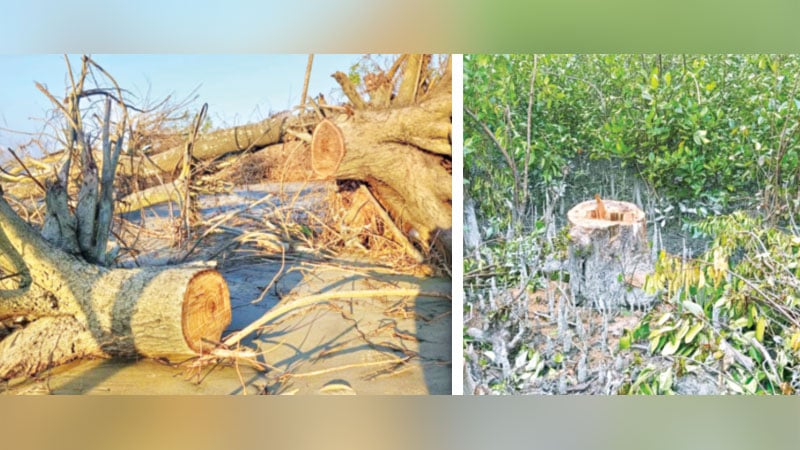
Deforestation has created a food shortage that is driving many lorises into human settlements, where they are killed on roads and railway lines or electrocuted. A team of Bangladeshi and foreign researchers coordinated by wildlife researcher Hasan Al Razi estimates that about 23 slow lorises now survive in Lawachara. The felling of old trees and the destruction of the park's natural environment are shrinking their food sources by the day.
Professor Mohammad Firoz Jaman of the zoology department at Dhaka University believes wildlife releases will bring no benefit unless scientific protocols are strictly followed. Conservation efforts exist: since 2022 the German voluntary organisation Plumploris eV and the local forest department have jointly rescued and treated 23 slow lorises from various places, 15 of which have been released into the forest.
Tanvir Ahmed, wildlife researcher and member of the IUCN mammal group, said the primate order has 504 species in 79 families worldwide; Bangladesh has ten species of monkeys and langurs, six of them on the threatened list, and the slow loris of the Lorisidae family is critically endangered. It measures 26 to 38 centimetres, weighs 1 to 2 kg, lives alone and quietly, sleeps by day in tree hollows and forages alone or in pairs after dusk. It lives at most 20 years and bears one young a year, eats insects, small fruit, soft bark and tree gum, and plays a part in pollination. Its numbers have halved in two decades, and its looks make it sought after on the international black market.
Experts say the loris of the evergreen forests of Lawachara, Satchari and Rema-Kalenga can only be kept alive by stopping forest destruction and hunting and by enforcing a scientific release policy. For the tea gardens and fields that border these forests, an animal that pollinates and eats insects is part of the farm's ecology too.
Source: banglanews24
Comments
(0)