
A team of young Bangladeshi students has won international recognition for using jute waste to solve two problems in fish ponds. 'The Golden Loop' processed discarded jute sacks into a jute geotextile that stops pond banks from eroding, and burned jute sticks in a low-oxygen environment to make biochar, which absorbs ammonia and other toxic substances and improves water quality. The project reached the top six of 119 teams in the Food Systems Innovation Challenge 2026 in the Netherlands, Desh Rupantor reports.
The project was carried out in four ponds. Laid on pond banks in place of conventional synthetic textiles, the jute geotextile prevented bank erosion over six months of trials, the team says. To turn jute sticks, usually thrown away or burned as fuel, into biochar, the students also built a stove of their own design.
Six of the eight members are students at Bangladesh Agricultural University (BAU): Mst Murshida Jahan Mitu, Nur Ayesha Chowdhury, Md Arkanul Islam Akik, Sadia Islam Badhon, Saifa Saba Hossain and Kursi Rahman Luba. The other two are Liton Tripura of Dhaka University and Ahsani Takbim Esha of Chittagong University. They were supervised by Professor Harunur Rashid of BAU's Department of Fisheries Management and Professor Mohammad Matiur Rahman of Fisheries Biology and Genetics, with technical help from Professor Mohammad Mofizur Rahman Jahangir of Soil Science.
The competition ran from January to September; the final was held on 29 September in the Omnia building at Wageningen University, where teams presented their projects and answered the jury's questions.
Team member Nur Ayesha Chowdhury said the aim was to bring new innovation to food systems through jute, and the team chose fish farming because fish is one of the main sources of nutrition in a riverine country. Heavy rain, fieldwork and keeping up with classes and exams while collecting samples and running laboratory analyses were the biggest challenges, she said.
For fish farmers the point is that the materials to protect pond banks and keep water clean could come from Bangladesh's own jute and jute sticks, most of which are now discarded or burned. The report was written by a third-year student of BAU's Faculty of Veterinary Science.
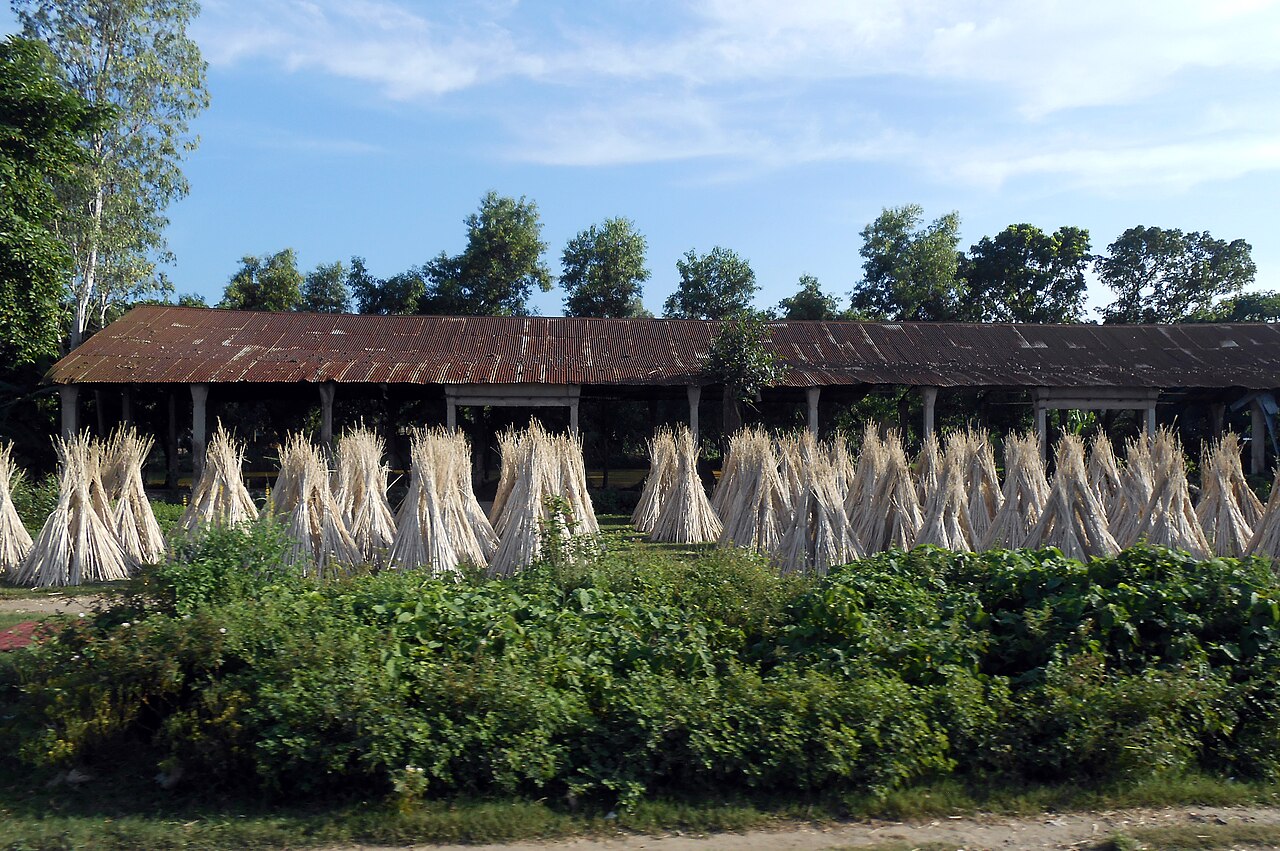
Photo: jute sticks drying in Narsingdi. Photo: Moheen Reeyad / Wikimedia Commons (CC BY-SA 4.0)
Source: Desh Rupantor

Comments
(0)