
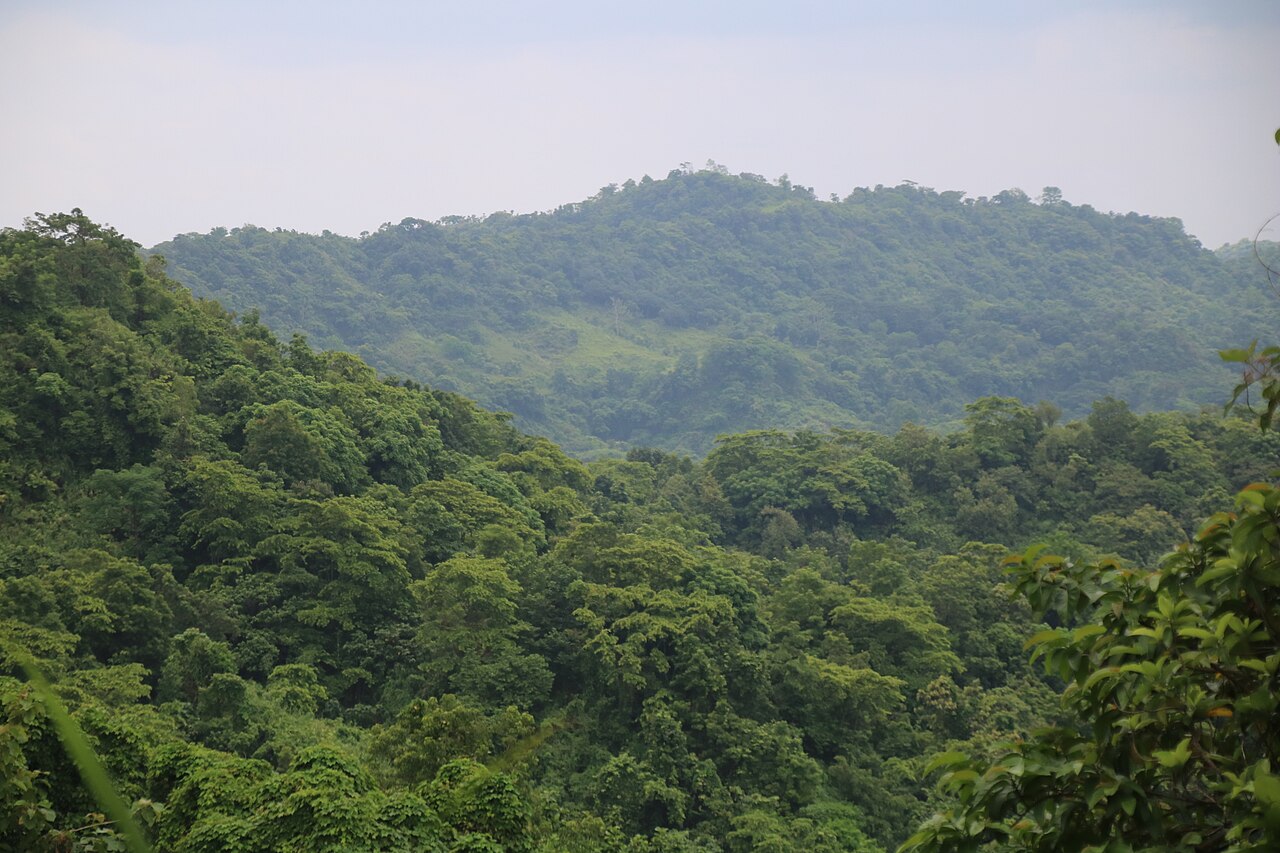
Mention an eco-park in Bangladesh and people picture forest walkways, an artificial lake with boats and a watchtower. But in an opinion column in Sarabangla, Tanzid Shuvro, a student at National University, points out that on paper an eco-park's first aim is conserving biodiversity, not recreation. The Forest Department defines it as a protected area where limited recreation is allowed without harming wildlife.
He backs the argument with figures. WWF's Living Planet Report 2024 found monitored vertebrate wildlife populations fell by an average of 73% between 1970 and 2020, and by 85% for freshwater species. Forest land under the Forest Department's direct control in Bangladesh is about 1.52 million hectares, roughly 10.5% of the country. A 2014-15 Forest Department and IUCN assessment found at least 31 species lost from the country in a century, with 56 critically endangered, 181 endangered and 153 vulnerable.
His complaint is that once a forest is declared an eco-park, attention shifts to boundary walls, gates, ticket counters, lake digging and boating, while habitat restoration, species surveys and long-term monitoring lag behind. Crowds, noise and plastic can drive away the very animals the area was meant to protect, and lakes and roads cut forests into fragments.
He proposes compulsory scientific biodiversity surveys before and after an eco-park is declared; making the views of wildlife experts and environmental scientists mandatory before infrastructure is approved; considering local people's livelihoods and customary rights from the start; publishing how much of the money goes to conservation and how much to construction; and long-term monitoring.
A suspension bridge or an artificial lake gives a few hours of fun, he writes, but saving a species protects a resource for generations. The views are the writer's own.
Photo: forest at the Sitakunda Botanical Garden and Eco-Park. Photo: Anwarul85 / Wikimedia Commons (CC BY-SA 4.0)
Source: Sarabangla

Comments
(0)