
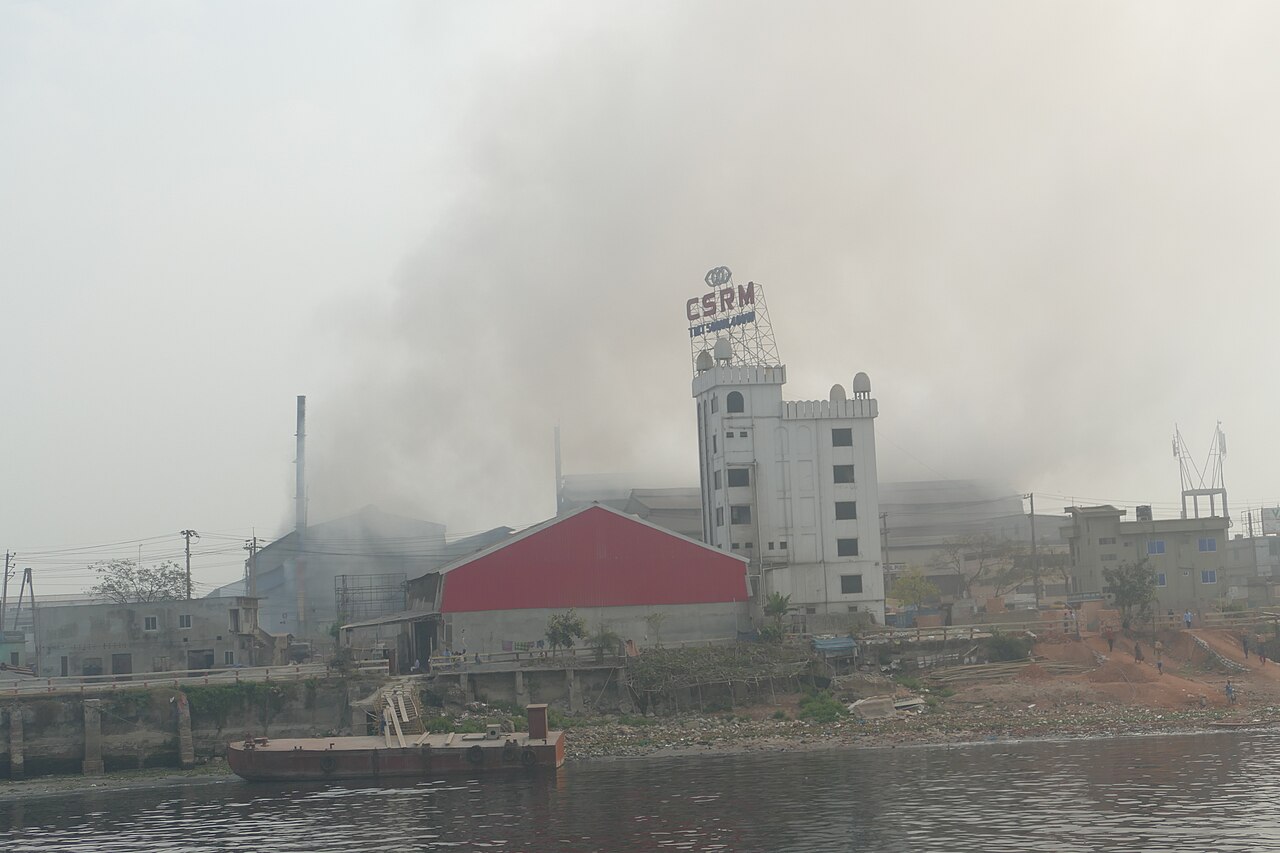
Md Anwar Hossain, secretary of the Ministry of Science and Technology, has stressed treating the harmful wastewater of the textile and garment sector with modern technology, calling it essential for sustainable industrialisation and environmental protection in Bangladesh.
He spoke on Monday (19 October) at the ministry's meeting room in the Secretariat, at a discussion of research by Sabrina Mostafa, a senior scientific officer at the IGCRT of the Bangladesh Council of Scientific and Industrial Research (BCSIR) and a PhD researcher at RMIT University in Australia. Her work is on developing processes to treat wastewater from Bangladesh's textile industries.
Speaking as chief guest, the secretary said BCSIR and the sustainability departments of business bodies such as the BGMEA and BKMEA should carry out research and process development together, so that garment and textile wastewater is treated in an environmentally sound way. He called for a strong, skilled research team to make sure effective treatment begins even before wastewater leaves a plant.
He drew particular attention to reducing the use of chemical dyes in industry and using more local natural materials instead. He also called for technology that cuts the excessive use of groundwater and drinking-quality water in dyeing, so that the process runs on the least water possible.
The secretary further urged that the findings of new research on reusing or recycling post-dyeing water and treated wastewater be put into practice in industry.
Based on a report by Banglanews24's special correspondent.
Photo: Kritzolina / Wikimedia Commons (CC BY-SA 4.0); factory pollution on the bank of the Buriganga, representative picture
Source: Banglanews24



Comments
(0)