
Build a resort on a cut hillside and you can count the tourists and the revenue; fill a wetland for apartments and you can count the rise in land value. What rarely gets counted is what the lost hill or wetland was worth, and what its loss will cost society. Rakib Hossain, a PhD researcher in economics at Khulna University, makes this case in an opinion piece for Dhaka Post. The views are the writer's own.
He draws examples from across the country. In March 2026 more than 500 illegal structures were cleared from Sugandha beach in Cox's Bazar; a 2025 study found major land-use change on St Martin's Island between 2018 and 2024; news reports in 2025 described Kuakata losing nearly a third of its forest in five years. He counts hill cutting for resorts in Bandarban and the 2025 stone looting at Bholaganj's Sadapathor and Jaflong in Sylhet as part of the same problem.
His argument is that destroying the coral, biodiversity and scenery that tourism depends on trades future income for present profit. Coastal forests reduce disaster damage, and the huge cost of concrete defences built after the forest is gone shows the value of the services that were lost. A stone from Sadapathor is easy to price, he writes, but the boat, shop and tourism livelihoods built around the river's stones must be counted too.
He calls clearing forest, cutting hills or blocking streams under labels such as "eco resort" and "eco park", in Gazipur's sal forest and elsewhere, greenwashing: a resort garden or artificial pond is no substitute for natural forest. He also points to resorts beside the Dhangmari canal in the Sundarbans and tourism risks to dolphin habitat. Citing a preliminary 2026 study by the Urban Development Directorate, he writes that rivers, canals, ponds and water bodies in and around Dhaka shrank by about 83.4 percent between 1776 and 2025; filling them raises land values while the cost of waterlogging and drainage falls on the whole city, what economists call a negative externality.
He proposes that the true social and environmental cost be assessed before projects are approved in sensitive areas; that land-use change in forests, hills, wetlands and on the coast be monitored regularly; that environmental clearance be tied to real standards rather than formality; and that the views and livelihoods of affected local people be central to project appraisal. If nature is the main asset of nature tourism, he writes, protecting it should be the first condition of investment.
Written by Rakib Hossain, PhD researcher, Department of Economics, Khulna University. The views are the writer's own.
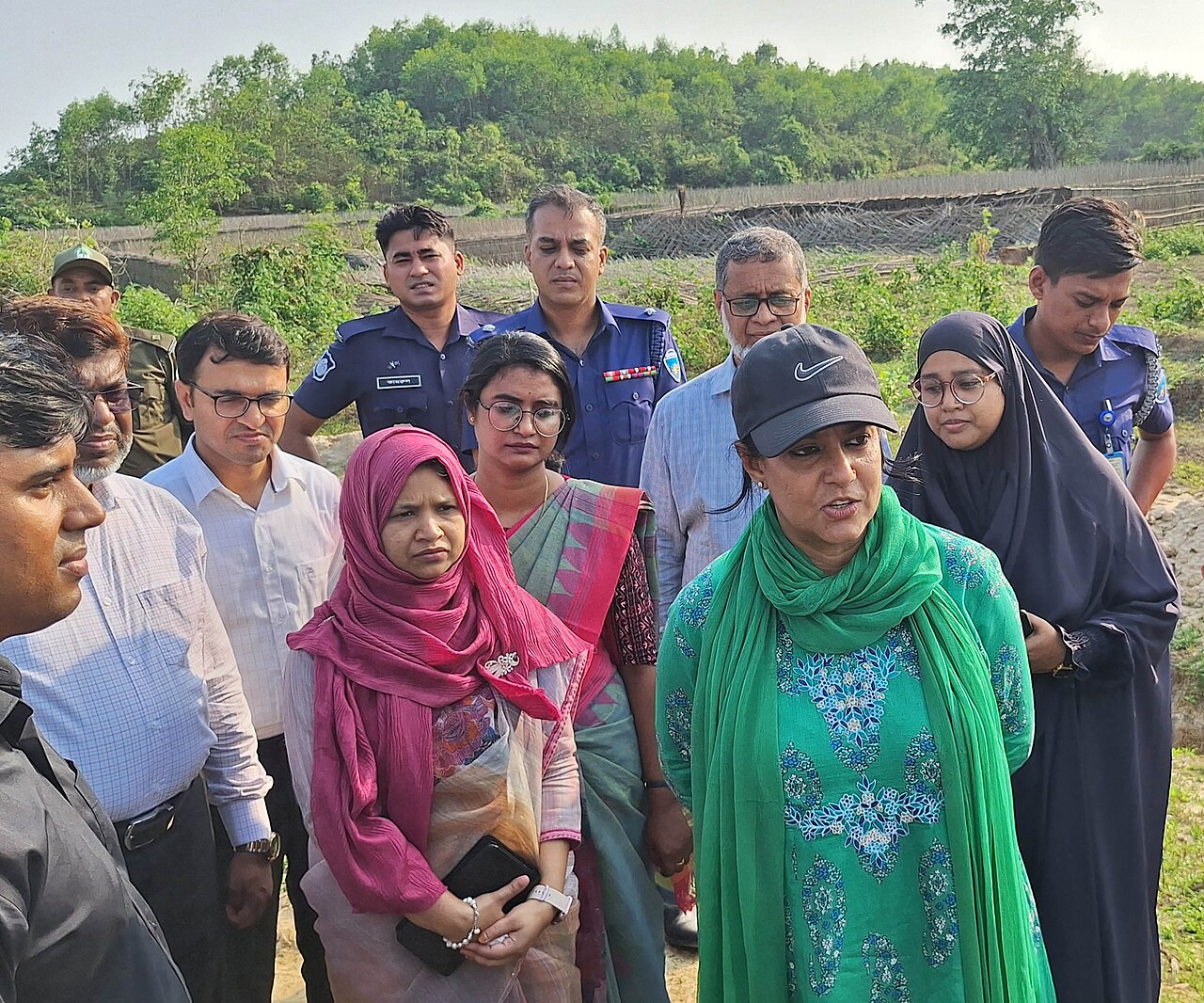
Photo: Inspection of hill cutting in the Chunati range, Chattogram, 2025, Press Information Department / Wikimedia Commons (public domain)
Source: Dhaka Post




Comments
(0)