
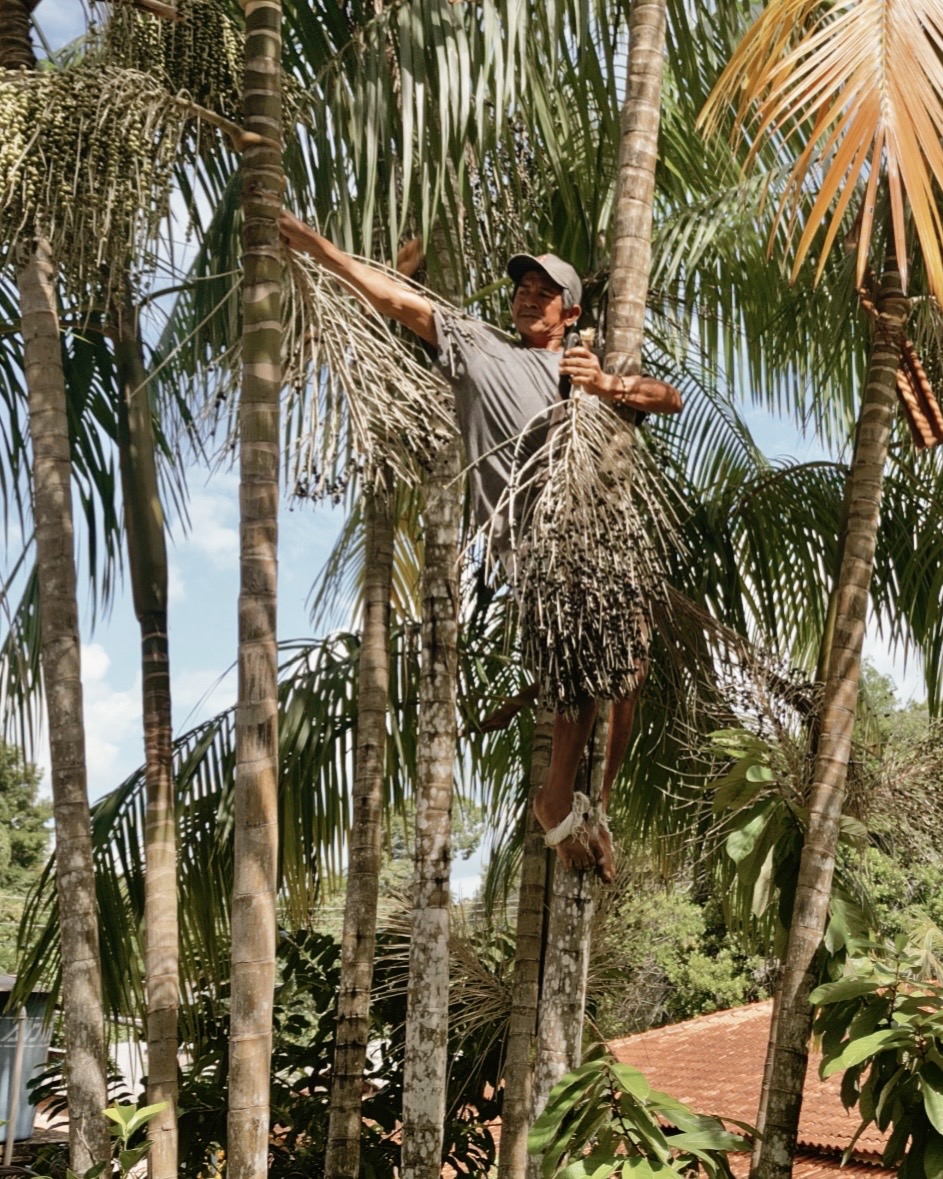
Açaí's journey from a staple of Brazil's Amazon to a global wellness trend shows how a forest fruit can reach consumers everywhere while the communities behind it gain little, Swasti Pachauri argues in a column for Down To Earth. The views are the writer's own.
The berry's pulp has long been eaten as a puree with cassava dishes or fish. Its deep purple colour, from anthocyanin antioxidants, has carried it into juices, bowls, ice creams, cosmetics and supplements, and industry estimates project the global market for açaí products to grow by US$1.5 billion in 2026. In India, cafés and brands such as Acai Theory and Lyfberry are selling it to young, health-minded buyers.
Harvesting is hard work: the tall, slender palms cannot easily be harvested by machine, so pickers climb them, and because the berries spoil quickly the pulp must be processed and moved to cold storage fast. The industry has been criticised for child labour and poor working conditions. Madson Freitas of the Museu Paraense Emílio Goeldi has described the spread of açaí palms at the expense of other vegetation as the "açaí-fication" of the Amazon, although açaí is also grown in agroforestry with crops such as coffee, and both are vulnerable to drought.
About 85% of the fruit's mass is seed, which can pollute rivers and soil when discarded but is being studied for uses such as organic cosmetics. Brazil, worried about biopiracy and appropriation, designated açaí and cupuaçu as national fruits in January 2026.
Pachauri lists Indian fruits with processing potential: shahtoot (mulberry), jamun, phalsa, amla, ber, karonda and Indian cherries, Himalayan rhododendron, sea buckthorn and kaafal, as well as non-timber forest produce, with custard apple and water chestnut already in ice creams and flour. Realising that potential, she writes, will need investment in processing, cold storage and supply chains, along with safeguards for intellectual property and biodiversity and a fair share of benefits for local communities.
Photo: Vieiraproductions / Wikimedia Commons (CC BY-SA 4.0)
Source: Down To Earth


Comments
(0)