
18 September is World Bamboo Day, observed every year since 2010 by the World Bamboo Organization (WBO). In its 2026 message the organisation calls for bamboo to be treated as a strategic resource for tackling climate change, restoring the environment and pursuing sustainable development. This year's theme, "Bamboo Beyond Borders", presents the plant as an asset from village to city, from farmland to factory and into modern architecture.
The day was launched at the eighth World Bamboo Congress in Bangkok, Thailand, in 2009, an event supported by the country's Royal Forest Department. The first congress was held in Puerto Rico in 1984; the International Bamboo Association was formed at the third congress in Minamata, Japan, in 1992, converted into the WBO at the sixth congress in New Delhi in 2004, and legally established in 2005. It is not a United Nations day but a global awareness day marked with bamboo planting, workshops, exhibitions and research events.
Bamboo roots form a dense underground network. A 2024 study titled "Merits of Bamboo Utilization in Earth Preservation, Water and Wastewater Treatment" found that this fibrous mesh can help limit soil erosion and the decline of soil quality, and can trap harmful substances as water passes through it, though the effect varies with species, environment and management.
Advice to plant more bamboo for carbon storage comes with a caveat. A systematic review by Suman Dutta and co-authors published in the journal Environmental Reviews in 2025 notes that bamboo takes carbon from the atmosphere and stores it, but that the carbon can return to the atmosphere if the bamboo is cut and burnt. How much bamboo helps the climate therefore depends not on how much is planted but on how it is grown, harvested, processed and used; the authors call for more research.
The WBO lists construction, furniture, engineered products, textiles, paper, food, fuel and new bio-based technologies as fields where bamboo has potential, while noting that durable and safe construction requires proper drying, preservation, jointing, fire safety and quality control. Because every bamboo product rests on the labour of farmers, artisans, engineers, scientists and local communities, the organisation says local participation and a fair share of the benefit must be secured. In Vietnam, a project of the UN Food and Agriculture Organization (FAO) has given women bamboo growers access to cooperatives that share production costs, sell produce and provide training; bamboo there is both a source of income and a means of restoring land.
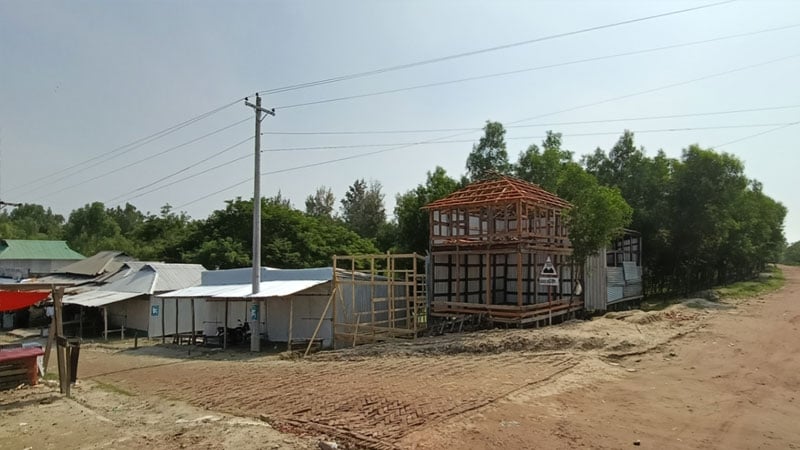
In Bangladesh bamboo has long gone into houses, fences, footbridges, farm tools, fish traps, baskets and winnowing trays. The Bangladesh Forest Research Institute (BFRI) worked on furniture made from bamboo composites between 2005 and 2015 and on refining and spreading that design between 2015 and 2020; 36 bamboo species are conserved on its campus at Sholoshohor in Chattogram. BFRI research into composite boards and furniture has shown that bamboo can substitute for timber.
There is cause for concern too. A 2018 report by the Humanitarian Bamboo Project attributed a decline in the country's bamboo supply to land clearing, falling local prices and gregarious flowering disease, even as demand in construction and other sectors remains strong. For bamboo growers and artisans caught between those two trends, the report's conclusion is that market demand alone is not enough: sustainable production and the conservation of species must come with it.
Source: Prothom Alo

Comments
(0)