
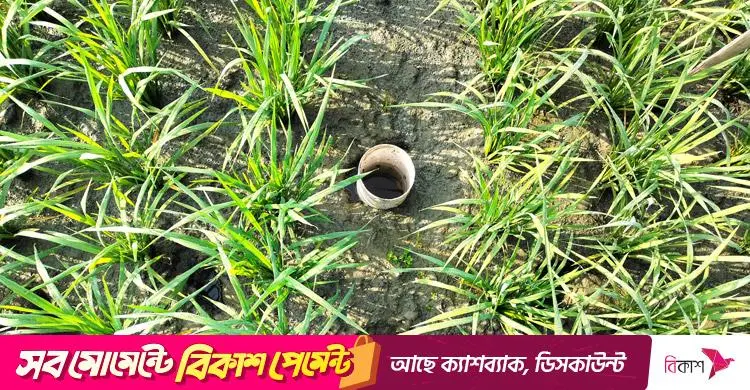
The Alternate Wetting and Drying (AWD) method of irrigating rice is up to 28 percent cheaper than conventional irrigation. Because fields receive measured amounts of water, they do not become waterlogged, which keeps rice free of a range of problems.
This Boro season, the new irrigation method is being used for the first time in Matiranga in the Khagrachhari hill district to protect the environment and save water. Agriculture officials say that if it succeeds, it will bring new hope for rice farming.
How AWD works
According to the Bangladesh Rice Research Institute (BRRI), AWD means irrigating as needed by alternately wetting and drying the field. A perforated plastic pipe 12 inches long and 3 inches in diameter is set in the field with 8 inches buried in the soil, and the water level inside is checked to decide when to irrigate. Producing one kilogram of rice takes about 2,000 to 3,000 litres of water conventionally but only about 1,200 litres with AWD.
Too much standing water can reduce yields and increase pest attacks. In waterlogged fields, rice cannot take up zinc and gypsum; zinc deficiency causes brown spots; brown planthopper and case worm attacks increase; tillering suffers; urea cannot be applied; and methane is produced and pollutes the air. AWD avoids these problems.
The Matiranga demonstration
An AWD demonstration was set up on 2 acres 50 decimals in the Charpara block of Matiranga municipality with farmers Md. Tajul Islam, Sajai Marma and Sufia Begum. The upazila agriculture office gave the three farmers BRRI rice seed, urea, DAP, MOP, zinc sulphate, gypsum, boron, organic fertiliser, pesticide and six AWD pipes, among other inputs. Because the technology is new, it has aroused curiosity, and farmers visit every day.
"I did not know about AWD before," Tajul Islam said. "The trial has been quite successful, and I will advise farmers to use it."
Upazila agriculture officer Agriculturist Md. Sabuj Ali called AWD environmentally friendly and said that if it becomes popular it will save irrigation water, electricity and fuel, reduce farmers' irrigation costs, raise rice yields and ease pressure on groundwater.
Source: Jagonews24. First published in Bengali on The Agro News.
Comments
(0)