
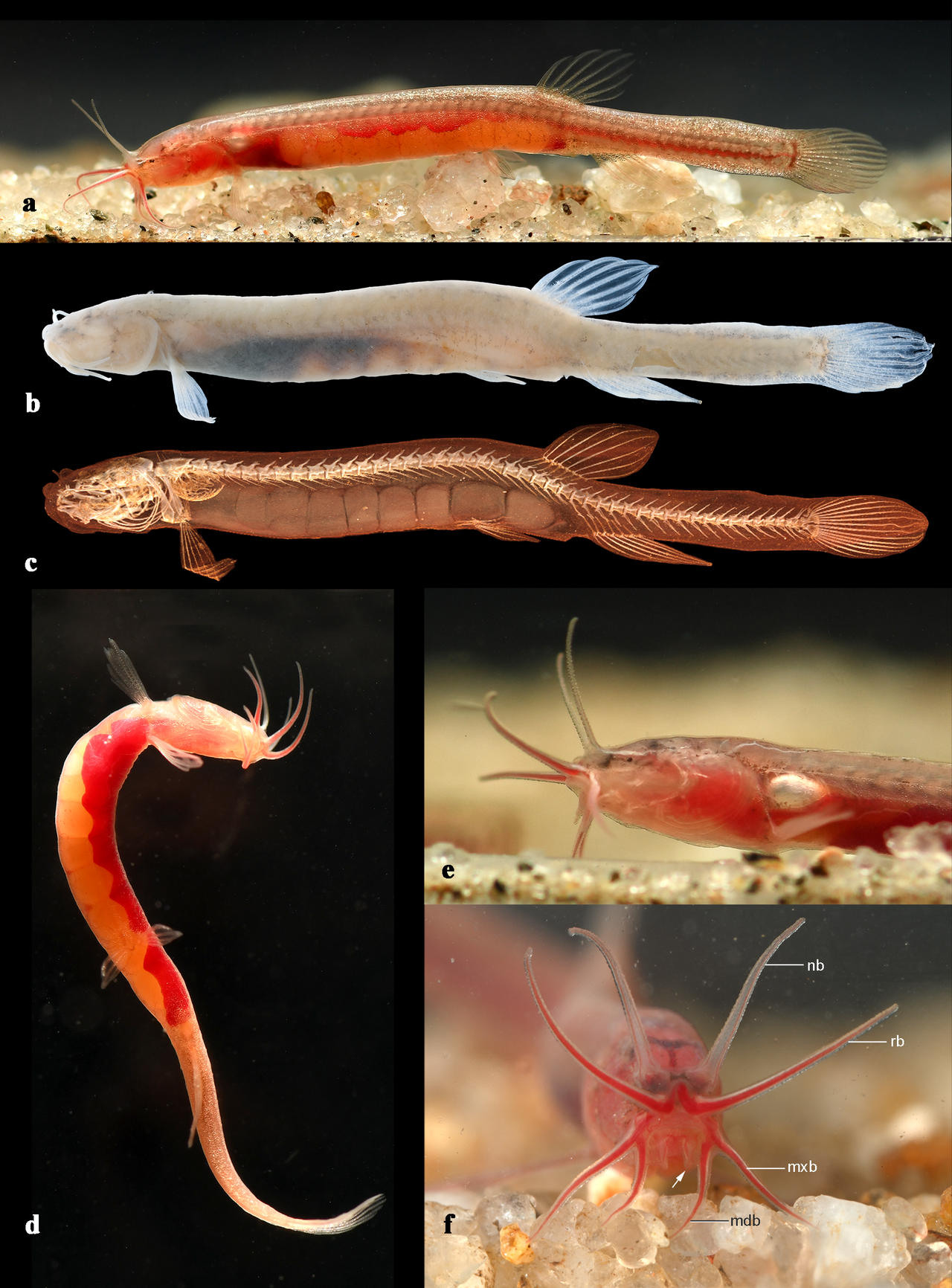
Two fish species new to science have been described from household wells in Assam's Goalpara district, offering a rare glimpse of life in the aquifers beneath the Brahmaputra floodplain, Mongabay India reported. One is Gitchak nakana, a blind loach about two centimetres long whose transparent body makes it look blood red; the other is Rakthamichthys anchi, a slender, eel-like fish of the swamp eel family.
Both were found because of a local resident turned researcher. Wimarithy K. Marak had seen small pink 'worms' in neighbourhood wells for years; in 2021 she sent a photograph to her supervisor and a specimen was collected in March that year. In May 2024 a relative draining his well found the second species; its holotype measures about 310 mm. Two papers describing them were published this year, led by the German ichthyologist Ralf Britz, with micro-CT scanning done in Germany.
The wells sit in alluvial deposits, which Britz called the most unexpected habitat for subterranean fishes because it changes so quickly. The researchers did not publish the exact locality for fear the populations might be exploited. Prerona Das, a geologist at North-Eastern Hill University, said the Brahmaputra floodplain holds five to six layered aquifers reaching 400 metres in depth.
Rajeev Raghavan of the Kerala University of Fisheries and Ocean Studies, a co-author, said people often mistake such fish for earthworms or young snakes and kill them, and his team works with communities in Kerala to change that. The fish may visit wells because they offer more food, light and oxygen than the aquifer, he said, and they can go months without feeding.
Groundwater fishes are among the first animals to feel changes in water quality, Raghavan said, warning that unregulated pollution and extraction could wipe out species before they are discovered. Das listed urbanisation, poor sanitation, agricultural chemicals and waste disposal among the risks. Grant Hose of the University of Sydney, who was not involved, suggested sampling purged wells for environmental DNA to confirm which animals live in the aquifer itself.
The report was written by Priyanka Shankar.
Photo: R. Britz, W. K. Marak, K. Velentina et al. / Wikimedia Commons (CC BY 4.0)
Source: Mongabay India

Comments
(0)