
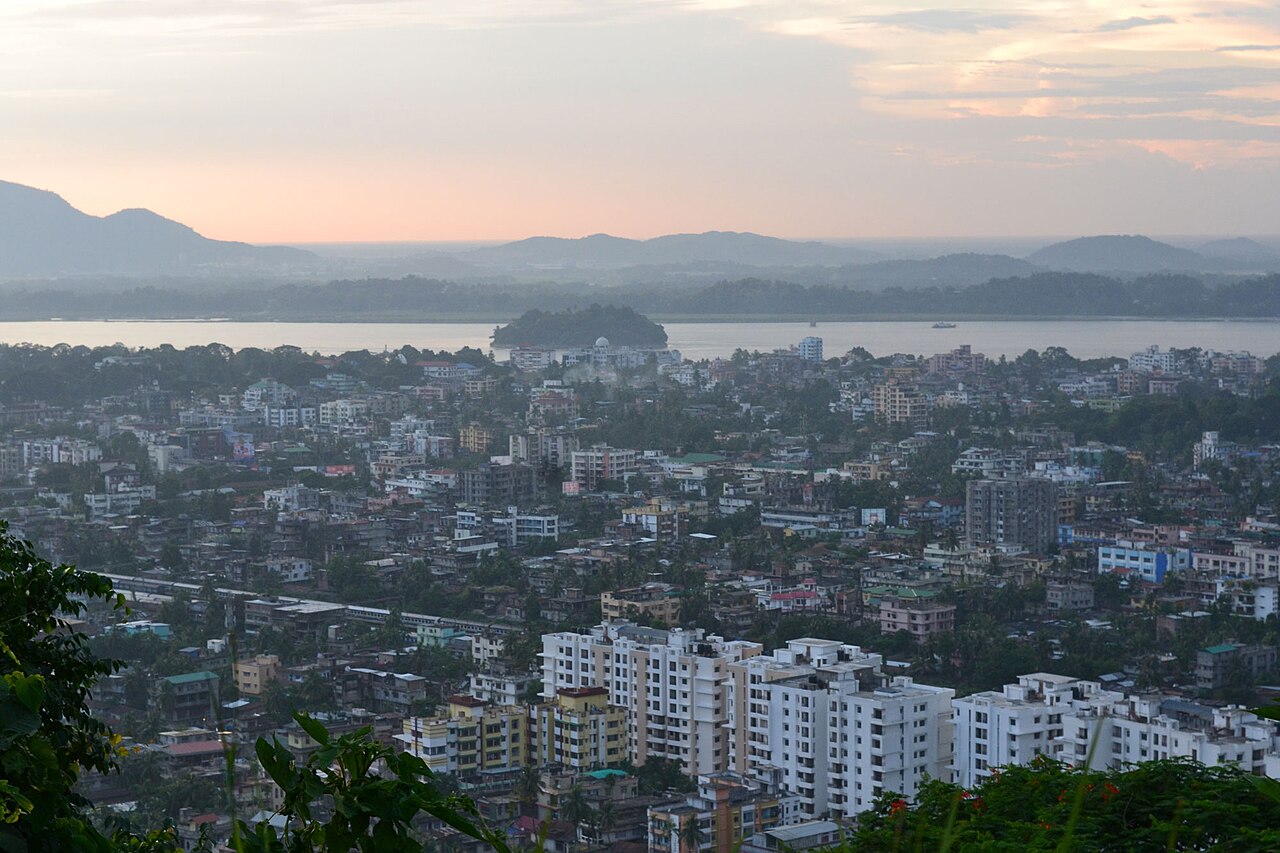
Assam keeps getting hotter, but by the letter of India's rules it almost never has a heatwave. The India Meteorological Department (IMD) declares one only when a station in the plains reaches 40°C and runs 4.5°C to 6.4°C above normal for two days, or hits 45°C outright. Humidity plays no part, and in Assam that leaves a gap between what the thermometer says and what people feel, Mongabay India reports.
The readings show the problem. On 25 May 2024 Guwahati recorded 40.1°C, at least 8°C above normal, with relative humidity between 40% and 100% and an apparent, or feels-like, temperature of about 52°C. On 23 September 2024, the city's hottest September day on record, the feels-like temperature reached about 53°C. On 4 July 2026 a maximum of only 36°C, with humidity up to 100%, still produced a feels-like temperature of around 52°C.
"This isn't a contradiction; it's a definitional blind spot," said Partha Jyoti Das, environmental scientist and Professor of Practice at Gauhati University. Because no heatwave has been declared, he said, heat has not been treated as a risk, which experts see as one reason Assam has no Heat Action Plan, while more than 250 cities and districts in 23 heat-prone states have one. Das argues that wet-bulb temperature, which accounts for evaporative cooling, says more about heat stress in Assam: 35°C with humidity above 80% can mean a wet-bulb temperature of 31-32°C.
The evidence is building. The Assam State Action Plan on Climate Change 2.0 records annual average maximum temperatures rising by 0.049°C a year between 1990 and 2019. An October 2026 report by IMD scientists found Guwahati's heat index above 40°C from May to October in 2022-2024, peaking at 55.5°C in September, with July to September in the authors' "Extreme Danger" category, a level no month reached in 1991-2020. A 2023 review of 37 Heat Action Plans found 67% defined heat hazards by daytime temperature alone.
Children are especially exposed. A 2026 study estimated that up to 560 million children under 10 worldwide, about 43%, face at least one extra month of heat stress a year because of human-induced climate change, with South Asia among the worst affected. Madhulika Jonathan, UNICEF's Chief of Field Office for Assam and the Northeast, said heat touches children's health, nutrition, water, schooling and learning, in a state where nearly half the districts are among India's most climate-vulnerable.
A Heat Action Plan is now being prepared through stakeholder consultation, said Rizwan Uz Zaman, Technical Consultant at ACCMS, including whether different thresholds suit Assam. With six agro-climatic zones, he suggested a multi-criteria index so that plans can follow each zone's risk. Das wants IMD to publish humidity-based heat indices alongside air temperature, so people know that a normal-looking reading can still carry a high risk of heat stress.
Photo: Anushila Bharali / Wikimedia Commons (CC BY-SA 4.0)
Source: Mongabay India


Comments
(0)