
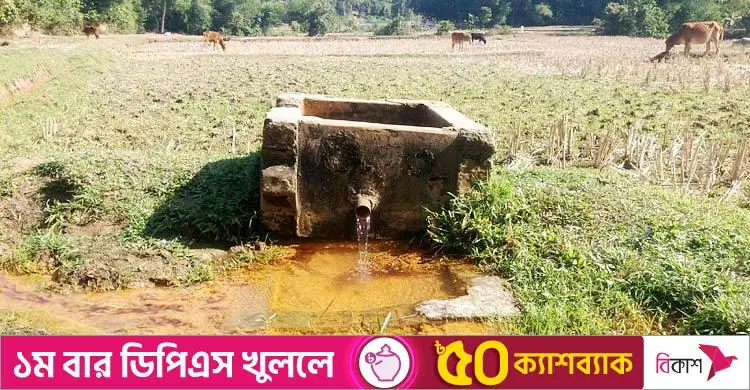
Artesian wells are raising hopes for farming in the hilly areas of Mirsarai upazila, Chattogram. The wells bring groundwater up from about 1,000 feet below ground automatically, without pumping, so farmers now have water even in the dry season and cultivation is increasing.
How the wells work
According to the Bangladesh Agricultural Development Corporation (BADC), 33 artesian wells have been installed over the past five years in Koila Rahmatpur, Islamabad, Sonai, Koila Bazar and nearby areas of Karerhat union to increase dry-season crop production, 20 of them in 2024-25. The wells need no electricity or generator and are sunk about 1,000 feet deep. They cannot be installed in every hill area, only where there is a "spring layer", with water under pressure from below; several villages in Karerhat union have such layers. Local farmers are growing vegetables, rice and lemons with the water.
Results
BADC sub-assistant engineer Zahed Hasan, in charge of Mirsarai, said farming in the hills is difficult in the dry season for lack of water, which is why BADC installed the wells, and farmers are now cultivating even in the dry season. Sub-assistant agriculture officer Nayan Kumar Das, responsible for Ward 6 of Karerhat union, said 30 hectares are now farmed in the dry season in Rahmatpur village, Koila area, 20 hectares of them irrigated by artesian wells and 10 hectares by local streams.
Farmer Abul Kalam said there was no dry-season farming before for lack of water, but since the wells were installed cultivation has expanded widely, and lemon growing has increased. Mirsarai upazila agriculture extension officer Protap Chandra Roy said cultivation has grown in the hilly areas of Karerhat union, and because the water costs nothing, farmers are paying more attention to farming.
Source: Jagonews24. First published in Bengali on The Agro News.

Comments
(0)