
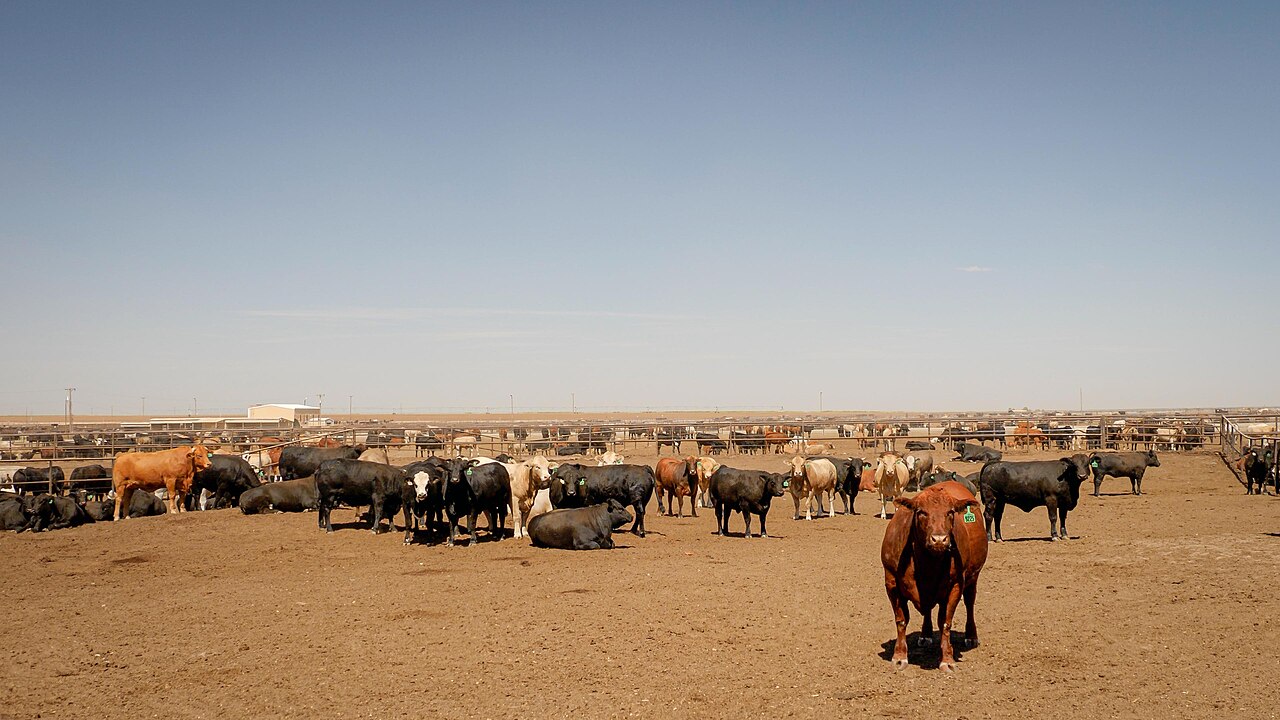
Respiratory disease affected 12.2% of cattle on US feedlots in 2020, and 90.2% of feedlots used antibiotics on at least one animal that year, according to a new report from the US Department of Agriculture's Animal and Plant Health Inspection Service (APHIS).
Health and Management Practices on U.S. Feedlots, 2021 is the second report from the Feedlot 2021 study, the fifth national study of the industry by APHIS's National Animal Health Monitoring System. It covered 22 states and feedlots with 50 or more head. The figures describe 2020.
Arrival weight mattered, at least on the bigger operations. Overall, 25.9% of cattle under 400 pounds at arrival developed respiratory disease, against 9.6% of those at 700 pounds or more. On large feedlots the gap was 31.0% to 10.4%, while small feedlots showed no difference by weight.
Three in four feedlots (75.9%) processed cattle as a group within four weeks of arrival. Of those, most vaccinated all cattle against respiratory diseases (87.6%), bovine viral diarrhoea (80.8%) and clostridial diseases (70.1%), and 83.7% gave all cattle a parasiticide. In addition, 58.4% did not need to castrate any male calves because all had been castrated before arrival.
On antibiotics, 83.7% of feedlots used injectable or bolus-dosed products on at least one animal, 69.9% used antibiotics in feed for at least some cattle, and 5.9% used them in water. When choosing injectable products, most feedlots rated personal experience (83.7%), veterinarian recommendations (82.4%) and duration of action (62.4%) as extremely or very important.
Written or electronic biosecurity plans were far more common on large feedlots (30.3%) than small ones (5.6%). The vast majority of feedlots (91.8%) shared no fence line allowing nose-to-nose contact with other cattle, bison or domestic ruminants. For those, the nearest such operation was 1.7 miles away on average.
Reporting by Melanie Epp for The Cattle Site.
Photo: Preston Keres/USDA/FPAC / Wikimedia Commons (Public domain)
Source: The Cattle Site

Comments
(0)