
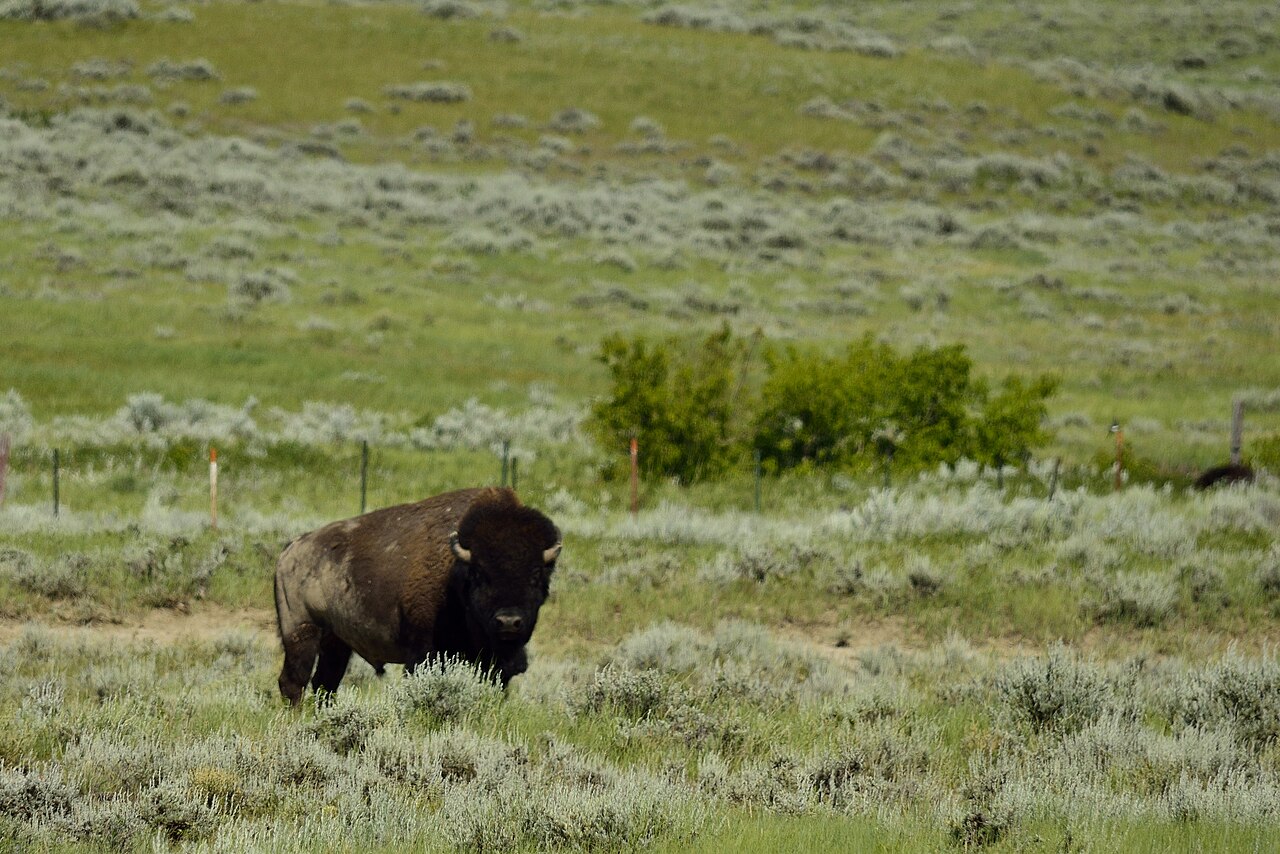
Montana's Department of Natural Resources and Conservation (DNRC) has concluded that American Prairie Foundation's plan to graze bison on a 640-acre state trust land lease in Phillips County is not likely to cause significant environmental impacts, though it flagged public safety and escapes as concerns.
The environmental assessment, under the Montana Environmental Policy Act, looked at changing State Lease 6732 from cattle to a mix of bison and cattle. The stocking limit would stay at 120 animal unit months, and DNRC said range damage is driven mainly by poor management and overstocking rather than by the class of livestock.
Containment drew the closest attention. American Prairie's own records show 18 bison escapes in 2020, 11 in 2021 and six in 2022, against six, six and two cattle incursions. DNRC said bison breach perimeter fences at a higher rate than cattle, and some past escapes meant long periods outside grazing areas, aerial help or animals being killed.
If the proposal is approved, American Prairie would have to maintain perimeter fences, monitor bison routinely, recapture escaped animals quickly and keep reporting escapes and incursions. Warning signs would go up at access points, gates and cattle guards, because bison can endanger recreational users, especially in the breeding season or when cows are protecting newborn calves.
The group proposes about 2.9 miles of new fence, 9.8 miles rebuilt and electrified, about 15 miles maintained and about 5.2 miles removed across its wider project area, to wildlife-friendly standards. DNRC found this could benefit wildlife and saw no measurable effect on soil productivity, water quality, watersheds or local air quality.
The finding is not a green light. It does not authorize grazing or fencing, which still need approval under state law on trust lands, and DNRC did not evaluate the legality of American Prairie's bison grazing on federal lands or the effects of a large conservation herd.
Reporting credited to Andy Schwab at Northern Ag Network.
Photo: Brian Greenblatt / Wikimedia Commons (CC BY-SA 3.0)
Source: Northern Ag Network

Comments
(0)