
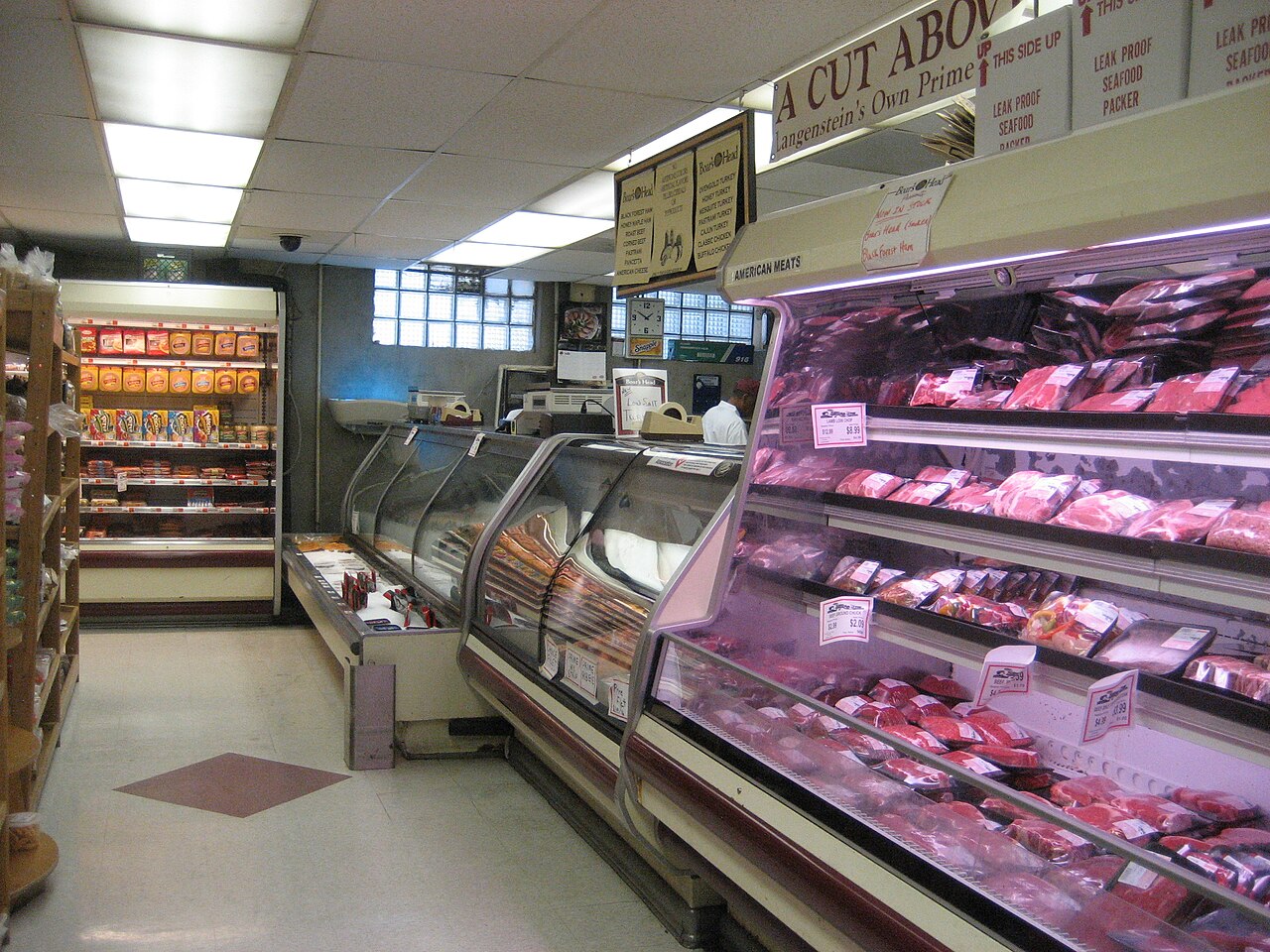
Amsterdam became the first capital city in the world to ban billboards advertising fossil fuels and meat on 1 May this year, five years after the measure was first proposed. The ban is part of the city's targets to become carbon neutral by 2050 and to halve meat consumption over the same period. Utrecht, The Hague, Zwolle, Delft and Nijmegen already have similar rules, while cities such as Helsinki, Stockholm and Bristol have restricted advertising for fossil fuels and other carbon-intensive products, mostly without including meat.
The case for including food rests on emissions. Food and agriculture produce about a third of global greenhouse gas emissions. In the EU, animal-sourced foods are thought to account for 81 to 86% of the emissions from food production while supplying about 21% of calories and 64% of protein. The 2025 EAT-Lancet Commission report, written by 70 experts from 35 countries, estimated that a shift to mainly plant-based diets could avoid around 15 million deaths a year and cut agriculture's non-CO2 emissions, such as methane from livestock and nitrous oxide from fertilisers, by 15% by 2050.
Linda Aspey, a climate psychology specialist and board member of the Climate Psychology Alliance, told Euronews that much of advertising's power comes from "repetition and cueing". She cited a study in which seeing an image of a Big Mac increased people's desire to eat one. "What the evidence does show is that advertising typically shapes what feels normal for most of us, to varying degrees, which in turn can shape behaviours," she said.
Dutch meat eating was already falling: in 2024 the Netherlands ate less meat than at any time in the past 20 years, according to Wageningen Social and Economic Research's Meat Report. Amsterdam has not yet published any data on the effect of its ban. When Transport for London removed junk food advertising from its network, weekly household purchases of such food were estimated to fall by nearly 7% and of confectionery by almost a fifth, measured from shopping data rather than surveys. Aspey said such restrictions, as with tobacco, tend to work best combined with other measures.
Subsidies point the other way. A report by the charity Foodrise found that in 2020 animal-sourced foods received about 77% of the EU's Common Agricultural Policy subsidies, €39 billion of €51 billion, and that beef and lamb received around 580 times more than legumes such as lentils and beans.
The report was written by Liam Gilliver for Euronews.
Photo: Infrogmation of New Orleans / Wikimedia Commons (CC BY-SA 3.0)
Source: Euronews




Comments
(0)