
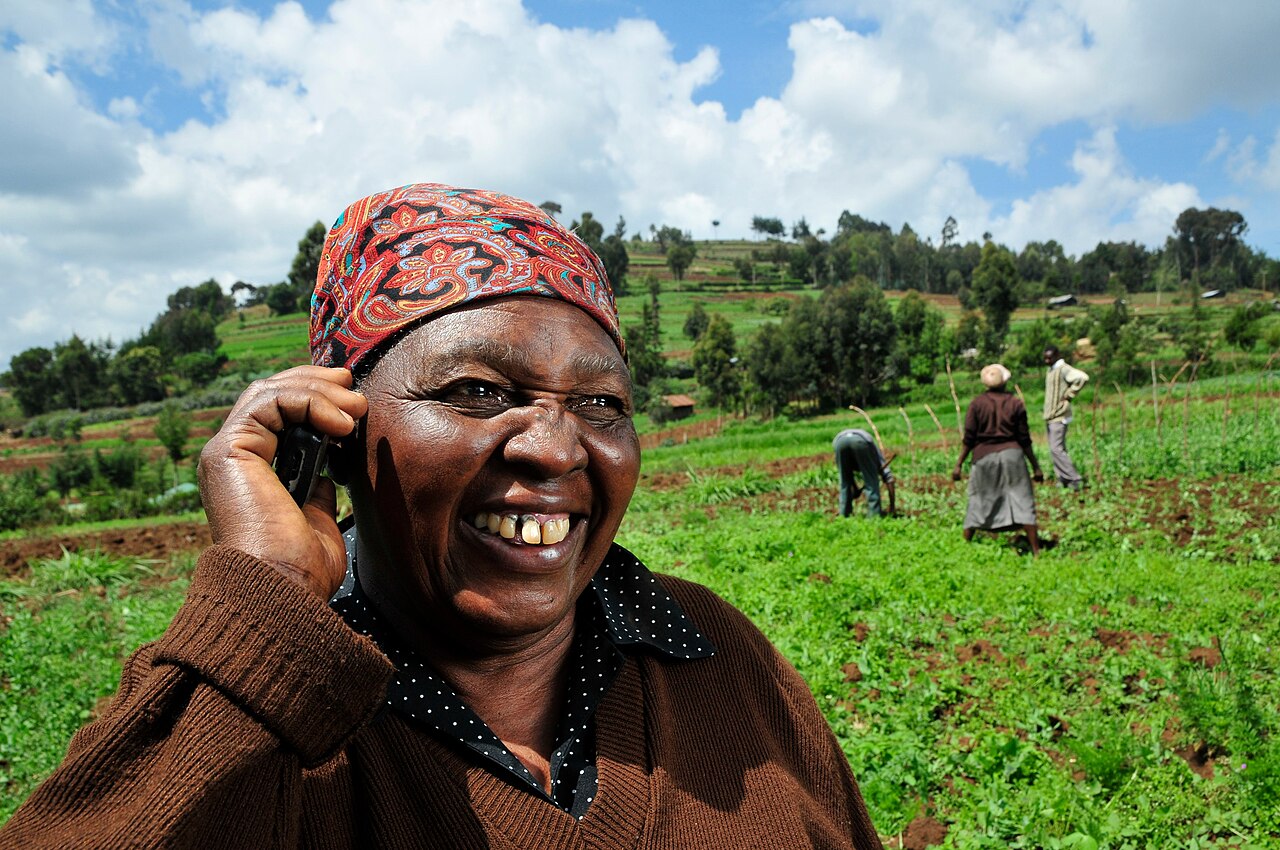
Artificial intelligence is already working for India's smallholder farmers in soil testing, pest prediction, weather and price advice and quality grading, and farmers' digital readiness is no longer the main obstacle, argues Hemendra Mathur, a venture capitalist and co-founder of ThinkAg, in a signed column. The views are the writer's own.
His evidence is voice. In Nagpur district, he writes, more than a lakh (100,000) farmers have asked an AI service questions by phone in their own dialect in the past year, through Maharashtra's MahaVISTAAR platform, which had reached around 30 lakh farmers by February 2026. Kisan e-Mitra, the AI assistant for the PM-KISAN scheme, had answered more than 9.3 million queries in 11 Indian languages by December 2025, and Bharat-VISTAAR, launched nationally in 2026, takes calls on the toll-free number 155261, so a farmer with a basic phone needs no data pack.
The weak point, he says, is content, curation and context, not conversation: founders estimate that a quarter to a third of farmer queries still go unanswered, and a wrong spray recommendation can destroy a season. He cites a 2026 study of farm advisory queries from Bihar in which a fine-tuned small model raised recall of expert-verified facts from 26.2 percent to 50.3 percent at about 15 percent of GPT-4's cost, while the largest untuned model tested scored 23.8 percent.
Mathur makes four recommendations: build small, crop- and region-tuned language models rather than large ones, so that each query costs less than a rupee and can run offline; connect AI to India's digital public infrastructure, such as AgriStack's farmer IDs and plot registry, so advice ends in a purchase, loan or sale; write agriculture-specific AI rules now, including consent a farmer can understand and a liability standard for advice that causes losses; and release public farm data, from ICAR practice guides to mandi price series, in machine-readable form.
AgriStack had created more than 10.31 crore farmer IDs by 3 August 2026, he notes, and its digital crop survey covered over 31.3 crore plots in 648 districts in the 2025-26 rabi season. Farm data collected for advice, he warns, must not quietly become a credit score or an insurance price without the farmer's separate consent.
For South Asia's small farmers, the column's main point is practical: an adviser that answers a voice call in the farmer's own language may reach more growers than another smartphone app.
Photo: Neil Palmer (CIAT) / Wikimedia Commons (CC BY-SA 2.0)
Source: Global Agriculture

Comments
(0)