
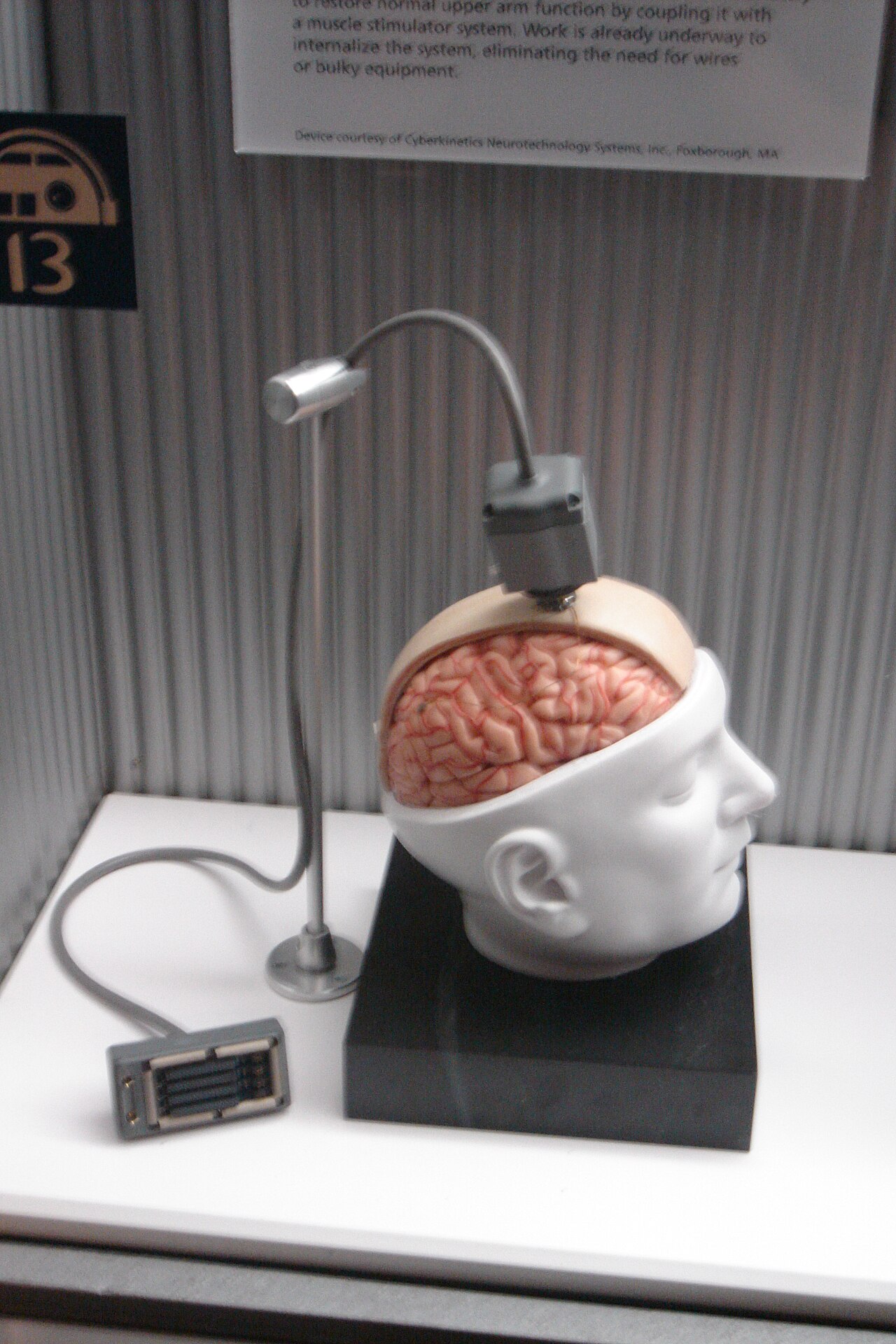
People who lose the physical ability to speak through paralysis, stroke or serious neurological disease often still form language and thoughts in the brain. Researchers around the world are working to turn those thoughts into words using brain-computer interfaces (BCIs), which analyse faint electrical activity in the brain and use artificial intelligence to rebuild the sound of speech.
When someone tries to say a word, specific electrical patterns appear in the brain. To capture them, tiny electrodes are placed in particular areas of the brain to pick up nerve-cell signals and send them to a computer outside. According to Dinajpur TV's report, the BCI device made by US company Paradromics has 421 microelectrodes that record activity linked to speech and movement.
As the patient tries to say words or sentences silently, the link between the brain waves and the words is recorded digitally. Machine-learning models are trained on large amounts of this data until the computer learns which signals go with which sounds; after that, whenever the patient tries to speak, the computer analyses the signals and produces speech automatically. A 2025 international study made significant progress towards near-instant speech by analysing signals every 80 milliseconds.
Many earlier devices needed wires from the brain sensors to an outside computer, tying patients to the machine. In the newer systems, signals go first to a small transceiver placed in the chest and from there wirelessly to an external receiver. The report says researchers at the University of Michigan reached a new milestone in 2026 by implanting such an integrated device in people for trial use.
The researchers say the technology is still in the early stage of human clinical trials and is not yet a routine or commercially available treatment. But it could become a major means of independent communication for people who have lost their speech.
Photo: PaulWicks / Wikimedia Commons (public domain) (a BrainGate brain-computer interface)
Source: Dinajpur TV

Comments
(0)