
AgriZeroNZ, New Zealand's public-private partnership for cutting farm emissions, has invested a further NZ$17.7 million in ArkeaBio, a Boston-based developer of a methane vaccine for cattle, and NZ$5.1 million in BioLumic, a New Zealand-founded company using ultraviolet light to breed low-emissions pasture, Rural News reports. The partnership says it has now invested more than NZ$100 million since it was set up in 2023.
"Helping farmers meet that challenge requires practical emissions reduction tools and significant, sustained investment to get them to market," said chief executive Wayne McNee, adding that the portfolio, which spans genetics, inhibitors, pasture, probiotics, vaccines and wearables, gives confidence that a range of tools will be available by 2030.
The ArkeaBio money, its third and largest round from AgriZeroNZ, bringing the total to NZ$33.8 million, will fund trials in lactating dairy cows in New Zealand to produce data for a regulatory submission, with a launch there targeted for 2028. The recombinant protein vaccine prompts a cow's immune system to make antibodies against the methane-producing microbes in the rumen, reducing methane without disrupting digestion, the company says; trials at Texas A&M University gave proof of concept. "For our first vaccine, we're targeting a methane reduction of around 15% that lasts for at least three months," said chief executive Frank Wooten, with a 12-month vaccine the long-term goal.
BioLumic, which now has NZ$10.6 million from AgriZeroNZ, uses precise UV light "recipes" to switch on desirable traits in seeds, with no chemicals and no genetic modification. Its ryegrass programme raises the grass's fat content, since higher-fat diets are linked to lower methane from livestock. It has raised lipid levels in proof-of-concept work and is aiming for levels that modelling suggests could cut methane from grazing animals by about 12.5 percent. The money will fund field trials with seed companies in New Zealand, Australia and Europe.
Both technologies are still in development: the vaccine needs regulatory approval and the ryegrass faces more field trials, and the methane cuts quoted are targets or modelling results, not proven outcomes on farms.
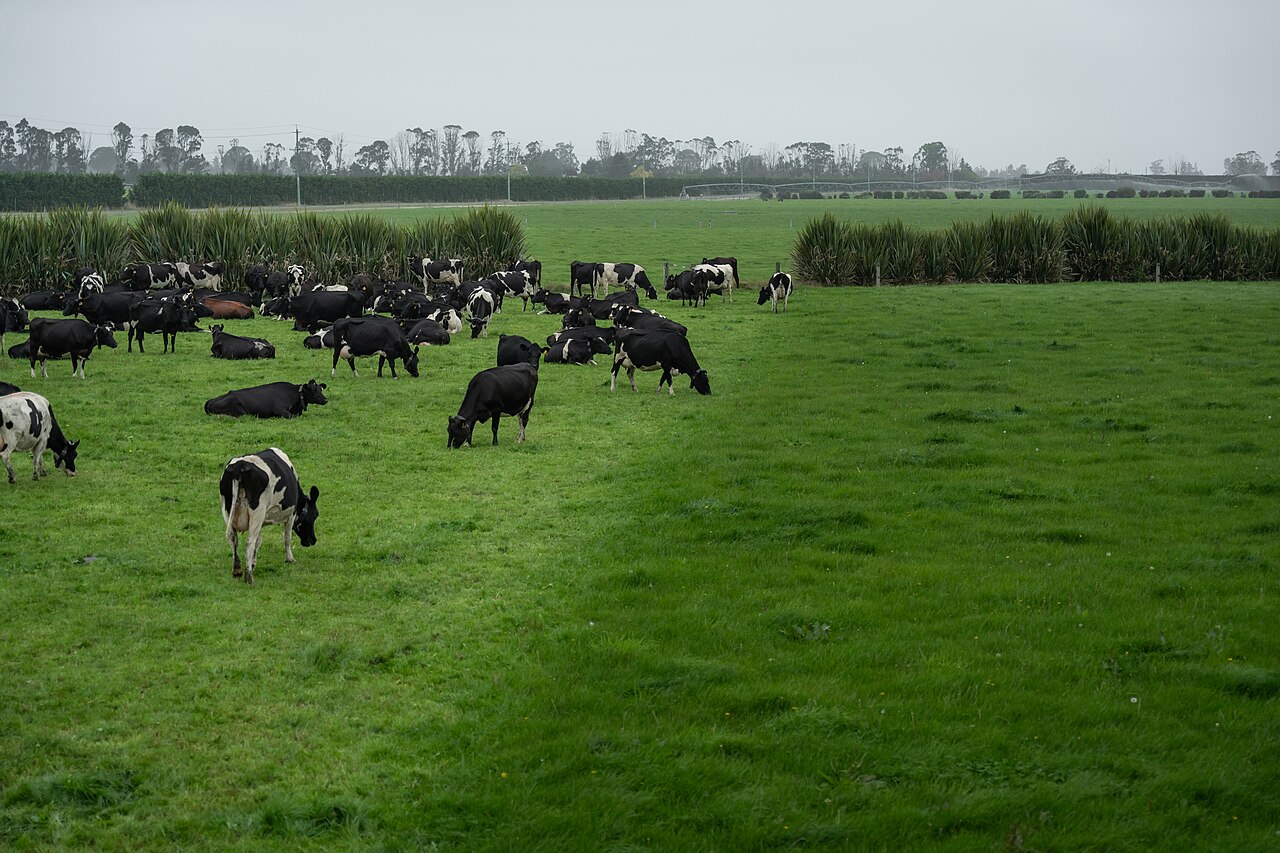
Photo: Halter / Wikimedia Commons (CC BY-SA 4.0)
Source: Rural News Group

Comments
(0)