
Leaders from Africa and Asia have called for a move from rice strategies to their implementation, backed by more financing across the value chain, predictable trade and regional rice reserves with early-warning systems, as global supplies tighten ahead of a strong El Nino. The call closed the Global Rice Policy Dialogue 2026 in Addis Ababa, Ethiopia, held on 15 and 16 October.
The meeting was co-hosted by the African Union Commission's agriculture department and the International Rice Research Institute (IRRI), with AfricaRice, the CGIAR Policy Innovations Science Program and the Ethiopian Institute of Agricultural Research. More than 80 policymakers, researchers, financiers and business leaders from 25 African and Asian countries agreed that no country can secure its rice supply through self-sufficiency or trade alone.
The figures explain the worry. Rice is a crop worth US$362 billion a year, yet only about 11 percent of world output is traded, and five exporters, India, Thailand, Vietnam, Pakistan and Cambodia, supply almost 80 percent of that trade. Africa imports about 18 million tons a year; Sub-Saharan Africa buys about a third of all internationally traded rice and the continent spends US$6 to 9 billion a year on imports. African production is rising by about four percent a year, consumption by about six.
IRRI senior scientist Alisher Mirzabaev warned that world production is projected to fall below consumption this season for the first time in three years. Global stocks look comfortable at 36 percent of annual use, he said, but India and China hold 82 percent of them; for the rest of the world the ratio is only 13 percent. A strong El Nino, oil prices about 75 percent higher than in January and high domestic fertiliser prices put the March to April 2027 planting season at particular risk.
Hailemariam Desalegn Boshe, board chair of AGRA and CGIAR and a former prime minister of Ethiopia, pointed to Tanzania, which raised its irrigation budget for rice areas almost nine-fold in three years and now grows more rice than it eats, and to the new US$500 million West Africa Rice Investment Facility. "Africa does not lack plans, and it does not lack potential. What we need is the discipline to deliver," he said. Thirty-two African countries already have national rice strategies.
Participants ranked climate shocks and water scarcity as the biggest risk to rice markets, followed by low productivity and fertiliser and energy costs. Irrigation and water management topped the list of investment priorities, ahead of seed systems, research and extension, and milling, storage and quality. AfricaRice director general Baboucarr Manneh noted that more than 80 percent of Africa's rice is rainfed and urged wider use of climate-smart varieties, alternate wetting and drying and solar-powered irrigation.
For importing countries in Asia as well as Africa, the warning about thin stocks outside India and China is the point to watch: decisions on exports, imports and public stocks in one country move prices and food security elsewhere, as Ethiopia's representative told the meeting.
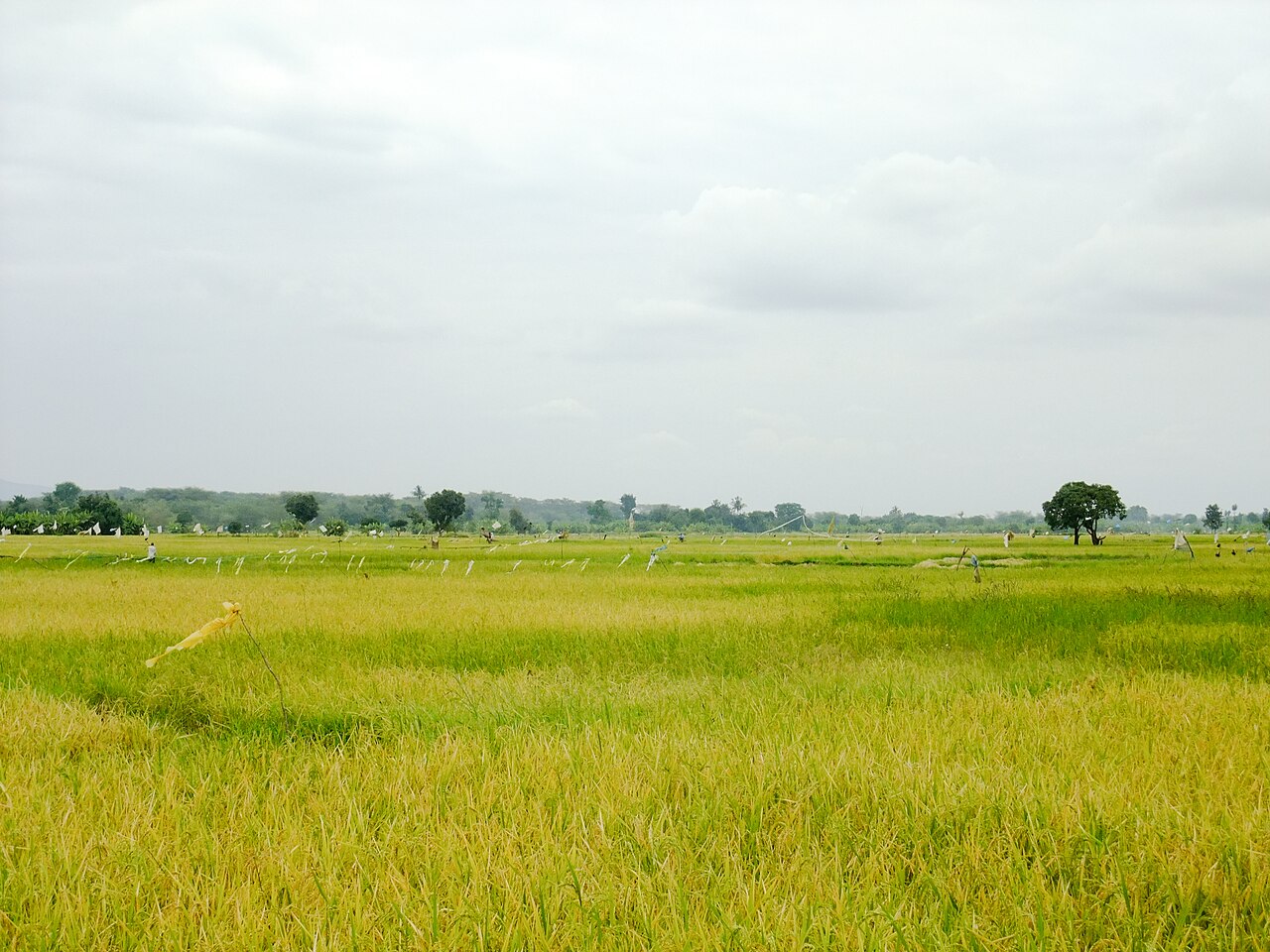
Photo: lecucurbitacee (rice fields at Mto wa Mbu, Tanzania) / Wikimedia Commons (CC BY 2.0)
Source: IRRI
Comments
(0)