
The International Livestock Research Institute (ILRI) is running a project in Zambia's Eastern Province that teaches livestock keepers to grow forage and store crop residues as feed, so their animals do not lose weight and value when pastures dry up, according to a report first published in the Times of Zambia and carried by ILRI.
ILRI research associate Thembinkosi Baleni said recurrent droughts that strip natural pasture and water are among the worst climate risks for rural households. The programme aims to form 10 livestock forage cooperatives; two have been set up so far and trained in sustainable livestock management. Growing forage, he said, protects animals as economic assets during drought and opens extra income from fattening, feed production hubs and the trade in forage and grain seed.
To reach more people, the project uses a "lead farmer" model. It is developing 20 farmer field schools on forage production and livestock feeding across 10 districts of the province. Selected farmers are trained in growing forage, mixing crop residues and storing feed, and then pass the skills on to "follower farmers" in their own communities. The project also hands out seed of velvet bean, pigeon pea and Rhodes grass for farmers to plant, cut and bale.
The work runs through the government's own extension service. Maybin Banda, a livestock technician in Chipata with the Department of Livestock Development, said the department provides staff while the project pays for fuel and allowances. Heads of department are trained first, then camp extension officers, who go out to find farmers and keep teaching them how to harvest, bale and feed.
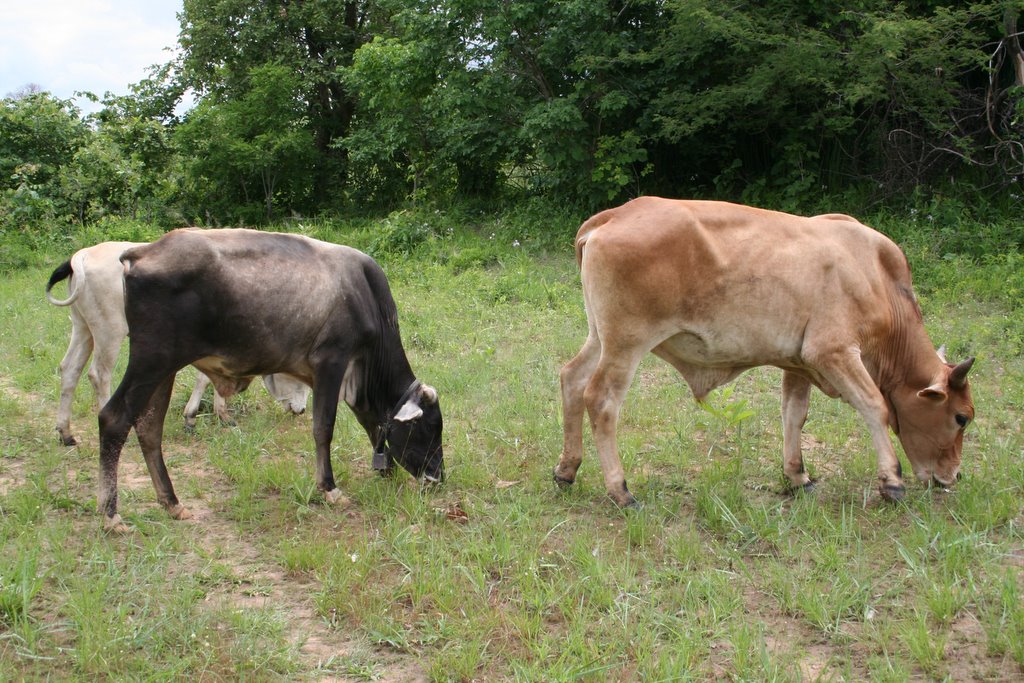
Banda said the project answers a seasonal problem. Farmers rely on natural grazing, but grazing land is being taken for crops and pastures run out in the hot season. "In our district, vendors look at the body condition score when setting prices," he said, so poorly fed animals sell for far less. Extension staff now ask farmers not to burn maize stover or leave groundnut haulms in the field after harvest, but to collect and bale them for the lean months.
Photo: Amanita Phalloides / Wikimedia Commons (CC BY-SA 3.0)
Source: ILRI
Comments
(0)